Convert Pressure Units In Seconds, With The Maths Shown
To turn kPa into psi, multiply by about 0.145. To turn bar into psi, multiply by about 14.5. To turn psi into kPa, multiply by about 6.895.
Use the free converter below for kPa, psi, bar, MPa, atm, mmHg and inH₂O, then check the full chart, the formula for each pair, and the one detail most converters skip: whether your reading is gauge or absolute.
How Do You Convert kPa, psi And bar?
All three measure the same thing, force per area, so converting is a single multiplication. 1 psi = 6.894757 kPa, 1 bar = 100 kPa and 1 bar = 14.5038 psi. Everything else follows from those three numbers.
So 230 kPa is 33.36 psi, 32 psi is 220.6 kPa, and 2.5 bar is 36.26 psi. Before you convert, check whether the number is a gauge reading (relative to the air around you) or an absolute one. The units convert the same way, but mixing the two is the most common source of a wrong answer.
Pressure Unit Converter: kPa, psi, bar And More
Type a value, pick the unit you have and the unit you need. The converter shows the answer, the factor it used, the same pressure in eleven units, and the gauge or absolute equivalent at standard atmospheric pressure.
Prefer to do it by hand? The factors table below covers every common pair, and each pair has its own section with a worked example further down the page.
Pressure Conversion Factors
Multiply the value you have by the factor in the right-hand column. Factors are rounded to six significant figures, which is more precision than any dial gauge can show. Values follow NIST Special Publication 811, Appendix B.8, and 1 bar is exactly 100 kPa by definition.
| To Convert | Into | Multiply By |
|---|---|---|
| kPa | psi | 0.145038 |
| psi | kPa | 6.894757 |
| bar | psi | 14.5038 |
| psi | bar | 0.0689476 |
| bar | kPa | 100 |
| kPa | bar | 0.01 |
| MPa | psi | 145.038 |
| psi | MPa | 0.00689476 |
| atm | kPa | 101.325 |
| mbar | Pa | 100 |
| mmHg (torr) | kPa | 0.133322 |
| inH₂O | Pa | 249.089 |
kPa To PSI
To convert kPa to psi, multiply the kilopascal value by 0.145038 (or divide by 6.894757). One kilopascal is roughly one seventh of a psi, so the psi number is always much smaller.
Formula:
psi = kPa × 0.145038
Worked example: 230 kPa × 0.145038 = 33.36 psi
| kPa | psi |
|---|---|
| 10 kPa | 1.45 psi |
| 50 kPa | 7.25 psi |
| 100 kPa | 14.50 psi |
| 101.325 kPa | 14.70 psi |
| 150 kPa | 21.76 psi |
| 200 kPa | 29.01 psi |
| 220 kPa | 31.91 psi |
| 230 kPa | 33.36 psi |
| 240 kPa | 34.81 psi |
| 250 kPa | 36.26 psi |
| 300 kPa | 43.51 psi |
| 400 kPa | 58.02 psi |
| 500 kPa | 72.52 psi |
| 700 kPa | 101.53 psi |
| 1,000 kPa | 145.04 psi |
| 2,000 kPa | 290.08 psi |
PSI To kPa
To convert psi to kPa, multiply by 6.894757. Rounding to 6.895 is accurate enough for everyday readings; use the full factor for calibration certificates.
Formula:
kPa = psi × 6.894757
Worked example: 32 psi × 6.894757 = 220.6 kPa
| psi | kPa |
|---|---|
| 1 psi | 6.9 kPa |
| 5 psi | 34.5 kPa |
| 10 psi | 68.9 kPa |
| 14.7 psi | 101.4 kPa |
| 15 psi | 103.4 kPa |
| 20 psi | 137.9 kPa |
| 25 psi | 172.4 kPa |
| 30 psi | 206.8 kPa |
| 32 psi | 220.6 kPa |
| 35 psi | 241.3 kPa |
| 40 psi | 275.8 kPa |
| 50 psi | 344.7 kPa |
| 60 psi | 413.7 kPa |
| 100 psi | 689.5 kPa |
| 150 psi | 1,034.2 kPa |
| 300 psi | 2,068.4 kPa |
Bar To PSI
To convert bar to psi, multiply by 14.5038. A quick mental check: 1 bar is about 14.5 psi, so 2 bar is about 29 psi.
Formula:
psi = bar × 14.5038
Worked example: 2.5 bar × 14.5038 = 36.26 psi
| bar | psi |
|---|---|
| 0.5 bar | 7.3 psi |
| 1 bar | 14.5 psi |
| 1.5 bar | 21.8 psi |
| 2 bar | 29.0 psi |
| 2.2 bar | 31.9 psi |
| 2.5 bar | 36.3 psi |
| 3 bar | 43.5 psi |
| 4 bar | 58.0 psi |
| 5 bar | 72.5 psi |
| 6 bar | 87.0 psi |
| 8 bar | 116.0 psi |
| 10 bar | 145.0 psi |
| 16 bar | 232.1 psi |
| 20 bar | 290.1 psi |
| 100 bar | 1,450.4 psi |
| 200 bar | 2,900.8 psi |
| 300 bar | 4,351.1 psi |
PSI To Bar
To convert psi to bar, multiply by 0.0689476 (or divide by 14.5038). This is the conversion you need when a psi-rated part goes into a system specified in bar.
Formula:
bar = psi × 0.0689476
Worked example: 35 psi × 0.0689476 = 2.41 bar
| psi | bar |
|---|---|
| 1 psi | 0.069 bar |
| 5 psi | 0.345 bar |
| 10 psi | 0.689 bar |
| 14.5 psi | 1.000 bar |
| 15 psi | 1.034 bar |
| 20 psi | 1.379 bar |
| 30 psi | 2.068 bar |
| 32 psi | 2.206 bar |
| 35 psi | 2.413 bar |
| 40 psi | 2.758 bar |
| 50 psi | 3.447 bar |
| 60 psi | 4.137 bar |
| 100 psi | 6.895 bar |
| 150 psi | 10.342 bar |
| 300 psi | 20.684 bar |
| 1,000 psi | 68.948 bar |
| 3,000 psi | 206.843 bar |
Bar To kPa And kPa To Bar
Bar and kPa are both metric, so this one is easy: 1 bar = 100 kPa. Multiply bar by 100 to get kPa, or divide kPa by 100 to get bar. One millibar (mbar) is 0.1 kPa, or 100 Pa.
Formula:
kPa = bar × 100 | bar = kPa ÷ 100
Worked example: 3 bar × 100 = 300 kPa, and 250 kPa ÷ 100 = 2.5 bar
| bar | kPa |
|---|---|
| 0.01 bar | 1 kPa |
| 0.1 bar | 10 kPa |
| 0.5 bar | 50 kPa |
| 1 bar | 100 kPa |
| 1.5 bar | 150 kPa |
| 2 bar | 200 kPa |
| 2.5 bar | 250 kPa |
| 3 bar | 300 kPa |
| 5 bar | 500 kPa |
| 10 bar | 1,000 kPa |
| 16 bar | 1,600 kPa |
| 20 bar | 2,000 kPa |
| 100 bar | 10,000 kPa |
Pressure Conversion Chart: kPa, psi, bar, atm, mmHg And inH₂O
Find your value in the kPa column and read across. The 101.325 kPa row is one standard atmosphere, the reference point for absolute pressure. Values are rounded for reading; use the converter for more decimal places.
| kPa | psi | bar | atm | mmHg (torr) | inH₂O |
|---|---|---|---|---|---|
| 1 | 0.15 | 0.010 | 0.010 | 7.5 | 4.0 |
| 10 | 1.45 | 0.100 | 0.099 | 75.0 | 40.1 |
| 50 | 7.25 | 0.500 | 0.493 | 375.0 | 200.7 |
| 100 | 14.50 | 1.000 | 0.987 | 750.1 | 401.5 |
| 101.325 | 14.70 | 1.013 | 1.000 | 760.0 | 406.8 |
| 200 | 29.01 | 2.000 | 1.974 | 1,500.1 | 802.9 |
| 300 | 43.51 | 3.000 | 2.961 | 2,250.2 | 1,204.4 |
| 500 | 72.52 | 5.000 | 4.935 | 3,750.3 | 2,007.3 |
| 700 | 101.53 | 7.000 | 6.908 | 5,250.4 | 2,810.2 |
| 1,000 | 145.04 | 10.000 | 9.869 | 7,500.6 | 4,014.6 |
| 2,000 | 290.08 | 20.000 | 19.738 | 15,001.2 | 8,029.3 |
| 5,000 | 725.19 | 50.000 | 49.346 | 37,503.1 | 20,073.2 |
| 10,000 | 1,450.38 | 100.000 | 98.692 | 75,006.2 | 40,146.3 |
inH₂O uses the 4 °C water reference (249.089 Pa per inch). Some HVAC instruments use a 20 °C or 60 °F reference instead, which reads about 0.1% to 0.2% differently.
Gauge vs Absolute Pressure: psig vs psia
Gauge pressure is measured relative to the air around you. That's why a tyre gauge or a process gauge reads zero when it's disconnected. In psi it's written psig; in metric you'll see kPa(g) or barg.
Absolute pressure is measured from a perfect vacuum. At sea level, an absolute gauge open to the air reads about 101.3 kPa, or 14.7 psi. In psi it's written psia, or kPa(a) and bara in metric. Vacuum work, barometric readings, gas-law calculations and many transmitter specifications use absolute pressure.
The relationship:
absolute = gauge + atmospheric | psia = psig + 14.696 (at standard atmosphere)
Example: a vessel reading 30 psig is at about 30 + 14.7 = 44.7 psia, or 206.8 kPa(g) and 308.2 kPa(a).
Converting units never changes gauge into absolute; you have to add or subtract atmospheric pressure as a separate step. Real atmospheric pressure also drops with altitude and shifts with the weather, so for precise absolute work use your local barometric reading instead of 101.325 kPa. The converter above lets you enter it.
Which Pressure Unit Is Used Where?
kPa (kilopascal): the SI unit for everyday pressures and the default on Australian gauges, tyre placards and building services drawings. 1 kPa = 1,000 Pa.
psi (pounds per square inch): the imperial unit still printed on a lot of imported equipment, compressors and hydraulic fittings. It's why so many gauges carry a second psi scale.
bar and mbar: metric but not SI. Bar is common on European instruments, pumps and gas cylinders; mbar suits low pressures and vacuum, from freeze dryers to filtration rigs.
MPa (megapascal): 1,000 kPa. Used for hydraulics, high-pressure gas and materials testing, where kPa numbers get unwieldy.
atm, mmHg and torr: reference and vacuum units. One standard atmosphere is 760 mmHg. Torr and mmHg are effectively interchangeable on vacuum gauges.
inH₂O (inches of water column): for very small pressures and pressure differences, such as fume hood and cleanroom airflow or gas burner settings. Steam sterilisers are another place the units meet: our autoclave guide covers how they work and where labs use them.

Where Unit Conversions Come Up
- •Matching a psi-rated sensor to a kPa or bar control system
- •Reading dual-scale gauges and datasheets from overseas suppliers
- •Converting vacuum specifications between mbar, Pa and torr
- •Setting tyre and compressed air pressures from a placard
- •Recording calibration results in the unit a certificate requires
Tyre Pressure Conversion: psi To kPa And bar
Australian tyre placards usually list kPa, while many pumps and gauges still read psi. This short table covers typical passenger car pressures. Always inflate to the figure on your vehicle's placard, measured cold.
| psi | kPa | bar |
|---|---|---|
| 28 psi | 193 kPa | 1.93 bar |
| 30 psi | 207 kPa | 2.07 bar |
| 32 psi | 221 kPa | 2.21 bar |
| 33 psi | 228 kPa | 2.28 bar |
| 34 psi | 234 kPa | 2.34 bar |
| 35 psi | 241 kPa | 2.41 bar |
| 36 psi | 248 kPa | 2.48 bar |
| 38 psi | 262 kPa | 2.62 bar |
| 40 psi | 276 kPa | 2.76 bar |
| 42 psi | 290 kPa | 2.90 bar |
| 44 psi | 303 kPa | 3.03 bar |
Common Pressure Conversion Mistakes
1. Mixing Gauge And Absolute
A transmitter specified in psia reads about 14.7 psi higher than a psig gauge on the same line. Check the suffix before you compare numbers.
2. Treating bar As atm
1 atm is 1.01325 bar, not 1 bar. The 1.3% gap is small on a dial but matters in calibration and gas calculations.
3. Rounding Too Early
Converting 6.9 instead of 6.894757 adds about 0.08% error per step. Keep full factors until the final answer, then round once.
4. Ignoring Altitude
Atmospheric pressure in Canberra (about 580 m) is several kPa lower than at sea level. Use local barometric pressure for precise absolute work.
Pressure Instruments That Read In More Than One Unit
The simplest way to avoid conversion errors is an instrument that shows the unit you need. These are the four we'd look at first: two dual-scale dial gauges, a transmitter for control systems, and a digital manometer that switches units on screen. The Ashcroft comes first because its dial reads psi and kPa side by side, so there is nothing to convert.
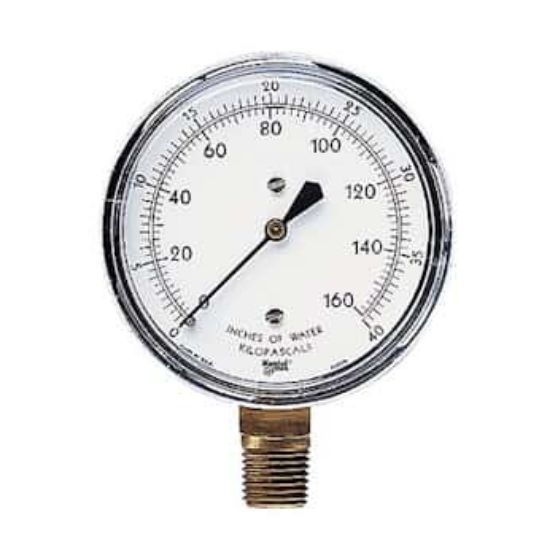
Ashcroft 2.5" Dual-Scale Low Pressure Gauge (psi / kPa)
A 0 to 10 psi brass gauge with a kPa scale alongside, so you can read either unit without converting. Its diaphragm suits low-pressure and low-vacuum work, and a built-in snubber steadies the needle when pressure fluctuates.
View This Gauge
Stanhope Seta Pressure Gauge, 0 to 2000 kPa
A precision Bourdon-tube gauge with a 150 mm mirror-band dial scaled in both kPa and psi, accurate to ±1% of full scale. The mirror band removes parallax error when you read the needle.
View This Gauge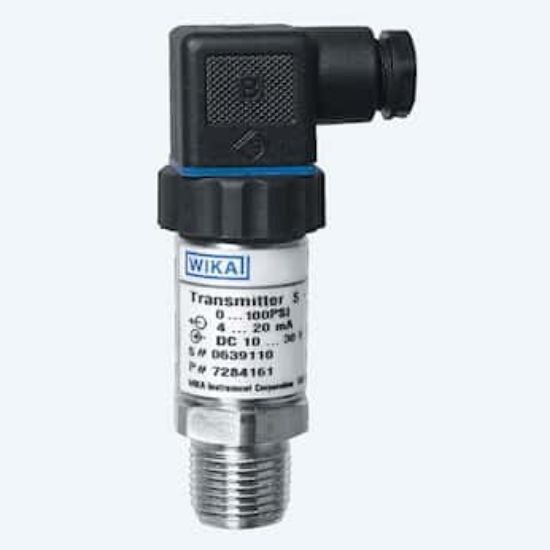
WIKA S-10 Pressure Transmitter, 0 to 100 psi
An industrial transmitter for gauge pressure with a 4 to 20 mA output and ±0.25% BFSL accuracy. Its 0 to 100 psi span works out to 0 to 6.89 bar, a common range when a psi-rated sensor feeds a metric control system.
View This Transmitter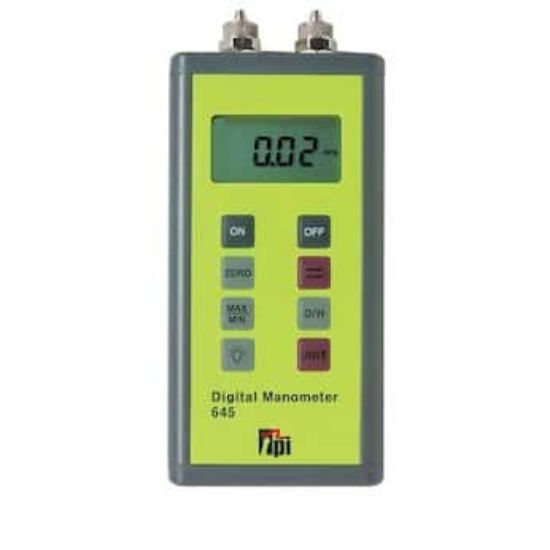
TPI 665 Dual-Input Differential Manometer, ±101.5 psi
A handheld digital manometer reading ±101.5 psi (±7 bar) differential with 0.01 psi resolution. It switches between seven pressure units on screen and logs readings, so field results can be recorded in whichever unit the job needs.
View This ManometerNeed a different range or output? Browse pressure sensors and transducers or digital manometers.
Explore More Lab Measurement Guides
What Is An Autoclave?
How steam sterilisers work under pressure, the main autoclave types and their laboratory uses.
Read The Autoclave GuideLaboratory Freeze Dryer Guide
Freeze drying runs under vacuum, usually specified in mbar, Pa or torr. Learn how freeze dryers work, what they cost in Australia and how to choose one.
Read The Freeze Dryer GuideWhat Is A Flow Meter?
Pressure and flow go hand in hand in fluid systems. Compare the main flow meter types and how each one works.
Read The Flow Meter GuidePressure Conversion FAQs
How Do I Convert kPa To psi?
Multiply the kPa value by 0.145038, or divide it by 6.894757. For example, 230 kPa × 0.145038 = 33.36 psi.
How Many psi Is 1 bar?
One bar equals 14.5038 psi. To convert bar to psi, multiply by 14.5038, so 2.5 bar is 36.26 psi.
How Many kPa Are In 1 psi?
One psi equals 6.894757 kPa, which most people round to 6.895. So 32 psi is about 220.6 kPa.
Is 1 bar The Same As 1 Atmosphere?
No, but they are close. One standard atmosphere is 101.325 kPa (1.01325 bar), while one bar is exactly 100 kPa. The 1.3% difference matters for calibration work and absolute pressure calculations.
What Is The Difference Between psi, psig And psia?
psi is the unit itself. psig (gauge) is measured relative to the surrounding atmosphere, so an open gauge reads zero. psia (absolute) is measured relative to a perfect vacuum, so at sea level it reads about 14.7 psi with nothing connected. psia = psig + atmospheric pressure.
Why Do Australian Gauges And Placards Use kPa?
Australia uses metric SI units, and the kilopascal is the SI unit sized for everyday pressures. Many gauges and tyre placards also show psi as a second scale because imported equipment and older references still use it.
How Do I Convert MPa To psi?
Multiply by 145.038. One megapascal is 1,000 kPa, or about 145 psi, so MPa is the usual unit for hydraulic and high-pressure systems.
Is mmHg The Same As torr?
For practical purposes, yes. One torr is defined as 1/760 of a standard atmosphere and one mmHg is within about 0.000015% of it, so vacuum gauges and datasheets use the two interchangeably.
Need A Gauge Or Sensor In The Right Units?
Talk to John Morris Group about pressure gauges, transmitters and manometers scaled in kPa, psi or bar, gauge or absolute, for your laboratory or plant.
Contact UsCall 1300 501 555 or contact John Morris Group for quotation and technical support.