Matching Flow Meter Technology To Your Application
A flow meter measures the rate at which a liquid or gas moves through a system.
Different flow meter technologies suit different fluids, flow ranges and accuracy requirements, from simple variable-area rotameters to digital mass flow meters.
How Does A Flow Meter Work?
A flow meter measures how much liquid or gas passes through it over time, typically expressed in units like litres per minute (LPM) or gallons per minute (GPM). Different flow meter types measure this in different ways, from a simple float rising in a tapered tube to digital sensors that measure mass, pressure or ultrasonic signal changes.
The right flow meter for a job depends on whether you are measuring a liquid or gas, the expected flow range, and how much accuracy and repeatability the application requires.
What Is A Flow Meter?
A flow meter is an instrument used to measure the rate of liquid or gas flow through a pipe, tube or system. Readings are typically shown in volumetric units such as litres per minute (LPM) or gallons per minute (GPM), or in mass units for mass flow meters.
The simplest and most common laboratory flow meter is the variable-area meter, often called a rotameter, which uses a float that rises in a tapered tube as flow increases. More advanced digital flow meters measure flow electronically and can output data for logging or process control.
Flow control is closely related to pump selection. See our guide to understanding pump speed and pressure for more on matching flow to your application.
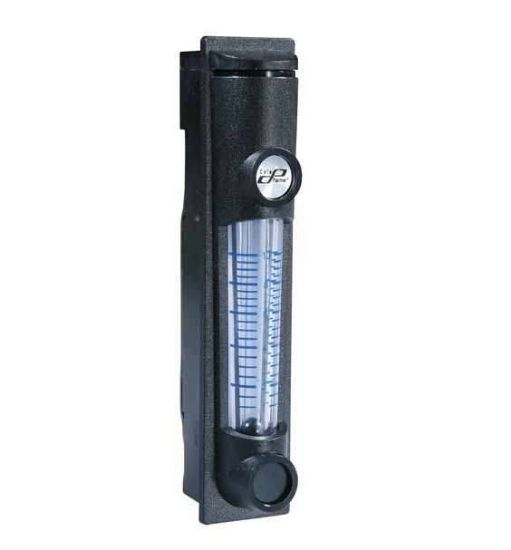
Common Flow Meter Applications
- •Gas and air flow monitoring in the lab
- •Water flow measurement for equipment cooling
- •Process gas control for instrumentation
- •Industrial oil and hydraulic fluid monitoring
Which Flow Meter Type Do You Need?
Start with what you are measuring and how precisely you need to measure it, then narrow down by flow range and material compatibility.
Choose A Variable-Area Meter If
- •You need a simple, direct visual reading
- •No electrical power is available nearby
- •Budget is a priority
- •You are measuring clean air, gas or water
Choose A Digital Mass Flow Meter If
- •You need a precise, repeatable digital reading
- •You want to log or export flow data
- •You are measuring a clean, specific gas
- •Flow needs to feed into a control system
Ask Before Buying
- •Are you measuring a liquid or a gas?
- •What is your expected flow range?
- •Is the fluid corrosive, viscous or high temperature?
- •Do you need a digital output or a visual reading is enough?
Variable-Area Vs Digital Mass Flow Meters At A Glance
These are the two most common flow meter types in laboratory and light industrial use. This table shows where each is the better choice.
| Criteria | Variable-Area (Rotameter) | Digital Mass Flow Meter | Better Choice |
|---|---|---|---|
| Upfront Cost | ✓ Lower cost | – Higher cost | Variable-Area |
| Reading Type | – Visual scale reading | ✓ Digital display, loggable | Digital |
| No Power Source Available | ✓ Works without power | – Requires power | Variable-Area |
| Precision And Repeatability | – Good for general indication | ✓ Higher precision | Digital |
What Are The Main Types Of Flow Meter?
Variable-area (rotameter): A float rises inside a tapered tube in proportion to flow rate, giving a direct visual reading with no power required. This is the most common flow meter style for general lab air, gas and water measurement.
Mass flow meters: These measure flow by mass rather than volume, giving readings that are not affected by changes in gas pressure or temperature. They are commonly used for precise gas control in laboratory and process applications.
Ultrasonic flow meters: These use sound waves to measure flow velocity without any parts in contact with the fluid, useful for corrosive or hygienic applications.
Coriolis flow meters: These measure the mass flow rate directly using the Coriolis effect on a vibrating tube, offering high precision for demanding process applications.
Flow Rate Calculator: L/min to m³/h, GPM and Pipe Flow
Convert a flow rate between L/min, m³/h, L/h, GPM and more, or switch tabs to work out flow rate from your pipe's inside diameter and fluid velocity.
L/min to m³/h and GPM Conversion Chart
1 L/min = 0.06 m³/h = 0.264 US GPM. Use the calculator above for any other value or unit.
| L/min | m³/h | L/h | US GPM | Imperial GPM |
|---|---|---|---|---|
| 1 | 0.06 | 60 | 0.264 | 0.22 |
| 5 | 0.3 | 300 | 1.321 | 1.1 |
| 10 | 0.6 | 600 | 2.642 | 2.2 |
| 20 | 1.2 | 1,200 | 5.283 | 4.399 |
| 50 | 3 | 3,000 | 13.21 | 11 |
| 100 | 6 | 6,000 | 26.42 | 22 |
| 200 | 12 | 12,000 | 52.83 | 43.99 |
| 500 | 30 | 30,000 | 132.1 | 110 |
| 1,000 | 60 | 60,000 | 264.2 | 220 |
Figures are rounded. US and imperial gallons differ, so check which one your flow meter's scale uses.
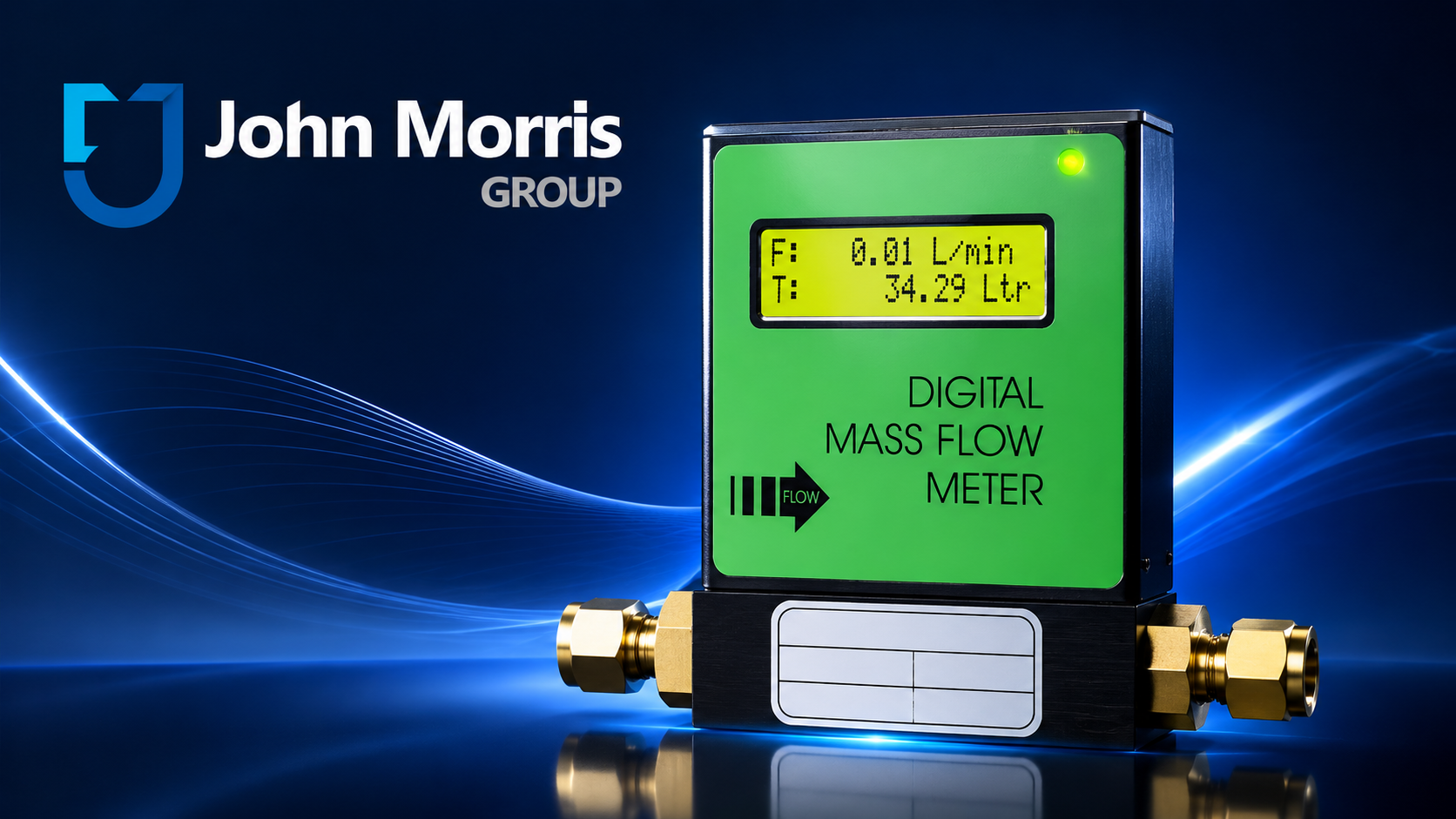
Why Accurate Flow Measurement Matters
1. Repeatable Experimental Conditions
Consistent gas or liquid flow rates are essential for reproducible results in analytical and process work.
2. Equipment Protection
Monitoring cooling water or gas flow helps prevent instrument damage from inadequate flow.
3. Process Control
Accurate flow data feeds into control systems to maintain safe, consistent process conditions.
4. Compliance And Reporting
Logged flow data supports quality control records and regulatory reporting requirements.
5. Reduced Waste And Cost
Precise flow control avoids overusing gases, reagents or water in a process.
6. Broad Application Coverage
Flow meters are available across a wide range of flow rates, materials and fluid types to suit almost any application.
How Do You Calibrate A Flow Meter?
Most flow meters are factory calibrated for a specific fluid, such as air, a particular gas, or water. Using a flow meter with a different fluid than it was calibrated for will give an inaccurate reading unless a correction factor is applied.
Periodic verification against a known reference standard helps confirm accuracy over time, particularly for flow meters used in regulated or quality-critical applications.
Always check the manufacturer's calibration fluid and correction guidance before using a flow meter with a different gas or liquid.
Flow Meters At John Morris Group
John Morris Group supplies flow meters across gas, water and industrial oil applications.
Flowmeter For Air, 1-10 LPM
Polycarbonate variable-area flowmeter with stainless steel construction for air and compatible gases.
Browse This Flowmeter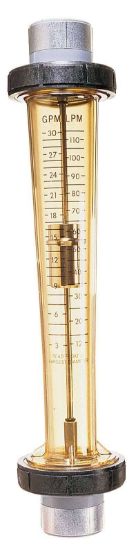
Flowmeter For Water, 0.2-2 GPM
Chemically resistant polysulfone flowmeter with a clear scale for quick, accurate readings.
Browse This Flowmeter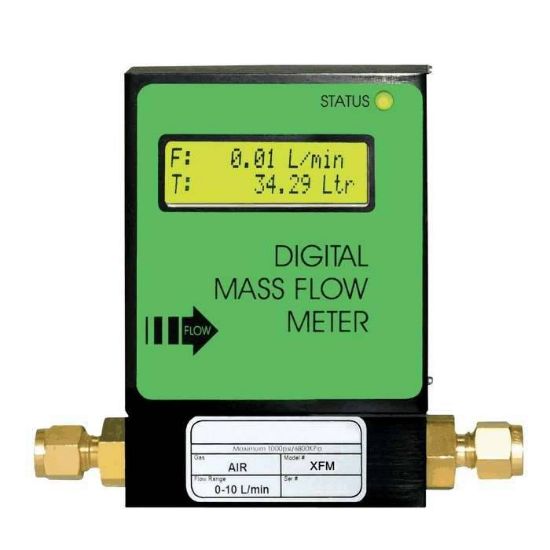
Digital Mass Flowmeter For CO2
Aluminum digital mass flowmeter for precise CO2 flow measurement from 0 to 1 L/min.
Browse This Flowmeter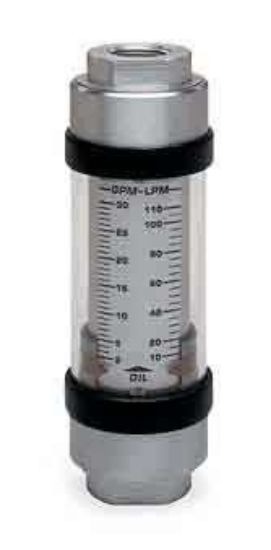
Hedland Oil Flow Meter
Industrial flow meter rated to 500°F and 3,500 psi for oil and hydraulic fluid monitoring.
Browse This Flow MeterExplore More Fluid Handling Resources
Flow measurement works hand in hand with pump selection and fluid properties. See how these related topics connect.
Peristaltic Pump Selection Guide
Learn how to choose the right peristaltic pump to pair with your flow measurement needs.
Read The Pump GuideUnderstanding Pump Speed And Pressure
See how pump speed and pressure interact with flow rate in precision dispensing applications.
Read The Pressure GuideWhat Is Viscosity?
Understand how viscosity affects flow behaviour and flow meter selection for thicker fluids.
Read The Viscosity GuideFlow Meter FAQs
What Is A Flow Meter Used For?
A flow meter is used to measure the rate of liquid or gas flow through a system, supporting applications such as lab gas control, cooling water monitoring, process control and industrial fluid monitoring.
How Does A Flow Meter Work?
Most simple flow meters use a float that rises in a tapered tube as flow increases, giving a direct visual reading. Digital flow meters use electronic sensors to measure flow by mass, pressure difference or ultrasonic signal, depending on the technology.
What Is A Rotameter?
A rotameter is a variable-area flow meter that uses a float rising in a tapered tube to show flow rate on a graduated scale. It is the most common flow meter style for general laboratory air, gas and water measurement.
How Does A Mass Flow Meter Work?
A mass flow meter measures flow by mass rather than volume, so its readings are not affected by changes in gas pressure or temperature, making it well suited to precise gas control applications.
How Do You Calibrate A Flow Meter?
Flow meters are typically factory calibrated for a specific fluid. Periodic verification against a known reference standard confirms ongoing accuracy, and a correction factor may be needed if the meter is used with a different fluid than it was calibrated for.
Can Flow Meters Be Installed Vertically?
Variable-area flow meters generally require vertical installation, since the float relies on gravity to return to a zero-flow position. Always check the manufacturer's installation orientation before fitting a flow meter.
How Do I Convert L/min To m³/h?
Multiply litres per minute by 0.06 to get cubic metres per hour. For example, 100 L/min is 6 m³/h. To go the other way, multiply m³/h by 16.67. The flow rate calculator above converts between all common units.
How Do You Calculate Flow Rate From Pipe Size And Velocity?
Use Q = A x v, where A is the pipe's internal cross-sectional area (π x radius squared) and v is the average fluid velocity. For example, a pipe with a 25 mm inside diameter carrying water at 1.5 m/s flows about 44.2 L/min (2.65 m³/h).
How Many Litres Per Minute Is 1 GPM?
1 US gallon per minute is 3.785 L/min, and 1 imperial gallon per minute is 4.546 L/min. Many flow meters, including US-made rotameters, use US gallons, so check the scale before converting.
Need Help Choosing The Right Flow Meter?
Talk to John Morris Group about flow meters for gas, water and industrial fluid applications in your laboratory or facility.
Contact UsCall 1300 501 555 or contact John Morris Group for quotation and technical support.