Thermocouple Types: J, K And T, And How To Select One
A thermocouple is a temperature sensor made from two dissimilar metal wires joined at one end, generating a small voltage that changes with temperature.
Type K, J and T are the three most common designs, and each covers a different temperature range and application, so the right choice depends on how hot or cold your process runs and what the probe will be exposed to.
How Does A Thermocouple Work?
A thermocouple joins two different metal wires at one end to form a measuring junction. This junction generates a small, temperature-dependent voltage, known as the Seebeck effect, which a meter or transmitter converts into a temperature reading.
Because the metal pair, not the sensor's size or shape, determines its behaviour, thermocouples are grouped into standard types. Type K, J and T are by far the most widely used, distinguished by their temperature range, accuracy and the environments they tolerate.
What Is A Thermocouple?
A thermocouple is a temperature sensor made of two dissimilar metal conductors, welded or twisted together at one end to form the measuring junction. As that junction's temperature changes, the voltage across the two wires changes with it, in a predictable, characterised relationship specific to that metal pairing.
Type K (chromel/alumel) is the most common general-purpose thermocouple, covering roughly -200°C to +1260°C. Type J (iron/constantan) covers a narrower range, roughly -40°C to +750°C, and should not be used in strongly oxidising atmospheres at the top of that range because the iron leg corrodes. Type T (copper/constantan) covers roughly -250°C to +350°C and is prized for accuracy at low and sub-zero temperatures.
A thermocouple's output still needs a meter, transmitter or data logger to turn that small voltage into a usable reading, similar to how a flow meter pairs a sensing element with a display or transmitter in a wider process control system.
Common Thermocouple Applications
- •Furnace, oven and kiln temperature monitoring
- •Process and reactor temperature control
- •Cold storage, freezer and cryogenic monitoring (Type T)
- •HVAC, plant and equipment temperature checks
- •Food safety and quality control temperature verification
Type K, J Or T, Which Do You Need?
Start with the temperature range and atmosphere your probe will face, then confirm accuracy needs and wiring compatibility with your existing meter or transmitter.
Choose Type K If
- •You need a wide, general-purpose temperature range
- •The process runs hot, up to roughly 1260°C
- •You want the most widely stocked, lowest-cost option
- •Your existing meters and transmitters are already set up for Type K
Choose Type J If
- •The application sits within a lower, roughly -40°C to 750°C range
- •The environment is not strongly oxidising at the top of that range
- •You are replacing existing Type J instrumentation
- •A lower-cost probe for a moderate temperature range is the priority
Choose Type T If
- •You are measuring sub-zero, cryogenic or cold-chain temperatures
- •High accuracy at low temperatures matters most
- •The probe may contact damp or humid conditions
- •The process does not exceed roughly 350°C
Type K, J And T Thermocouples At A Glance
Use this table as a starting point, then confirm the exact rating against the specific probe's datasheet before ordering.
| Criteria | Type K | Type J | Type T | Better Choice |
|---|---|---|---|---|
| Metal Pair | Chromel / Alumel | Iron / Constantan | Copper / Constantan | Depends On Range |
| Typical Temperature Range | ✓ -200°C to +1260°C | -40°C to +750°C | -250°C to +350°C | K |
| Accuracy At Sub-Zero Temperatures | Adequate, but not the most precise | Not typically used sub-zero | ✓ Best accuracy in this range | T |
| Oxidising Atmosphere Tolerance | ✓ Good general tolerance | Limited near top of range, iron leg corrodes | Good within its lower range | K |
| ANSI Wire Colour (Overall Jacket) | Yellow | Black | Blue | Check Standard |
| Availability And Cost | ✓ Most widely stocked, generally lowest cost | Widely available, low cost | Available, moderate cost | K |
What Are The Main Types Of Thermocouples?
Type K (chromel/alumel): The most widely used general-purpose thermocouple, covering roughly -200°C to +1260°C. Good stability, wide availability and broad chemical and oxidising-atmosphere tolerance make it the default choice unless another type suits the application better.
Type J (iron/constantan): Covers a narrower range, roughly -40°C to +750°C. Historically popular in older equipment and vacuum or reducing atmospheres, but the iron leg is prone to oxidation at higher temperatures, which limits its practical upper range in air.
Type T (copper/constantan): Covers roughly -250°C to +350°C and is known for good accuracy and stability at low and sub-zero temperatures, making it a common choice for cold storage, freezer and cryogenic monitoring.
Type N (nicrosil/nisil): A newer design intended to improve on Type K's stability at high temperatures and resistance to certain forms of corrosion, used in some higher-temperature industrial processes.
Type E (chromel/constantan): Produces the highest voltage output per degree of any common type, which can suit low-noise environments, though it is less common than K, J or T in general industrial use.
Type R, S and B (platinum/platinum-rhodium): Noble-metal thermocouples rated for very high temperatures, often above 1000°C, used in furnace and kiln applications where base-metal types would not survive.
Why Choosing The Right Thermocouple Type Matters
1. Matching The Temperature Range
Using a type outside its rated range risks inaccurate readings or premature probe failure, particularly at the extremes of the scale.
2. Atmosphere Compatibility
Oxidising, reducing or corrosive environments affect different metal pairs differently, which is why Type J is unsuitable for the top of its range in open air.
3. Measurement Accuracy
Each type has a different accuracy profile across its range, so choosing the type best suited to your specific temperature band improves reading precision.
4. Instrument Compatibility
Meters, transmitters and data loggers are configured for a specific thermocouple type. Mismatching probe and instrument type produces meaningless readings.
5. Wiring Errors
Correctly identifying wire colour and polarity avoids reversed connections, which silently produce a plausible-looking but wrong reading rather than an obvious fault.
6. Cost And Availability
Type K's wide availability and lower cost make it the practical default whenever its range and atmosphere tolerance suit the application.
What Do Thermocouple Wire Colours Mean?
Thermocouple extension wire is colour-coded so installers can identify the type and polarity without testing it electrically. Under the ANSI (US) code, Type K wire has an overall yellow jacket, Type J has an overall black jacket, and Type T has an overall blue jacket, with a red negative leg common across ANSI types.
The IEC (European) colour code uses different colours for the same types, for example green for Type K and brown for Type T, so a wire's colour only tells you the standard it was made to, not the type on its own. Always confirm the type from the probe's documentation or a label, and check ANSI versus IEC before assuming what a colour means.
Never mix thermocouple wire types or standards on the same run, and never substitute ordinary copper wire for thermocouple extension wire between the probe and the instrument. Doing so introduces extra, uncontrolled junctions that add error to the reading.
Thermocouples At John Morris Group
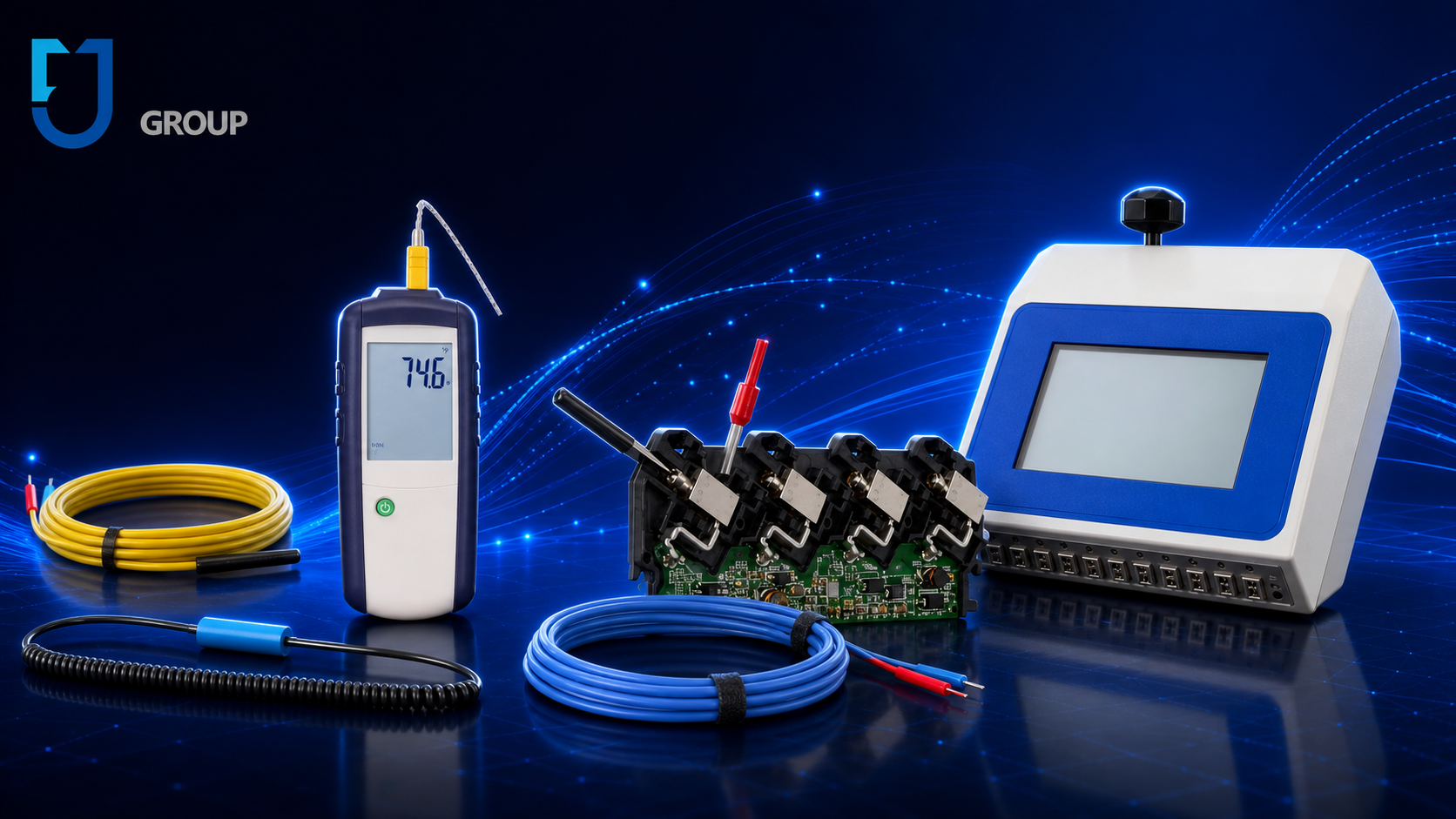
John Morris Group supplies Type J, K and T thermocouple probes alongside the readouts, transmitters and signal conditioners needed to put them to work.
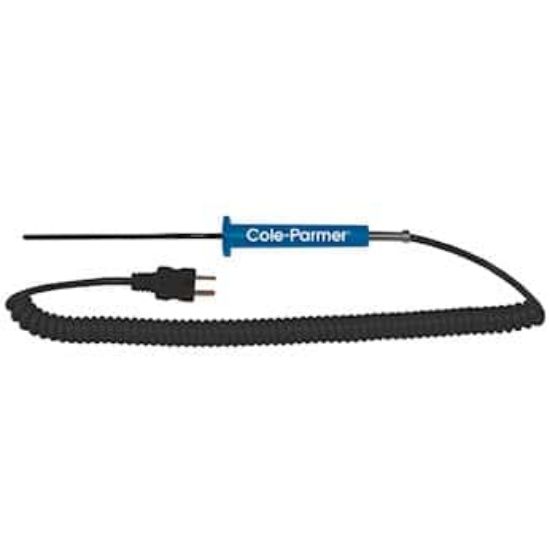
Digi-Sense PFA-Coated Thermocouple Probe, Type J
Compact 4.5-inch grounded Type J probe with a chemical-resistant PFA coating and PVC handle, suited to general-purpose monitoring in corrosive environments.
Browse This Thermocouple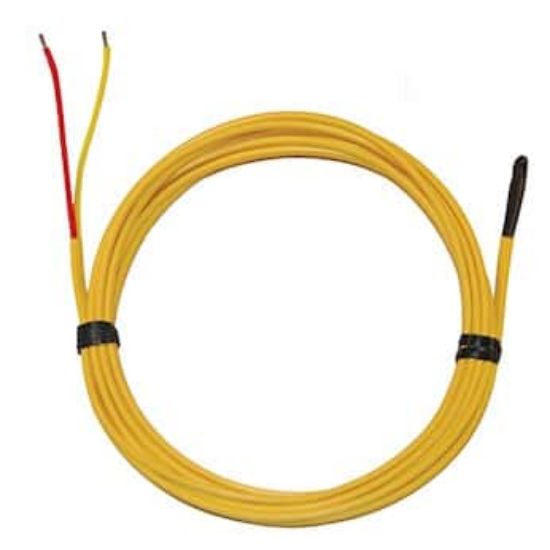
Digi-Sense Flexible Thermocouple Probe, Type K
Ungrounded, PVC-insulated Type K wire probe with a 10 ft bare wire lead, giving flexible routing for general-purpose temperature monitoring.
Browse This Thermocouple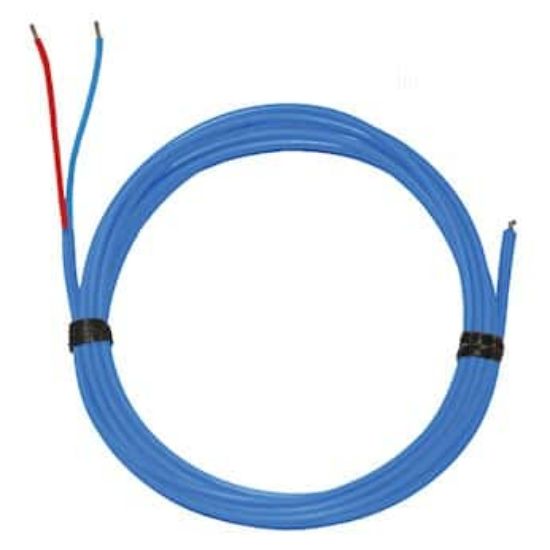
Digi-Sense Flexible Thermocouple Probe, Type T
Exposed-tip Type T probe with a 10 ft flexible lead for fast response, suited to cold storage and low-temperature monitoring rather than moist or aqueous environments.
Browse This Thermocouple
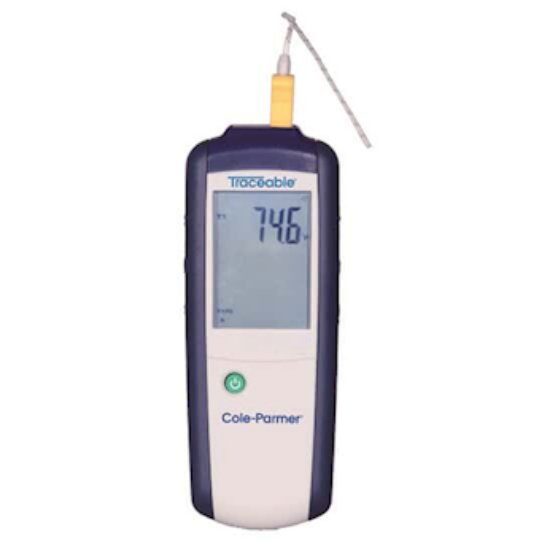
Traceable Thermocouple Thermometer, Type K/J
Handheld readout accepting Type K or J probes, precalibrated to NIST-traceable standards with min/max/avg, hold and selectable °F/°C/Kelvin display.
Browse This Thermocouple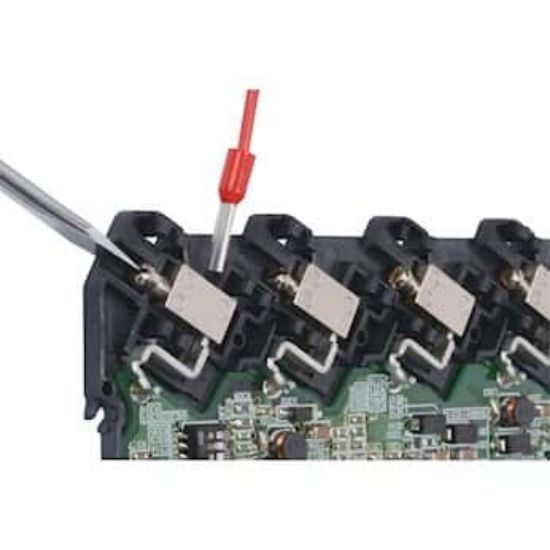
M-System M6 Signal Conditioner / Transmitter
DIN-rail mounted thermocouple transmitter with 2000 VAC isolation, converting a thermocouple input to a 4-20 mA signal for integration into a control system.
Browse This Thermocouple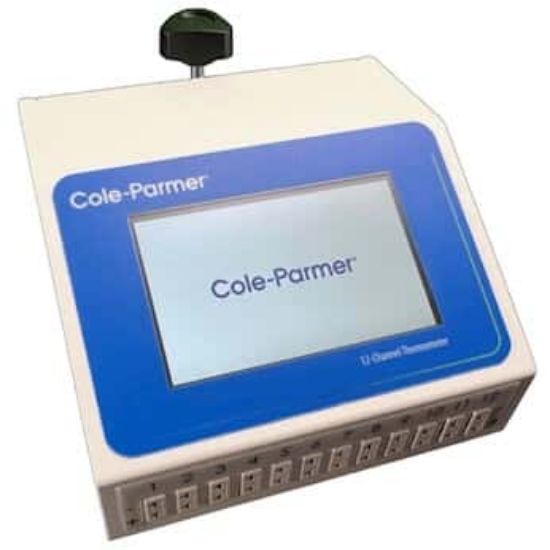
Digi-Sense 12-Channel Benchtop Thermometer
Touchscreen benchtop thermometer scanning up to 12 channels simultaneously, with internal data logging, CSV export and high/low alarm alerts (probes sold separately).
Browse This ThermocoupleExplore More Industrial Instrumentation Resources
Thermocouples are one part of a wider process instrumentation and calibration toolkit. See how they connect to flow control, fluid handling and calibrated measurement more broadly.
What Is A Flow Meter?
See how flow measurement pairs with temperature monitoring in a complete industrial process control setup.
Read The Flow Meter GuideWhat Is A Ball Valve?
Learn how ball valves control flow alongside temperature and process instrumentation in industrial systems.
Read The Ball Valve GuidePipette Calibration In Australia
See how NATA-accredited calibration keeps measurement instruments, including temperature readouts, audit-ready.
Read The Calibration GuideThermocouple FAQs
What Is A Thermocouple?
A thermocouple is a temperature sensor made from two dissimilar metal wires joined at a measuring junction. The junction produces a small voltage that changes with temperature, which a meter, transmitter or data logger converts into a reading.
How Does A Thermocouple Work?
It relies on the Seebeck effect: when two different metals are joined and the junction's temperature changes, a small, predictable voltage is generated across the wires. Because the relationship between voltage and temperature is characterised for each metal pairing, that voltage can be converted into an accurate temperature reading.
What Is The Difference Between Type J, K And T Thermocouples?
Type K (chromel/alumel) covers the widest range, roughly -200°C to +1260°C, and is the most common general-purpose choice. Type J (iron/constantan) covers roughly -40°C to +750°C but should not be used at the top of that range in oxidising atmospheres. Type T (copper/constantan) covers roughly -250°C to +350°C and offers the best accuracy at low and sub-zero temperatures.
What Is The Most Commonly Used Thermocouple Type?
Type K, sometimes written as a K type thermocouple, is the most widely used thermocouple overall, thanks to its broad temperature range, good general atmosphere tolerance, wide availability and comparatively low cost.
What Do Thermocouple Wire Colours Mean?
Wire colour identifies the thermocouple type and standard. Under the ANSI (US) code, Type K wire has a yellow overall jacket, Type J is black and Type T is blue. The IEC (European) code uses different colours for the same types, so always confirm the type from documentation rather than assuming from colour alone.
How Accurate Are Thermocouples?
Standard-grade thermocouples are typically accurate to within about ±1.5°C to ±2.2°C depending on type and temperature, while special-limits-of-error grades roughly halve that tolerance. Accuracy also depends on the meter or transmitter's own specification, not the probe alone.
How Do You Calibrate A Thermocouple?
Calibration compares the thermocouple and its readout against a known, traceable reference temperature, typically at multiple points across the working range, and records any offset. Handheld and benchtop readouts precalibrated to NIST-traceable standards, or verified through a NATA-accredited calibration service, give a documented, audit-ready basis for this comparison.
Can You Extend Thermocouple Wire With Regular Copper Wire?
No. Extending a thermocouple circuit requires matching thermocouple extension wire of the same type, not ordinary copper wire. Substituting copper introduces additional, uncontrolled junctions between dissimilar metals, which adds error to the reading.
Need Help Choosing The Right Thermocouple?
Talk to John Morris Group about Type J, K and T thermocouple probes, readouts and signal conditioners for your industrial or laboratory application.
Contact UsCall 1300 501 555 or contact John Morris Group for quotation and technical support.