Which Lab Balance Does Your Work Actually Need?
An analytical balance reads to 0.1 mg (four decimal places of a gram) inside a draught shield. A precision balance reads to 1 mg or coarser but carries far more weight.
The right choice comes down to the smallest sample you need to weigh accurately, not the biggest. This guide walks through the difference, how to work out what readability you need, how to set a balance up properly and how to keep it calibrated.
What Is The Difference Between An Analytical And A Precision Balance?
The difference is readability, the smallest change in mass the display can show. An analytical balance typically reads to 0.0001 g (0.1 mg), has a capacity of around 100 to 320 g, and needs a glass draught shield because air movement alone would disturb a reading that fine. A precision balance (also called a top-loading balance) typically reads from 0.001 g down to 0.1 g or 1 g, handles anything from a few hundred grams to tens of kilograms, and usually weighs on an open pan.
Use an analytical balance for standards, reagents, small samples and gravimetric methods. Use a precision balance for larger samples, media and buffer preparation, formulation and general lab weighing where a milligram is close enough.
What Is An Analytical Balance?
An analytical balance is a laboratory balance built to measure mass to 0.1 mg or better. Most use electromagnetic force restoration: instead of measuring how far a spring or load cell bends, the balance generates a magnetic force that pushes the pan back to its original position, and the current needed to do that is proportional to the mass on the pan. That is what makes four and five decimal places possible.
At that resolution, things you would never notice on a kitchen scale start to matter. A draught from an air conditioning vent, a warm sample creating convection currents, static on a plastic weigh boat or a fingerprint on a vial can all move the last digit. That is why analytical balances come with a draught shield, a levelling bubble and usually some form of built-in calibration.
Analytical balances are also the reference instrument for checking other volumetric equipment. Gravimetric pipette calibration, for example, works by weighing dispensed water on an analytical or semi-micro balance. See our pipette calibration guide for how that works in practice.

Common Analytical Balance Applications
- •Preparing analytical standards and reference solutions
- •Weighing active ingredients and reagents in pharma and QA
- •Gravimetric analysis, ash and residue determination
- •Gravimetric pipette calibration
- •Density determination with a density kit
Analytical Or Precision Balance: Which Do You Need?
Start with your smallest routine sample and the tolerance your method allows. Capacity is the second question, not the first. Plenty of labs end up with one of each: an analytical balance for the critical weighings and a precision balance for everything else.
Choose A Precision Balance If
- •Your samples are mostly above a few grams
- •1 mg, 10 mg or 0.1 g resolution is enough for the method
- •You weigh beakers, bottles or containers of several hundred grams or more
- •Speed matters more than the last decimal place, or you need it portable
Choose An Analytical Balance If
- •You routinely weigh samples under a gram
- •Your method or SOP specifies four decimal places
- •You prepare standards, weigh actives or run gravimetric tests
- •You need GLP records and traceable calibration for audits
Ask Before Buying
- •What is the smallest net sample, and what tolerance does the method allow on it?
- •How heavy is your heaviest container plus sample (tare counts against capacity)?
- •Internal or external calibration, and who will do the routine checks?
- •Does the result need to go straight to a PC, LIMS or printer?
Readability Is Not Accuracy: Check The Minimum Weight
A balance that displays 0.0001 g cannot weigh 0.0005 g with any confidence. What limits small weighings is repeatability: how much the reading scatters when you weigh the same object again and again. Pharmaceutical labs working to USP General Chapter <41> use this to set a minimum weight: the balance passes when twice the repeatability standard deviation, divided by the sample mass, is no more than 0.10%. In plain terms, the smallest sample you can weigh is roughly 2,000 times the balance's standard deviation.
Worked example: a balance with a repeatability of 0.1 mg gives a minimum weight of about 0.2 g (2,000 x 0.1 mg). If your method calls for 50 mg samples at that tolerance, you need a semi-micro balance, not a standard analytical one. Repeatability depends on your room and bench as much as the instrument, so the real minimum weight should be determined where the balance is installed.
Analytical Vs Precision Balance At A Glance
Typical figures for laboratory models. Individual balances vary, so always check the datasheet for the model you are considering.
| Criteria | Precision Balance | Analytical Balance | Better Choice |
|---|---|---|---|
| Readability | 0.001 g to 1 g | ✓ 0.0001 g (0.1 mg) | Analytical |
| Typical Capacity | ✓ Around 100 g up to tens of kilograms | Around 100 g to 320 g | Precision |
| Draught Shield | Open pan, or a draught ring on milligram models | Full glass shield with sliding doors, always needed | Depends On Sample |
| Weighing Speed | ✓ Fast, often around 1 to 2 seconds | Slower, several seconds to settle | Precision |
| Sensitivity To The Room | ✓ Tolerant of normal bench conditions | Needs a stable bench, no draughts, steady temperature | Precision |
| Small Samples (Under 1 g) | Large relative error | ✓ Designed for this | Analytical |
| Typical Cost | ✓ Lower | Higher, plus weights and calibration | Precision |
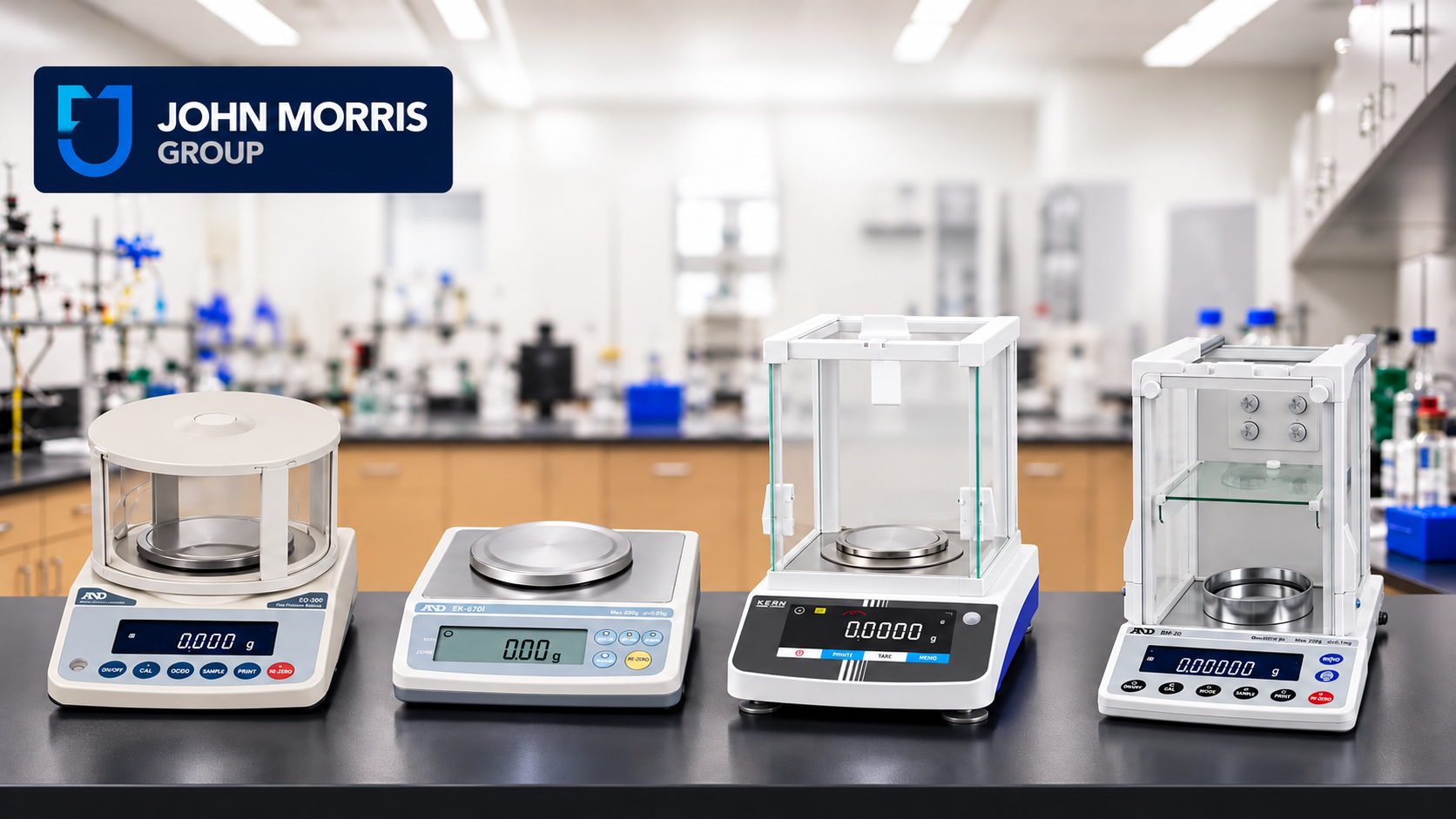
From Top-Loader To Microbalance: The Readability Ladder
"Electronic balance" covers all of these. What separates them is how many decimal places they resolve, and every step down the ladder trades capacity and speed for resolution.
Precision (top-loading) balances, 0.1 g to 1 mg: the everyday workhorse. Coarser models (0.1 g, 0.01 g) suit media prep, formulation and weighing bulk chemicals. Milligram models such as the A&D FX-120i (122 g x 0.001 g) sit at the top of the range and usually add a small draught ring. Browse the full precision balance range for capacities up to 16 kg and beyond.
Analytical balances, 0.1 mg: four decimal places, a full glass draught shield and typical capacities of 100 g to 320 g. The standard choice for chemistry, pharma and QA labs.
Semi-micro balances, 0.01 mg: five decimal places. Used when samples are small or tolerances are tight, for example weighing reference standards or calibrating low-volume pipettes. They take longer to settle (around 10 seconds on the Kern models below) and are more sensitive to static and draughts.
Micro and ultra-micro balances, 0.001 mg and finer: six or seven decimal places with capacities of only tens of grams. Used for filter weighing, particulate and residue analysis, and very small active ingredient doses. Models like the A&D BM-20 build in an ionizer and environmental sensors because at a microgram, static and room conditions dominate the result.
Six Things That Matter More Than The Spec Sheet
Most "my balance won't settle" calls come down to where and how the balance is used, not the balance itself. Get these right before you blame the instrument.
1. A Solid, Quiet Bench
Put analytical balances on a heavy, rigid bench or a dedicated weighing table, away from centrifuges, fume hood fans, doors and foot traffic.
2. No Draughts
Keep clear of air conditioning outlets and windows, and close the draught shield doors before reading. Open only the door you need.
3. Level It Every Time It Moves
Centre the levelling bubble with the feet after any move, then run a calibration. An off-level balance reads differently from the one that was calibrated.
4. Warm It Up
Electronic balances need time powered on to reach thermal equilibrium, often several hours for analytical models. Many labs simply leave them on standby.
5. Samples At Room Temperature
A warm crucible creates convection currents that make it read light. Let samples cool, ideally in a desiccator, before weighing.
6. Watch For Static
Plastic weigh boats, powders and dry air build up charge that makes readings drift. Use metal or glass vessels, or a balance with a built-in ionizer.
How To Calibrate An Analytical Balance
Three things often get called "calibration", and it helps to keep them apart:
Adjustment is what happens when you press CAL. The balance weighs a known mass and corrects itself so it reads that value. Balances with internal calibration do this with a built-in motorised weight, and many trigger it automatically when the temperature changes. Balances with external calibration, such as the A&D FX-120i, need you to place a certified weight on the pan.
Routine checks confirm the balance is still reading correctly between services. A typical routine looks like this:
- •Before use (daily): check the level bubble, zero the balance and weigh one test weight near the amount you usually weigh. Record the result.
- •Periodically (weekly or monthly, based on risk): a repeatability check (the same weight ten times), a corner-load check (the weight placed off-centre) and a check near full capacity.
- •If a check fails: run an adjustment, re-check, and take the balance out of service if it still fails.
Certified calibration is a documented service: a technician tests the balance across its range with traceable reference weights and issues a certificate showing the errors and measurement uncertainty. Most labs schedule it at least annually, and regulated or accredited labs set the interval in their quality system. John Morris Group's service team calibrates and services laboratory balances, so talk to us about balance calibration when you set up your schedule.
Which test weights? Weights are graded into accuracy classes: OIML R111 (E1, E2, F1, F2, M1 and so on) or ASTM E617 (Class 0 to 7). Analytical and semi-micro balances are typically checked with the tighter classes, such as OIML E2 or F1, or ASTM Class 1 or 2. Precision balances usually only need F1, F2 or the ASTM equivalents. Buy weights with a traceable certificate, such as this Troemner ASTM Class 1 analytical weight. Handle them only with tweezers or gloves, because skin oil adds mass.
Kern And A&D Balances At John Morris Group
One step at each rung of the readability ladder, from a portable two-decimal balance to a microbalance. We put the A&D FX-120i first because it is the quickest route to milligram readings: three decimal places with a 1-second stabilisation time.
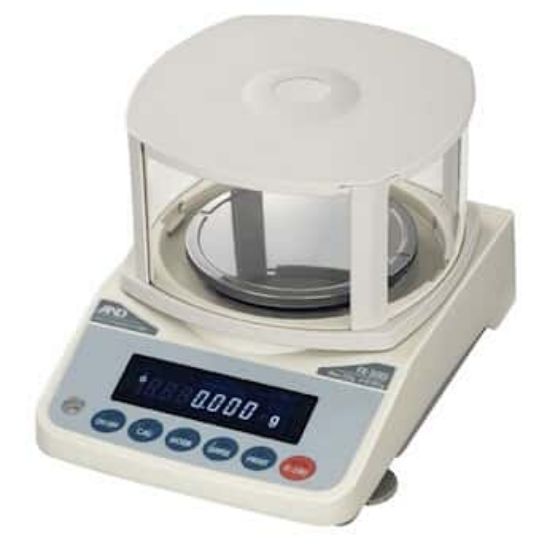
A&D FX-120i Precision Balance, 122 g x 0.001 g
A milligram top-loader with a 1-second stabilisation time, glass draught ring, external calibration, and RS-232 and USB output. A strong pick when three decimal places are enough and you want speed.
View This Balance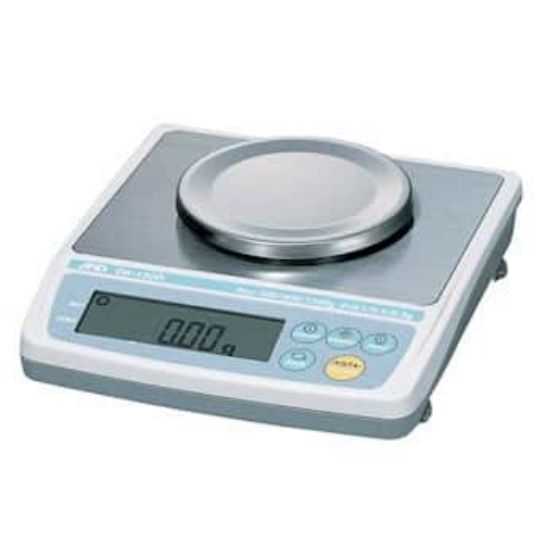
A&D EK-610i Portable Balance, 600 g x 0.01 g
Compact and lightweight with a rechargeable battery and backlit display, plus counting, percent weighing and a HI/OK/LO comparator. Suits teaching labs, field work and general bench weighing.
View This Balance
Kern Analytical Balance, 220 g x 0.0001 g, Touch Display
Four decimal places with internal automatic calibration, a 3-second stabilisation time, GLP/ISO records and data integrity support for FDA 21 CFR Part 11. Results go straight into Windows applications over USB.
View This Balance
Kern Premium Semi-Micro Balance, 101 g x 0.01 mg
Five decimal places from a single-piece weighing cell, with automatic internal adjustment, shockproof construction and stable results in around 10 seconds. For reference standards and tight-tolerance work.
View This Balance
Kern Semi-Micro Balance For Pipette Calibration, 210 g
Built for gravimetric pipette checks: a built-in ionizer to neutralise static, a large three-door glass draught shield, a dosing aid and stable results in around 10 seconds.
View This Balance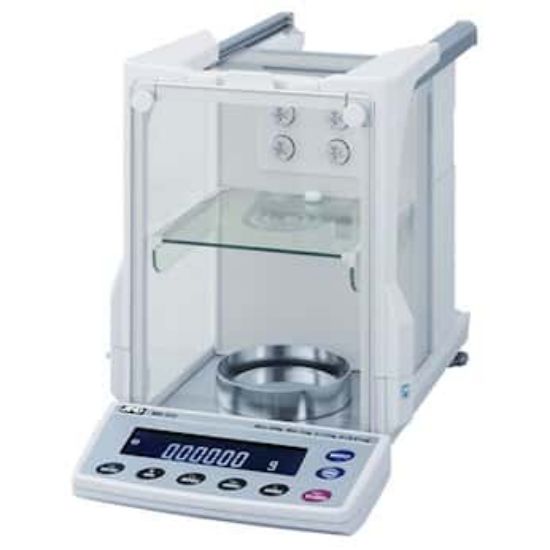
A&D BM-20 Micro Balance, 22 g x 0.001 mg
Six decimal places with a built-in ionizer and environmental sensors that log the room conditions behind every result. For filter weighing, residues and microgram samples.
View This BalanceMore On Lab Measurement And Calibration
A balance is usually the reference point for the rest of the lab's measurement equipment. These guides cover the instruments it most often checks or works alongside.
Pipette Calibration In Australia
How gravimetric pipette calibration works, how often to do it and what a NATA-accredited service involves.
Read The Pipette GuidepH Meter Buying Guide
Choosing a pH meter and keeping it calibrated: the same check-adjust-record routine applies.
Read The pH Meter GuideGraduated Cylinder Accuracy
When a measuring cylinder is accurate enough, and when you should weigh instead of measuring by volume.
Read The Cylinder GuideAnalytical And Precision Balance FAQs
What Is An Analytical Balance Used For?
An analytical balance is used wherever mass needs to be known to 0.1 mg: preparing standards and reference solutions, weighing reagents and active ingredients, gravimetric analysis, density determination and gravimetric pipette calibration.
Is A Precision Balance Less Accurate Than An Analytical Balance?
It has coarser readability, but that does not make it inaccurate. A precision balance is the more accurate choice for a 2 kg sample, which an analytical balance cannot weigh at all. Pick the balance whose readability and capacity match your samples.
How Does An Analytical Balance Work?
Most analytical balances use electromagnetic force restoration. When a sample is placed on the pan, a coil and magnet generate a force that holds the pan in its original position. The current needed is proportional to the mass, and the balance converts it into a reading.
How Do You Calibrate An Analytical Balance?
Level the balance, let it warm up, then run its calibration (adjustment) routine, either internally at the press of a button or by placing a certified external weight when prompted. Confirm the result by weighing a separate test weight and recording it. Certified calibration across the full range should be done by a qualified service provider.
How Often Should A Laboratory Balance Be Calibrated?
Do a quick check with a test weight before use, run fuller repeatability and corner-load checks on a set schedule, and have the balance professionally calibrated at least annually. Adjust it whenever it has been moved, re-levelled or exposed to a large temperature change.
What Is The Difference Between Readability And Repeatability?
Readability is the smallest increment the display shows. Repeatability is how closely repeated weighings of the same object agree. Repeatability decides the smallest sample you can weigh reliably, which is why two balances with the same readability can perform very differently.
Internal Or External Calibration: Which Is Better?
Internal calibration is more convenient and can adjust automatically when the temperature changes, which suits analytical and semi-micro balances in busy or regulated labs. External calibration costs less up front but needs a certified weight and someone to use it. Either way, you still need independent test weights to verify the result.
Do I Need A Trade-Approved Balance In Australia?
Only if the balance is used for trade, such as selling goods by weight. Trade-use instruments must be of an approved pattern under Australian trade measurement law. Balances used purely for laboratory testing, research or QA do not need trade approval, but they should still be calibrated for the quality of your results.
Need Help Choosing Or Calibrating A Balance?
Tell us your smallest sample, your heaviest container and your compliance requirements, and our team will recommend the right Kern or A&D balance and set up a calibration plan to match.
Contact UsCall 1300 501 555 or contact John Morris Group for quotation, calibration and technical support.