How To Choose (And Actually Calibrate) A pH Meter
The right pH meter depends less on the number on the display and more on where and how often you're taking a reading.
A benchtop unit built for a fixed lab bench and a rugged handheld built for a wastewater outfall are solving different problems, even though both end up showing a number between 0 and 14. This guide compares both, walks through a real calibration procedure step by step, and points to the meters, controllers and electrodes John Morris Group has in stock today.
How Do You Choose The Right pH Meter?
Start with where the measurement actually happens. A fixed bench in a lab or process area calls for a benchtop meter or an inline controller with a permanent electrode. A sample point that moves, that's outdoors, or that needs a reading somewhere without a power outlet calls for a portable, waterproof handheld instead.
Once the form factor is settled, the next decision is the electrode: general-purpose glass combination electrodes cover most aqueous samples, while soil, food and process-line samples usually need a purpose-built probe. Every meter on this page, regardless of price, only ever measures as accurately as its last calibration, which is why the calibration walkthrough further down matters just as much as the spec sheet.
What Is pH, Briefly
pH is a measure of hydrogen ion activity in a solution, expressed on a logarithmic scale from 0 (strongly acidic) to 14 (strongly alkaline), with 7 as neutral. Because the scale is logarithmic, a solution at pH 4 is ten times more acidic than one at pH 5, not just one unit different, which is why small drifts in a reading can matter more than they look.
A pH meter measures this electrically. A glass electrode develops a small voltage that changes with the hydrogen ion concentration of whatever it's immersed in, a reference electrode provides a stable baseline to compare against, and the meter converts that voltage difference into the pH value on the display. Temperature changes the electrode's own response to pH, not just the sample, which is why every meter in this guide includes some form of automatic temperature compensation (ATC) to correct for that electrode behaviour.
Because water quality, purity and dissolved content all interact with pH readings, it's worth understanding what's actually in the water you're testing with or against. See our guide to distilled, demineralised and deionised water for how those grades differ, including why one of them is specifically the wrong choice for storing a pH electrode (more on that in the calibration walkthrough below).
Common pH Measurement Applications
- •Routine QC and titration end-point checks in the lab
- •Wastewater, surface water and field environmental monitoring
- •Soil testing for agriculture and environmental assessment
- •Continuous process monitoring on a fixed line or tank
- •Food, beverage and dairy production QC
Benchtop Or Portable, Which Do You Need?
This is the decision that matters most, and it comes down to where the sample is, not what budget you have. Once you've settled on a form factor, the section below covers the criteria worth checking within either category.
Choose Benchtop Or A Controller If
- •Samples come to a fixed lab bench or process point
- •You need continuous, unattended monitoring with a relay or 4-20mA output
- •Mains power is always available
- •You want a larger display and a stand-mounted electrode setup
Choose Portable Or Handheld If
- •Sampling happens in the field, outdoors, or across multiple sites
- •You need a waterproof, drop-tested build
- •Battery operation is a requirement, not a backup
- •Different probes need to swap onto the same handheld unit
Ask Before Buying
- •What pH range and accuracy does your application actually require?
- •Does the electrode connector suit both this meter and any spares you already own?
- •How many calibration points does your quality process require?
- •Is the sample aqueous, semi-solid (soil, food) or a harsh process chemical?
What Should You Look For In A pH Meter?
pH range and accuracy. Most general lab and field work sits comfortably within 0-14 pH at ±0.01 to ±0.02 pH accuracy. Tighter accuracy mainly matters for regulated processes or research work, not routine QC.
Resolution and display. A 0.01 pH resolution display is standard, and some benchtop units show 0.001 pH for research-grade work, though the electrode's own accuracy is usually the limiting factor, not the display.
Number of calibration points. A single-point calibration is the bare minimum. Most routine work uses two or three points bracketing the expected sample range (see the calibration walkthrough further down), and some benchtop meters offer up to five points for wider-range work.
Electrode type and connector. A general-purpose glass combination electrode covers most aqueous samples, while soil, food and process-line samples usually need a purpose-built probe. Confirm the connector type (commonly BNC, though not the only standard used) matches both the meter and any spare electrodes you already own.
Automatic temperature compensation. An electrode's response to pH shifts with temperature, so ATC corrects for that shift rather than the sample's own chemistry, keeping a reading accurate without a manual temperature correction. It's standard on virtually every modern meter, portable or benchtop.
Field readiness, if relevant. For anything used outside a fixed bench, check the IP rating (IP67 is a common waterproof benchmark), battery life, and whether the housing is rated for drops, not just splashes.
Benchtop Vs Portable pH Meters At A Glance
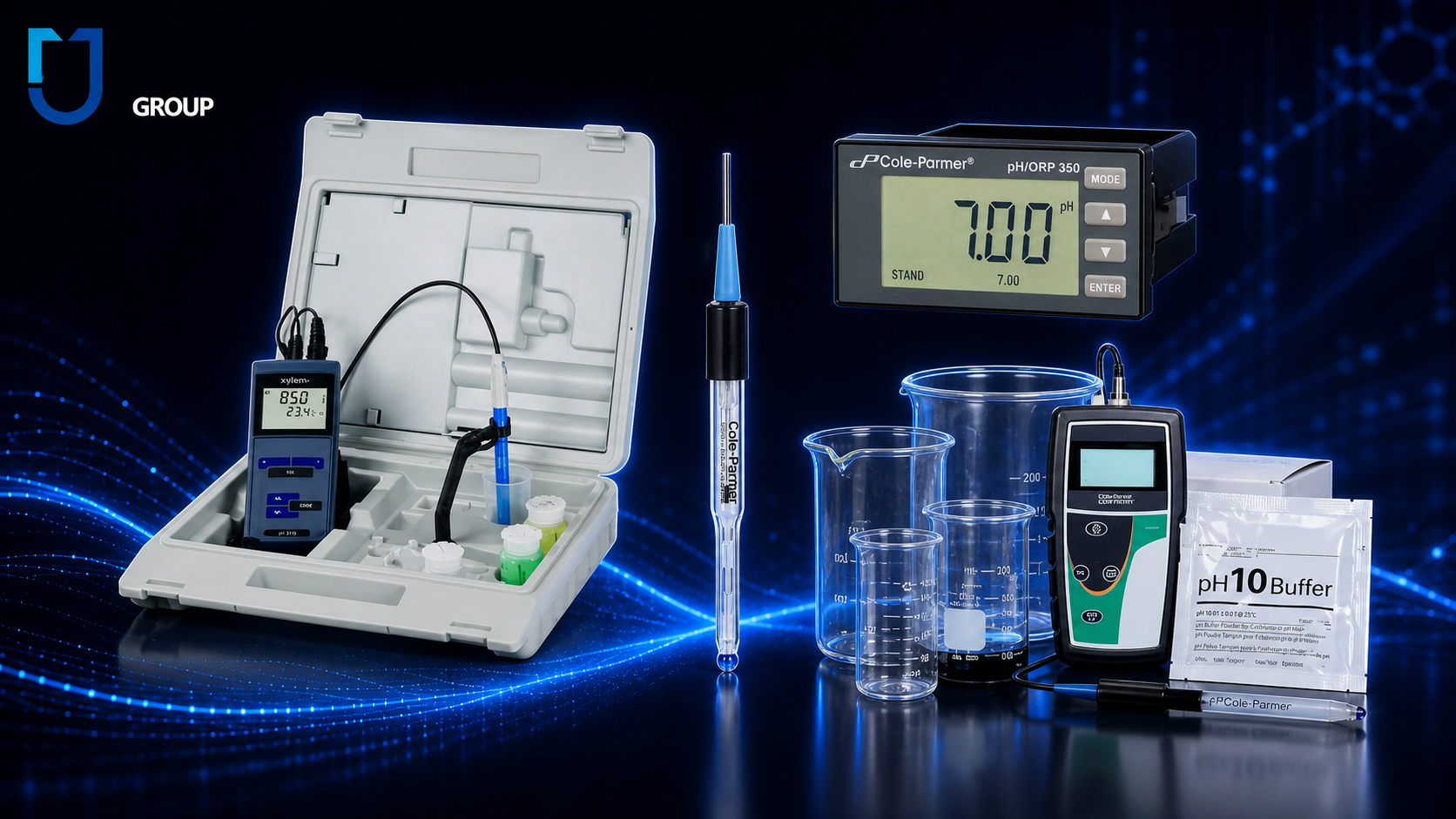
Based on two real, currently stocked units, illustrative of each category rather than a full spec-for-spec match: the Cole-Parmer 350 1/8-DIN controller (benchtop/process) and the Xylem Analytics pH 3110-Set 2 (portable, IP67).
| Criteria | Benchtop / Controller | Portable / Handheld | Better Choice |
|---|---|---|---|
| Waterproofing | Not required, fixed installation | ✓ IP67 rated (Xylem pH 3110) | Portable |
| Continuous Process Output | ✓ Isolated 4-20mA plus two relays | – Not designed for continuous logging | Benchtop |
| Calibration Method | ✓ Automatic buffer recognition, US and NIST sets | Manual multi-point calibration (see walkthrough below) | Benchtop |
| Published pH Accuracy | Not stated as a standalone spec on this controller's data sheet | ✓ ±0.01 pH (±0.005 from 15-35°C) | Portable |
| Power Source | 100-240 VAC mains only | ✓ Battery, field-ready | Portable |
| Typical Application | Fixed lab bench, process line, tank monitoring | Field water quality, soil, spot-checks | Depends On Application |
What A Benchtop pH/Conductivity Meter Actually Gives You
John Morris Group's own product review of a Cole-Parmer compact benchtop pH and conductivity meter is a useful walkthrough of what separates a genuinely well-specified benchtop unit from a basic one, so here's what it actually shows, step by step.
1. Footprint first. The reviewed unit is roughly 40% smaller than its previous-generation equivalent, which matters more than it sounds, since bench space is consistently at a premium in working laboratories. It still measures pH, conductivity, total dissolved solids and temperature from the one unit.
2. The display and controls. An oversized dual display shows the measured parameter and temperature at once and stays readable from across the room. The keypad is splash resistant, a genuinely practical detail given how often buffer solution ends up on the bench rather than in the beaker. A quick-reference card for calibration and settings sits printed directly under the meter.
3. Connections that don't lock you in. Around the back sit an AC power input, an 8-pin DIN connector for conductivity/TDS/temperature probes, and a BNC connector for the pH or ORP electrode. BNC is one of the most widely used connector types for pH and ORP electrodes, which means the meter isn't tied to one electrode brand for most general-purpose work, whether the application needs a fast-responding ISE electrode for trace buffers or a rugged epoxy-bodied electrode to survive a busy classroom or field crew. Some manufacturers do use other connector standards, so it's still worth confirming compatibility before buying a replacement electrode separately.
Worth knowing: the conductivity probe's built-in temperature sensor can also serve as the temperature compensation source for the pH electrode, so a single probe effectively does double duty on units built this way.
4. Calibration flexibility. The meter offers standard 3-point pH calibration, a 5-point option, and a quick single-point mode, chosen based on the expected sample range. The rule that applies regardless of model: bracket your calibration buffers either side of the pH you actually expect to measure, rather than always defaulting to the same two or three buffer points out of habit.
A simple mode button toggles between measurement types, a dedicated calibration button moves in and out of calibration mode, and setup mode requires holding the mode button for five seconds, a deliberate design choice so settings can't be changed by an accidental button press mid-measurement.
Why Getting pH Measurement Right Matters
1. A Logarithmic Scale Punishes Small Errors
Each whole pH unit represents a tenfold change in hydrogen ion concentration, so a small calibration drift can misrepresent a sample far more than the same-sized error would on a linear scale.
2. Compliance And QC Records
Environmental discharge limits, food safety standards and pharmaceutical QC all specify pH tolerances, and a documented calibration is usually what makes a reading defensible.
3. Process Outcomes Depend On It
Reaction rates, precipitation, biological activity and preservation all shift with pH, so an inaccurate reading can affect the outcome of the process being monitored, not just the paperwork.
4. Electrode Condition Changes Fast
Glass electrodes age, and their response can shift meaningfully between calibrations, which is why regular recalibration matters more than the price paid for the meter itself.
5. Temperature Is Not Optional
pH readings are temperature dependent, which is why automatic temperature compensation is standard on virtually every modern pH meter, including every meter in this guide, rather than an accessory feature.
6. The Wrong Form Factor Costs Time
A benchtop meter dragged into the field, or a handheld pressed into full-time process duty, both work, but neither works well, which is the real cost of skipping the selection step above.
What To Expect From A Rugged Handheld Meter
Xylem's own official video for their Pro10 handheld describes exactly the design brief a field pH meter needs to meet, and it's worth quoting directly: a handheld instrument for pH or ORP plus temperature, with user-replaceable sensors and cables and a convenient calibration routine. Mil-spec connectors, an IP67 waterproof rating and a rubber over-moulded case are built to survive a 1-metre drop test, because a meter that only works on a clean bench is the wrong tool for a stream, an outfall or a tank farm.
John Morris Group's own currently stocked equivalent, the Xylem Analytics pH 3110-Set 2, carries the same IP67 rating and ships as a complete transport-case kit with the SenTix 41 electrode. Its stated accuracy of ±0.01 pH (tightening to ±0.005 from 15-35°C) sits well inside benchtop territory despite the field-ready housing, which is the real argument for a modern portable meter over an older assumption that "portable" means "less accurate."
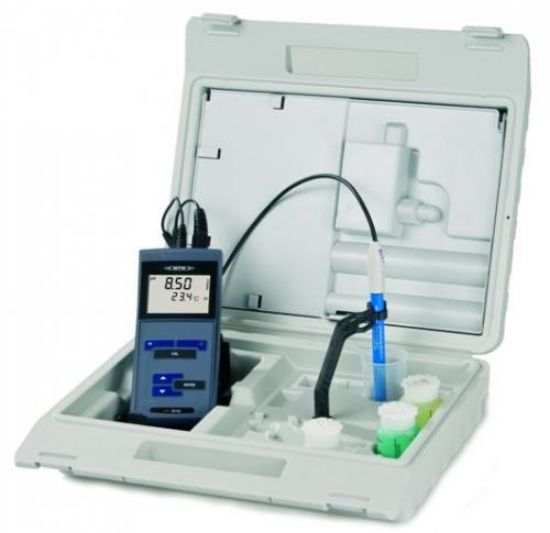
Xylem pH 3110-Set 2
IP67, ±0.01 pH accuracy, complete transport-case kit with SenTix 41 electrode.
View This MeterWatch The Official YSI Pro10 Overview On YouTube →
How To Calibrate A pH Meter
This walkthrough follows John Morris Group's own calibration demonstration for a compact Cole-Parmer pH tester, step by step. The exact button names vary between models, but the sequence and the underlying logic apply across almost every electrode-based pH meter.
Before you start: for this meter, the manufacturer's own instructions are to condition the electrode by immersing it in electrode storage solution, pH 4 buffer, or tap water for at least 30 minutes before use. Do not use deionised water for this, since it can leach ions out of the electrode's reference junction rather than conditioning it. For longer-term storage between uses, a manufacturer-specified storage solution is generally the safer default; check your own electrode's documentation if you're unsure.
- Rinse the electrode, then switch the unit on.
- Place the electrode in pH 7 buffer solution and press the calibration key to enter calibration mode. The upper display shows the reading based on the last calibration, while the lower display indicates the buffer solution being used.
- Wait for the reading to stabilise, then press the hold/enter key to confirm the first calibration point.
- For a single-point calibration, press the calibration key again to exit. For a multi-point calibration, the display will switch to the next buffer value; rinse the electrode and place it in pH 4 buffer solution.
- Wait for the reading to stabilise again, then press hold/enter to confirm the second point. Rinse the electrode once more and place it in pH 10 buffer solution for the final point, waiting for stabilisation before confirming.
- The meter returns to measurement mode automatically. Rinse the electrode, then confirm the calibration by placing it in any of the pH buffers, or go straight into taking a sample reading.
Bracket your range: the 3-point sequence above (pH 4, 7, 10) covers most general lab work, but if your samples consistently sit outside that range, calibrate with buffers that bracket your expected reading instead of defaulting to the standard three every time.
pH Meters, Controllers And Electrodes At John Morris Group
John Morris Group supplies benchtop meters, process controllers, portable field meters and replacement electrodes for laboratory, environmental and soil testing applications.
Xylem Analytics Portable pH Meter pH 3110-Set 2
IP67 waterproof handheld with SenTix 41 electrode and transport case, ±0.01 pH accuracy and automatic temperature compensation. The proven field-ready choice on this page.
Browse This Meter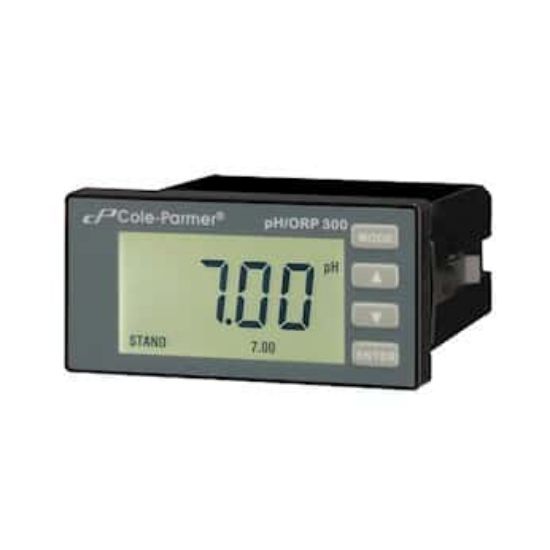
Cole-Parmer 350 pH/ORP/Temperature Controller
1/8-DIN process controller with isolated 4-20mA output and two programmable relays, built for continuous monitoring rather than spot checks.
Browse This Controller
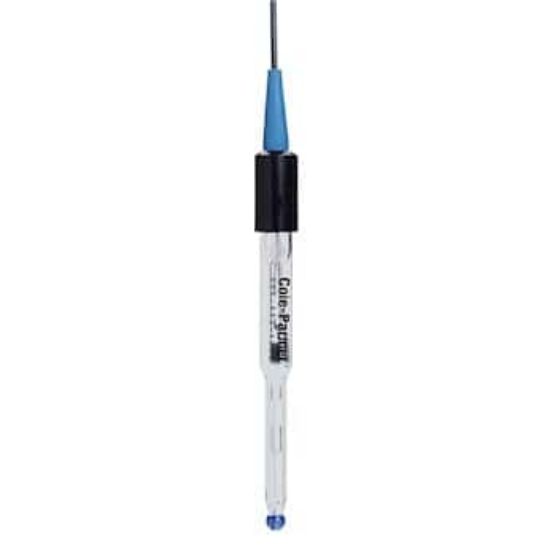
Cole-Parmer General Purpose pH Electrode, BNC
Glass-body combination electrode with a Delrin shield and dome bulb for better breakage protection, suited to most routine aqueous samples.
Browse This Electrode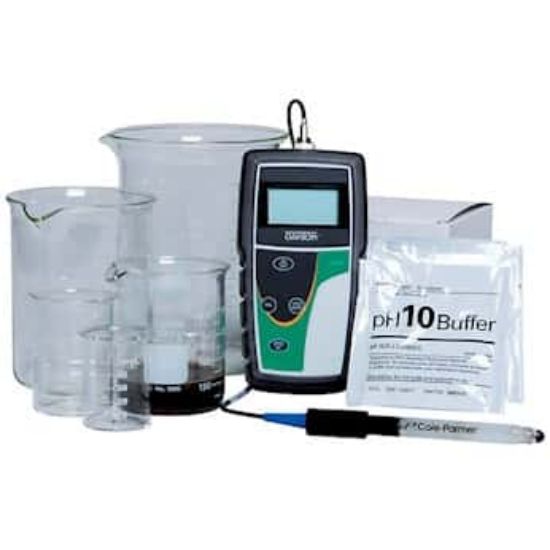
Cole-Parmer Soil pH Testing Kit
Complete kit with meter, soil electrode, five glassware beakers and calibration buffer/rinse pouches. A genuine turnkey option for soil and environmental testing.
Browse This KitExplore More Water Quality And Instrumentation Guides
pH measurement sits alongside other water quality and solution-property instrumentation. See how these related topics connect.
Distilled Vs Demineralised Vs Deionised Water
Understand the water grades used for buffer preparation, rinsing and dilution, and why deionised water is the wrong choice for pH electrode storage.
Read The Water GuideWhat Is An Osmometer?
Another electrode-based solution-property measurement, compare how osmometers and pH meters approach a similar measurement problem differently.
Read The Osmometer GuideWhat Is A Flow Meter?
pH monitoring is often paired with flow measurement in environmental and process systems. See how flow meters fit alongside pH instrumentation.
Read The Flow Meter GuidepH Meter FAQs
What Is A Good pH Meter Accuracy For General Lab Use?
±0.01 pH is a common benchmark for both benchtop and modern portable meters, tightening further in a controlled temperature range. For most routine QC and teaching applications, ±0.02 pH is perfectly workable.
How Often Should A pH Meter Be Calibrated?
Daily before use is standard for lab and QC environments, with a fresh calibration also recommended after storage, after an electrode change, or if a reading looks unexpectedly out of range.
Why Shouldn't A pH Electrode Be Stored In Deionised Water?
Deionised water has no ionic strength of its own, which can pull ions out of the electrode's reference junction over time rather than conditioning it. A manufacturer-specified electrode storage solution is generally the best default for storage between uses; pH 4 buffer or brief tap water conditioning are acceptable short-term alternatives per some manufacturers' own instructions, but check your specific electrode's documentation if you're unsure.
What Buffers Are Used For pH Calibration?
pH 4.01, 7.00 and 10.01 are the standard three-point set for most general applications. Choose buffers that bracket the pH range you actually expect to measure rather than defaulting to the same three every time.
Can I Use A Different Brand Of Electrode On My pH Meter?
Where the connector matches (BNC is one of the most common connector types for pH/ORP electrodes, though not the only one), most benchtop meters accept a wide range of electrode brands and types. Always confirm the connector and cable type before buying a replacement electrode separately from the meter.
Is A Portable pH Meter Accurate Enough For Lab Work?
Modern IP67-rated portable meters, such as the Xylem pH 3110 range, can match benchtop accuracy specifications. The main trade-off is convenience of features like a large display or continuous relay output, not measurement accuracy itself.
What's The Difference Between pH And ORP?
pH measures hydrogen ion activity (acidity/alkalinity). ORP (oxidation-reduction potential) measures a solution's tendency to gain or lose electrons, relevant to disinfection and water treatment. Many meters and electrodes, including several in this guide, can measure both.
Does Temperature Affect A pH Reading?
Yes, which is why every meter in this guide includes automatic temperature compensation (ATC). Measuring far from the calibration temperature without ATC can introduce a meaningful error into the reading.
Need Help Choosing Or Calibrating A pH Meter?
Talk to John Morris Group about benchtop meters, process controllers, portable field meters and electrodes for your laboratory, environmental or process application.
Contact UsCall 1300 501 555 or contact John Morris Group for quotation and technical support.