Laboratory Refrigeration
Stainless Steel, Plastic Or Spark-Free: Which Liebherr Interior Fits Your Lab?
Liebherr's own product walkthrough video, "Laboratory fridges and freezers," breaks its biomedical refrigeration range into three interior configurations built for three different jobs: a standard stainless steel interior for everyday sample and reagent storage, a plastic interior line, and a spark-free interior for anything explosive or flammable. Here's what the video actually shows for each one, and which of these models John Morris Group stocks in Australia today.
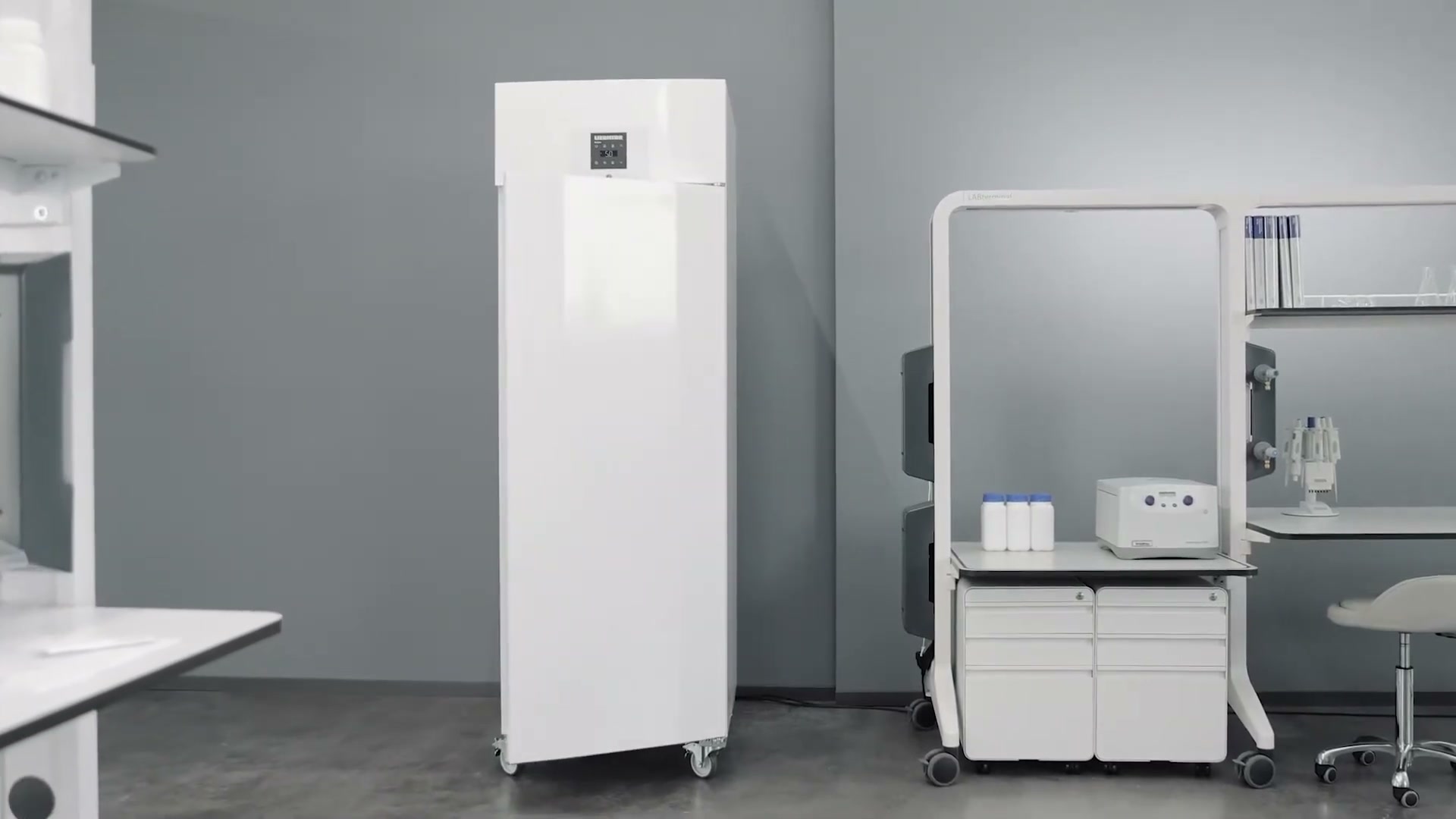
A Liebherr MediLine laboratory fridge in a working lab environment.
At A Glance
Range covers: standard stainless steel interior, plastic interior, and spark-free ATEX interior
Data logging: built-in real-time clock and min/max temperature memory on the standard units
Remote monitoring: a SmartMonitoring web dashboard is shown in the video, ask John Morris Group whether it is currently offered on Australian stock before assuming it applies
Compliance: spark-free models are certified for storing explosive and highly flammable substances
1) Standard Units, With Stainless Steel Interiors
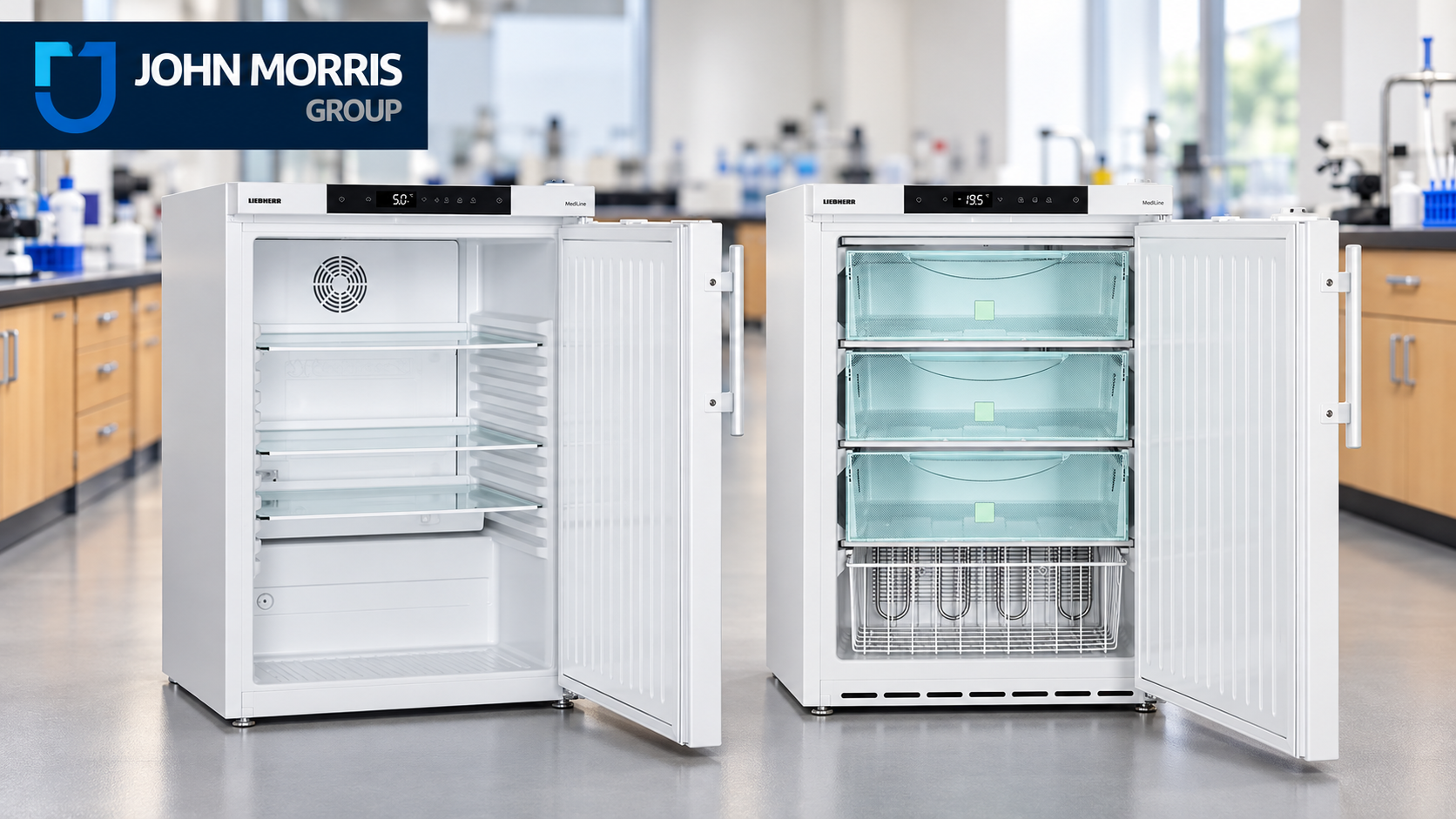
The first section of the video covers Liebherr's standard biomedical fridges and freezers, the same general MediLine family JMG stocks locally as glass and solid door models (588 litre, 614 litre and 642 litre capacities are covered in our companion guide, What Is A Vaccine Fridge?). These are the workhorse units for day to day sample, reagent and vaccine storage.
A built-in, real-time clock means the exact time can be determined precisely if an alarm is triggered, useful when investigating a cold chain excursion after the fact.
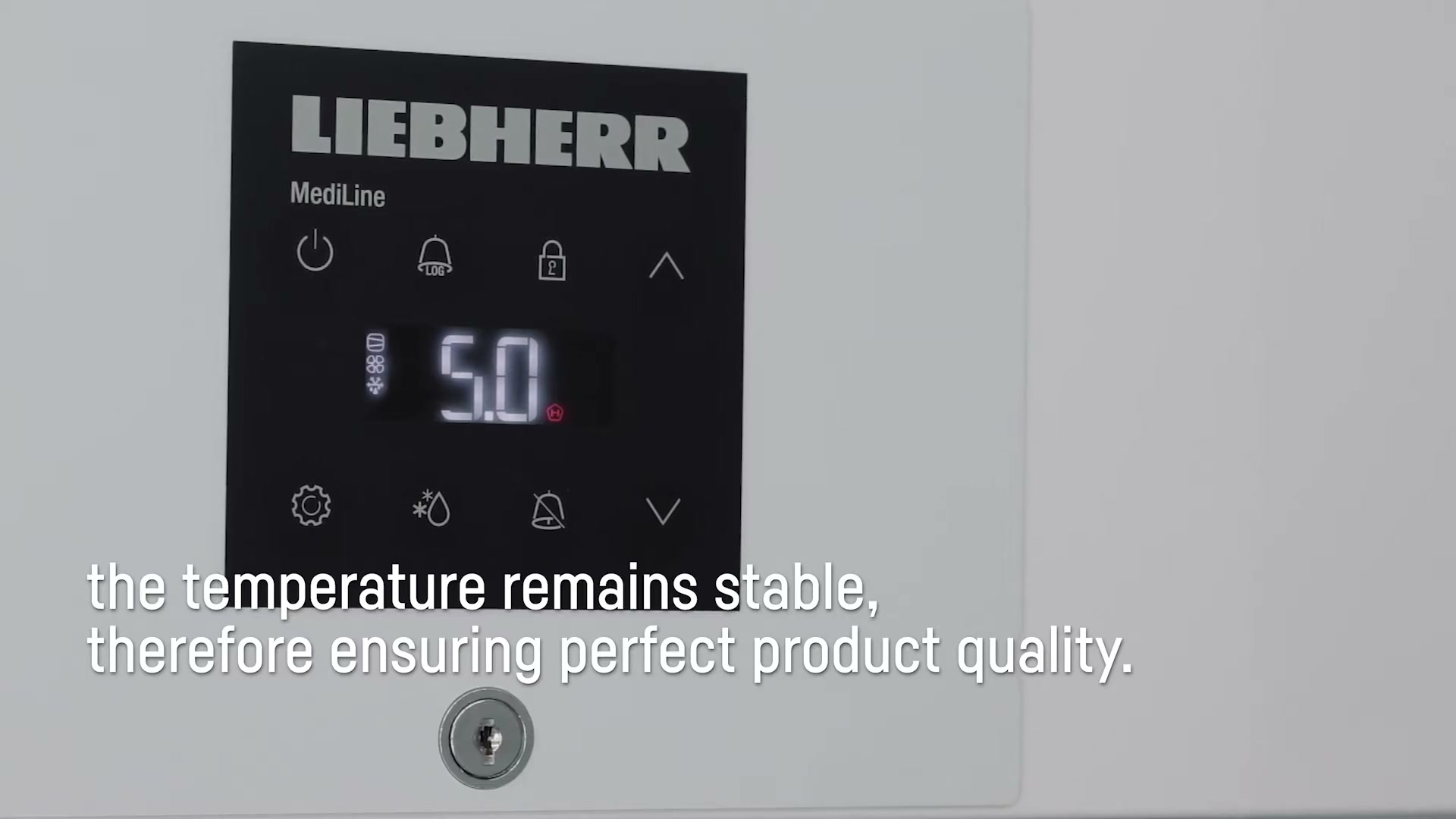
The Liebherr MediLine control panel and digital temperature display.
The built-in data memory records the minimum and maximum temperature the unit has reached, so a stable run can be confirmed, or a problem period pinpointed, without needing a separate logger.
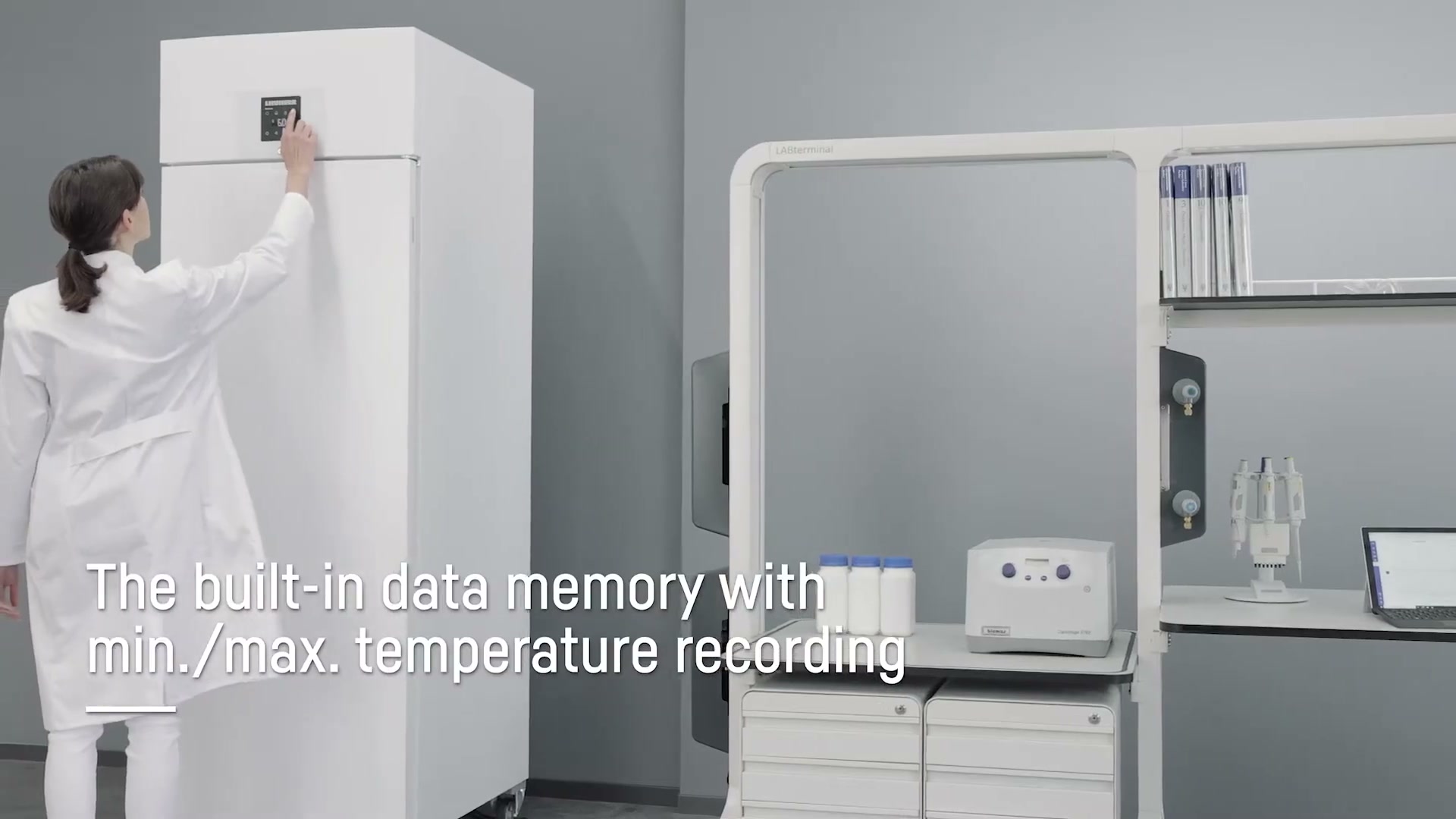
The built-in data memory with min/max temperature recording, shown on the control panel.
Why it matters: the video's own on-screen text ties this directly to product quality, "the temperature remains stable, therefore ensuring perfect product quality," which is the same reasoning behind WHO/National Vaccine Storage Guidelines' insistence on continuous, auditable temperature control.
An advanced cooling system is shown maintaining that consistency, and a feed-through option on the side of the cabinet lets an external temperature sensor run into the interior without breaking the door seal, useful where a facility runs its own independent monitoring alongside the unit's built-in controller.
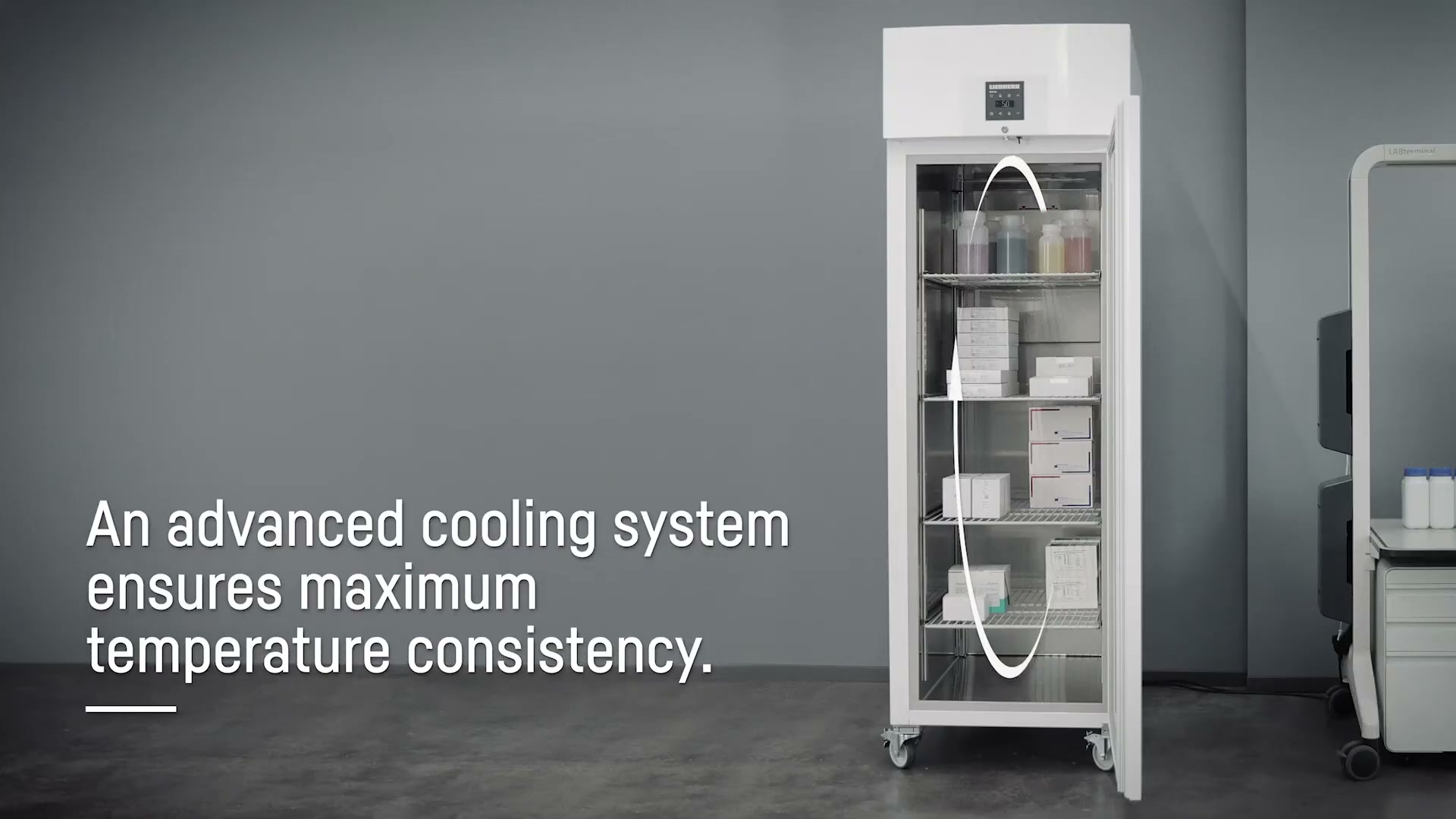
An advanced cooling system, shown maintaining consistent temperature across a fully stocked interior.
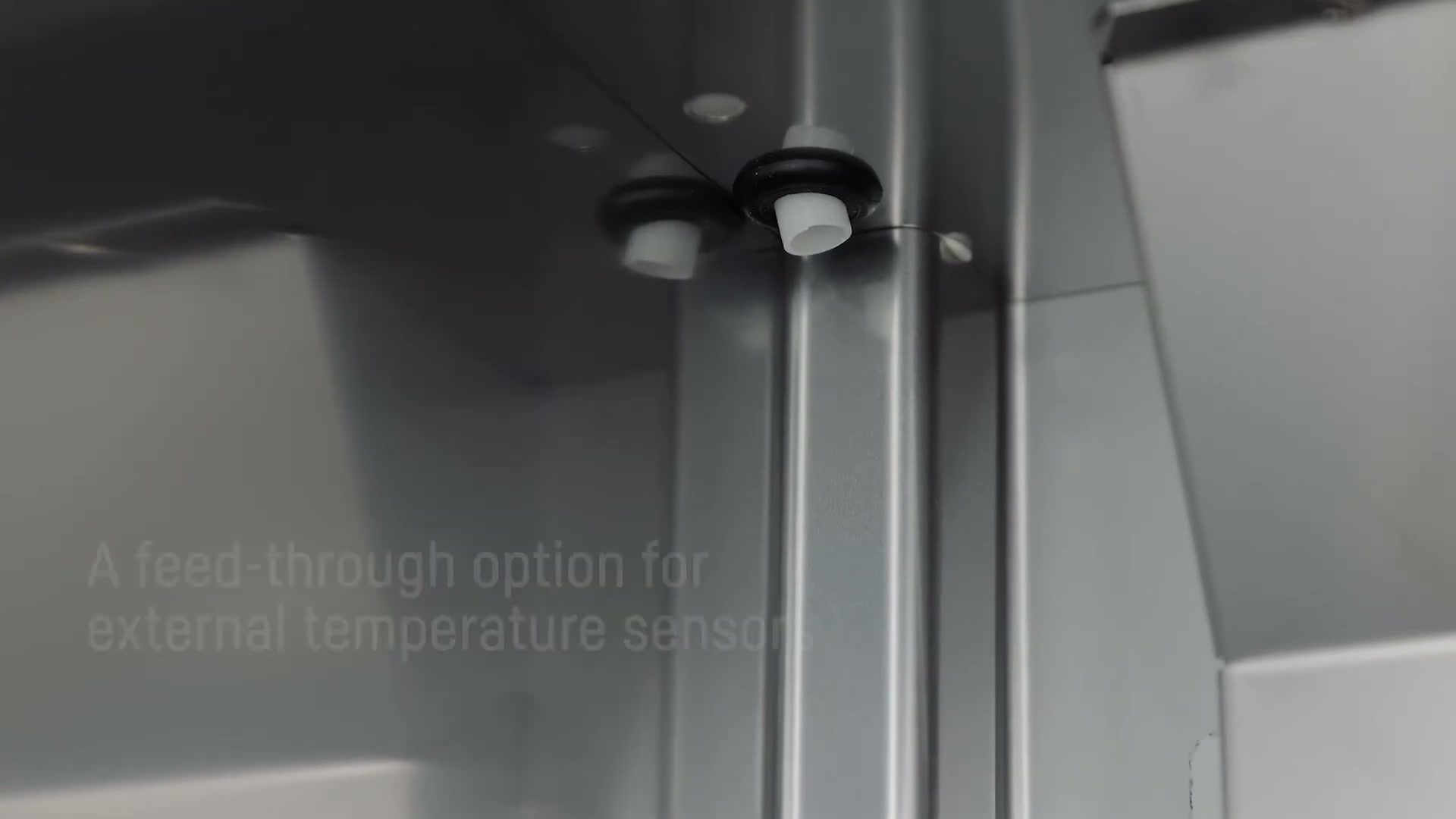
A feed-through option for an external temperature sensor, without breaking the door seal.
The video also shows a SmartMonitoring web dashboard, a browser-based history graph of temperature over time, door openings and alarm limits, accessed from a laptop rather than the unit itself. This looks like a genuinely useful feature for multi-site cold chain oversight, but it has not been confirmed this session whether it is currently sold or supported for John Morris Group's Australian customers, so treat it as something to ask about rather than an assumed inclusion.
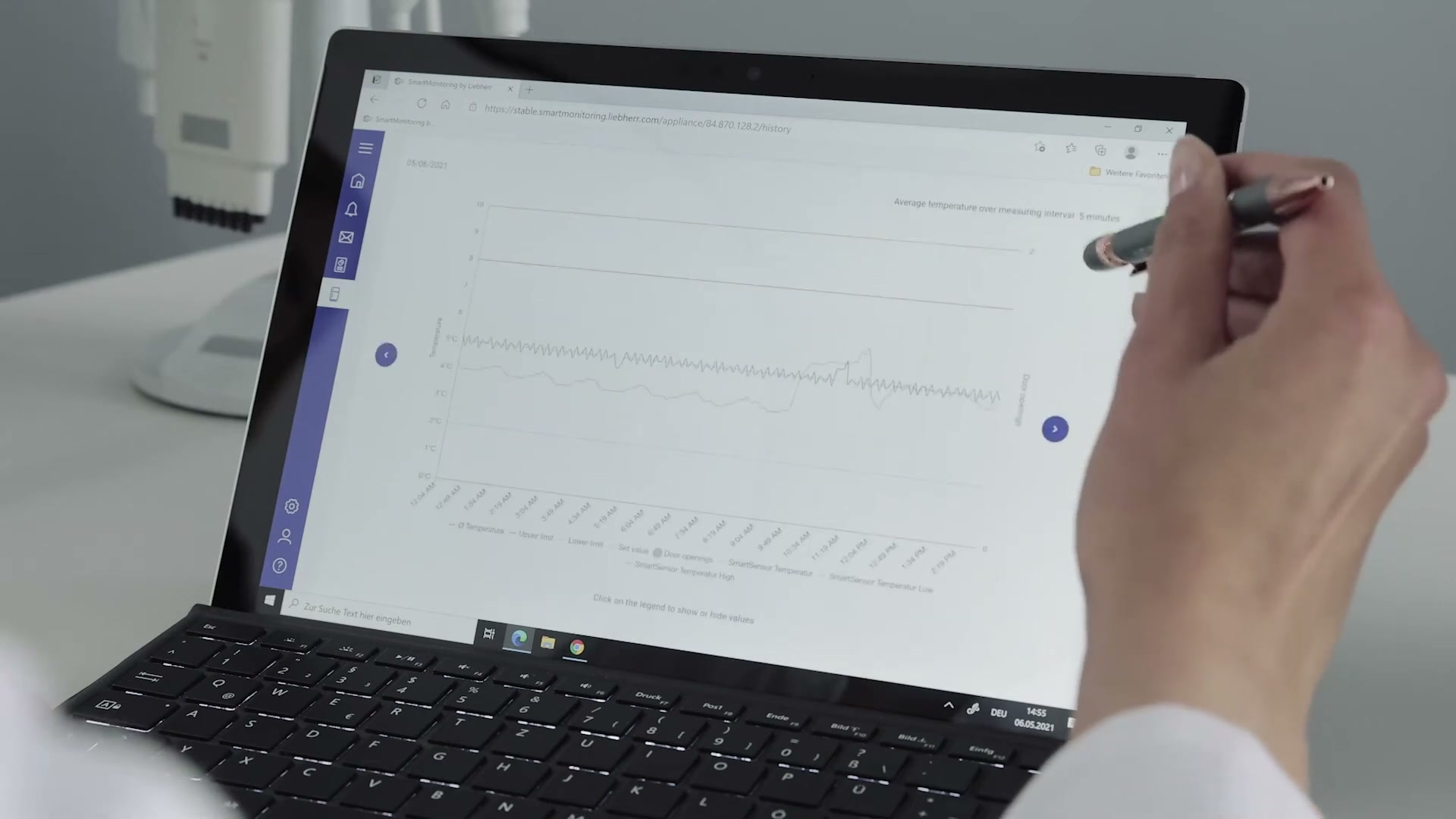
The Liebherr SmartMonitoring dashboard shown in the video. Confirm Australian availability with John Morris Group before relying on this feature.
2) The Freezer Line, With Plastic Interior Containers
The video's second section is shorter, and covers units with plastic interior containers and shelving rather than stainless steel. No specific model number was legible on screen during this segment, so this post describes only what's visibly shown rather than naming a JMG SKU it can't confirm matches exactly.
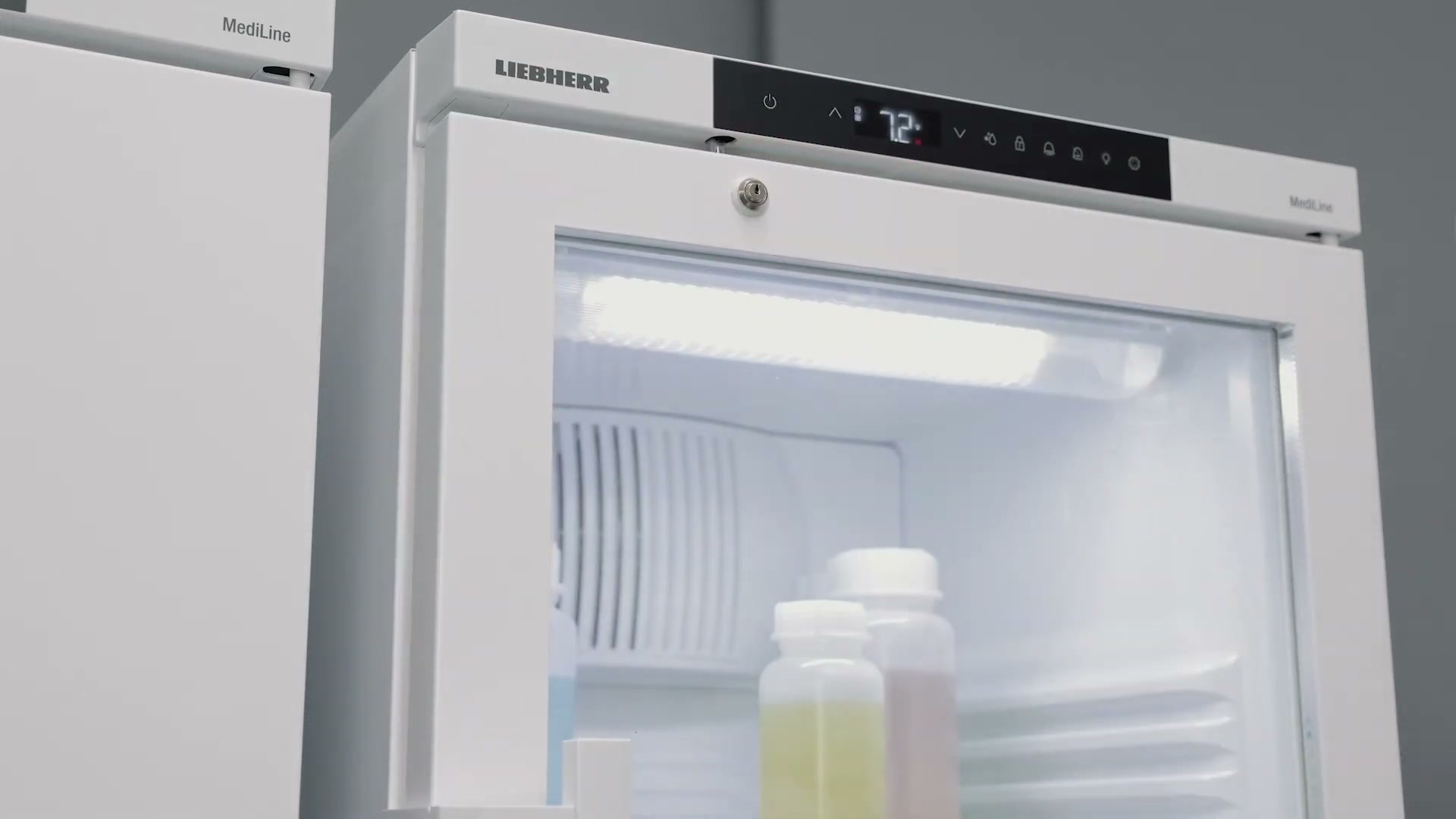
A Liebherr unit with plastic interior containers, section two of the video.
3) Spark-Free Models For Explosive And Flammable Samples
The final section covers Liebherr's spark-free interior range, purpose-built for storing explosive and highly flammable substances such as solvents in closed containers. On screen, a technician demonstrates the control panel of a unit branded "LIEBHERR MediLine," alongside a bright orange compliance label reading "Inspected according to EU Directive 2014/34/EU (ATEX)."
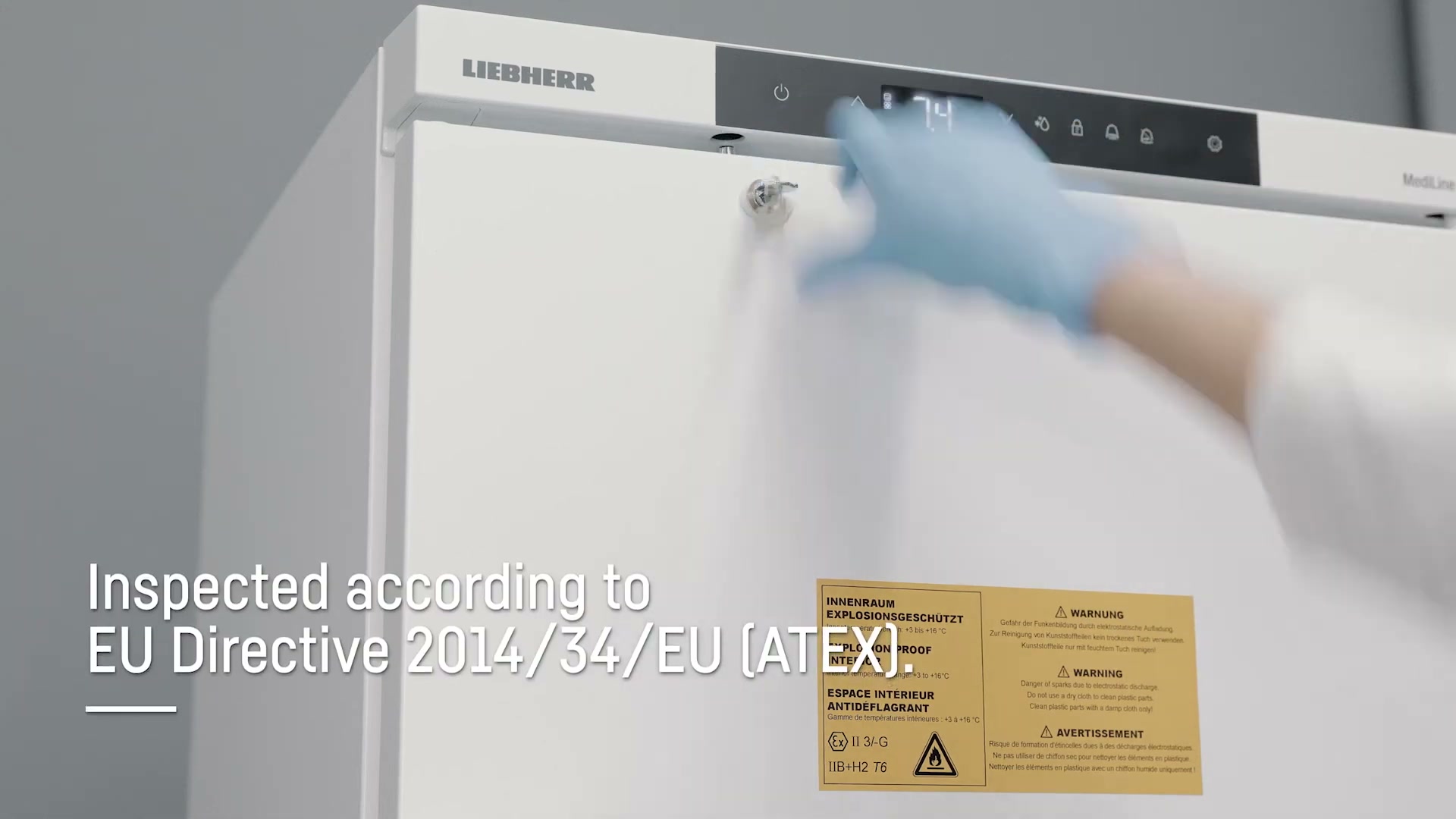
A Liebherr MediLine spark-free unit, with its ATEX explosion-protection compliance label visible on the cabinet.
Real methanol and ethanol reagent bottles are shown stored inside, alongside on-screen text confirming the interior is "suitable for storage of explosive and highly flammable substances in closed containers." A removable defrosting tray (removed by hand rather than needing a tool) and an airtight interior seal are also called out directly.
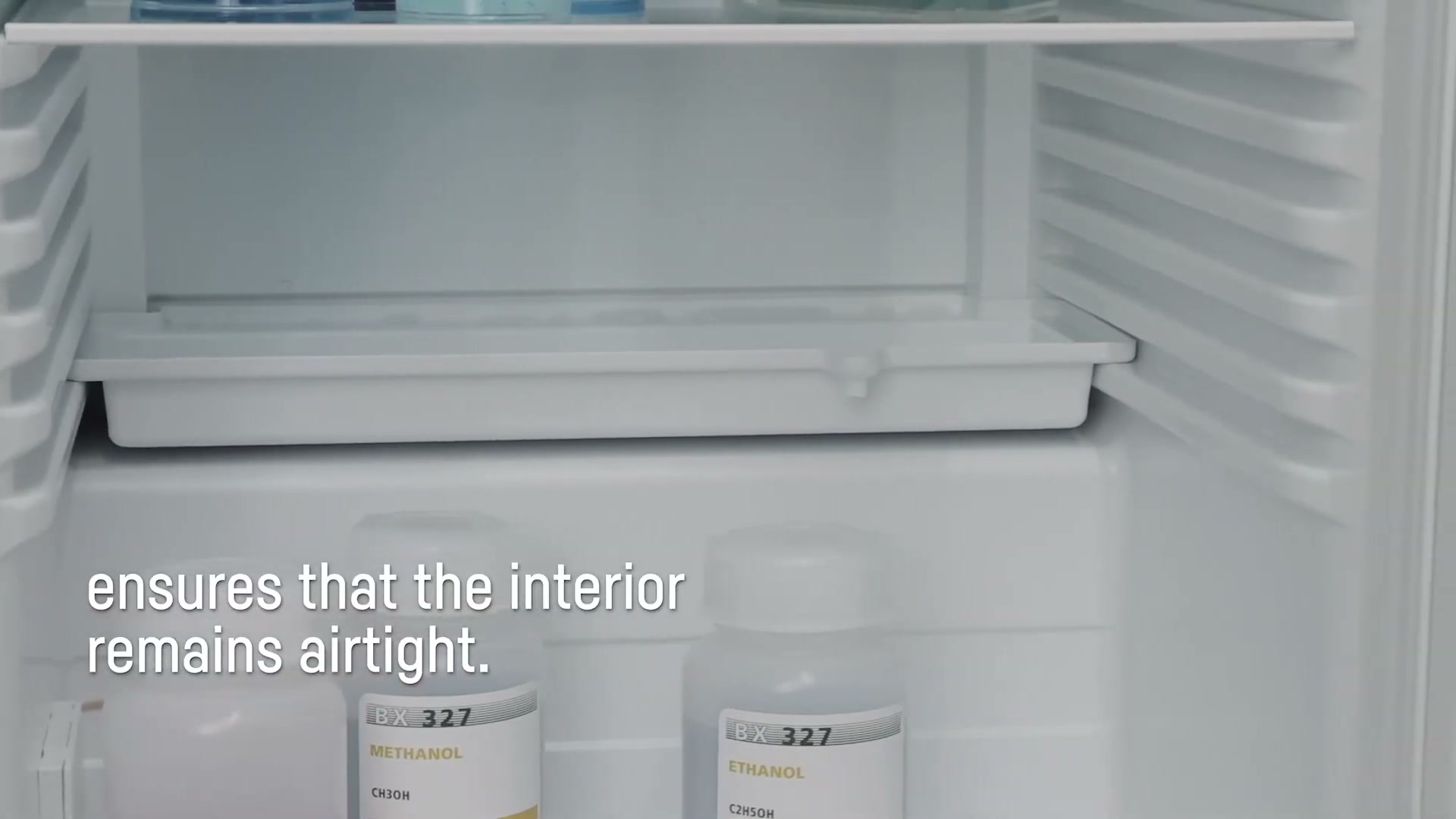
A removable defrosting tray above stored methanol and ethanol reagent bottles, inside a spark-free unit.
Live models in this range: John Morris Group stocks the equivalent spark-free pairing today, the Liebherr LKUexv-1610 spark-free fridge (141L) and the Liebherr LGUex-1500 spark-free undercounter freezer (139L), both certified for explosive and highly flammable substances and both fitted with the same built-in min/max data memory shown in the video.
Across all three sections, the throughline is the same: a controller that logs what happened rather than just displaying the current reading, so a cold chain or explosive-storage compliance question can be answered from the unit's own memory rather than guesswork.
Need A Spark-Free Fridge Or Freezer For Flammable Samples?
Storing solvents, reagents or other flammable substances safely means matching the right ATEX-rated unit to your volume and space. John Morris Group can help you choose between Liebherr's standard, plastic interior and spark-free ranges.
Contact John Morris GroupOr call 1300 501 555