Keeping Vaccines Between 2 °C And 8 °C, Every Hour Of Every Day
A vaccine fridge holds a stable 2 °C to 8 °C so temperature-sensitive vaccines and medicines stay within their safe storage range every hour of every day, not just when someone happens to check.
Dedicated vaccine and pharmacy refrigerators differ from a general lab fridge in the controls, alarms and compliance documentation built around that narrow band, and getting the wrong one can mean discarding stock that was never actually unsafe, or worse, using stock that was.
What Makes A Fridge A "Vaccine Fridge"?
A domestic fridge cycles temperature well outside the 2 °C to 8 °C band vaccines need, and it gives no record of ever having done so. A vaccine fridge is purpose-built to hold that narrow range with forced-air circulation for even cooling, a digital controller with min/max temperature memory, and audible and visual alarms if the temperature drifts.
In Australia, that range and the monitoring practices around it are set out in the National Vaccine Storage Guidelines, commonly known as "Strive for 5" for the target midpoint of 5 °C. A genuine vaccine fridge is designed to make meeting that guideline straightforward rather than something you have to engineer around a general-purpose unit.
What Is A Vaccine Fridge?
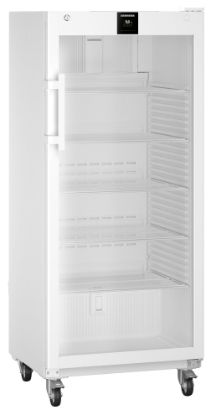
A vaccine fridge is a refrigerator engineered specifically to hold vaccines, and often other temperature-sensitive medicines, within a stable 2 °C to 8 °C range. The difference from a standard fridge is not really the temperature number itself, it is everything built around keeping that number honest: forced-air cooling so there are no warm pockets near the door, a controller that logs the minimum and maximum temperature reached, and an alarm that fires the moment something goes wrong rather than waiting for someone to notice.
Most models also include a safety device that intervenes if the unit's own controller fails and the temperature starts to fall toward freezing, which matters because a vaccine that has frozen is usually just as unusable as one that got too warm. Some units add WLAN or LAN connectivity so a facility can monitor several fridges from one dashboard instead of walking a corridor with a clipboard.
Sterility and contamination control matter too once vials are stored and drawn from repeatedly, which is a large part of why our lab glassware cleaning guide is worth a look alongside this one if your site also handles glass vials or ampoules.
Common Vaccine Fridge Applications
- •Pharmacy and general practice vaccine storage
- •Hospital and immunisation clinic cold chain
- •Laboratory storage of reagents and diagnostic samples
- •Aged care and community health cold storage
- •Veterinary practice vaccine and medicine storage
Dedicated Vaccine Fridge Or General Pharmacy Refrigerator?
Every model in this range meets a real compliance standard, the question is whether you need a fridge built exactly to the vaccine band or something with more range for mixed storage duties.
Choose A Dedicated 2°C-8°C Vaccine Fridge If
- •Vaccines are the primary or only thing being stored
- •You need to demonstrate Strive for 5 compliance to an auditor
- •A glass door for quick visual stock checks matters
- •Freezing protection is a non-negotiable safety requirement
Choose A Wider-Range Pharmacy/Lab Refrigerator If
- •You store vaccines alongside other medicines or reagents
- •Different products in your site need different set points
- •You need larger capacity across a whole pharmacy or ward
- •Remote WLAN monitoring across multiple units is a priority
Ask Before Buying
- •Does your accreditation body require a specific compliance standard, such as DIN 13277?
- •How many vaccine doses or bottles do you need to hold on your busiest day?
- •Who needs to be notified if an alarm triggers after hours?
- •Do you need a battery backup for the controller during a power outage?
Dedicated Vaccine Fridge Vs General Pharmacy Refrigerator At A Glance
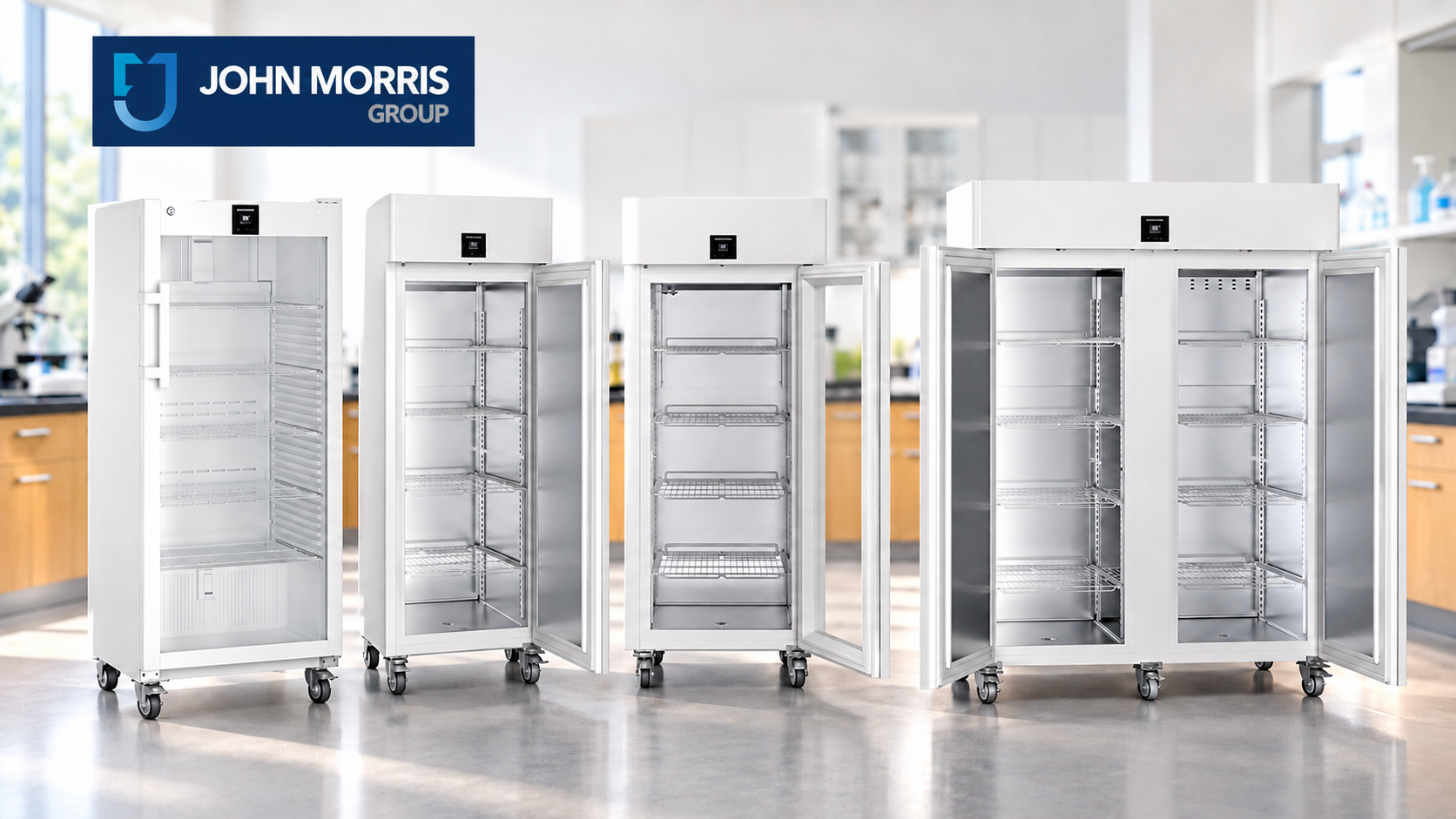
The 588 litre model below is purpose-built to the vaccine band; the 614 to 1391 litre models trade a wider set-point range for more flexibility and capacity.
| Criteria | Dedicated Vaccine Fridge (2-8°C) | General Pharmacy/Lab Refrigerator | Better Choice |
|---|---|---|---|
| Temperature Range | ✓ Fixed to the vaccine band, 2°C to 8°C | Wider, typically -2°C to +16°C | Depends On Application |
| Strive For 5 Compliance | ✓ Purpose-built to the guideline | Achievable, but the range is not vaccine-specific | Vaccine Fridge |
| Freezing Protection | ✓ +2°C SafetyDevice as standard | Varies by model, check the datasheet | Vaccine Fridge |
| Storage Capacity | 588 litres in the model shown here | ✓ Up to 1,391 litres for whole-site storage | General Refrigerator |
| Remote Monitoring | Battery-backed alarm system | ✓ WLAN/LAN with data logging on larger models | General Refrigerator |
Types Of Vaccine And Pharmacy Refrigerators
Glass door vaccine fridges: Built for stock checks without opening the door, which matters because every door opening lets warm air in and makes the compressor work harder to recover. The 588 litre model in this guide is a glass door design specifically because visibility and stability both matter for vaccine storage.
Solid door laboratory refrigerators: A wider set-point range and a solid, better-insulated door suit general pharmacy and laboratory storage where visibility matters less than raw stability or capacity, such as the 614 litre and 1,391 litre models here.
Double door pharmacy refrigerators: Larger sites often need more than one door's worth of capacity. A double door unit like the 1,391 litre model lets staff open only the section they need, rather than exposing the whole cabinet's contents to warm air for a single item.
Connected refrigerators: Models with SmartModule or WLAN/LAN connectivity log temperature continuously and can alert a facilities team remotely, which suits a hospital or multi-site pharmacy group more than a single-fridge general practice.
What Is "Strive For 5" And Why Does It Matter?
Strive for 5 is the practical name Australia's National Vaccine Storage Guidelines are known by, built around a simple idea: if you keep vaccines as close as possible to 5 °C, the exact midpoint of the 2 °C to 8 °C safe range, you build in a margin either way for the small fluctuations that happen every time a door opens or a delivery arrives.
The guideline is not just about the fridge itself. It expects a documented cold chain from delivery to administration, a data logger or min/max thermometer that records what actually happened rather than what you assume happened, and a written breach management plan for what staff do if the temperature does drift outside range. A fridge that only meets the temperature number but keeps no record does not actually get you there.
For pharmacies specifically, storage practice also sits under Quality Care Pharmacy Program (QCPP) accreditation and, for imported or supplied therapeutic goods, Therapeutic Goods Administration (TGA) requirements. A vaccine fridge with a built-in data logger and alarm history makes it straightforward to produce the records an auditor asks for, rather than reconstructing them after the fact.
Liebherr Biomedical Laboratory Fridges & Freezers
John Morris Group's own overview of the Liebherr biomedical range covers how the electronic controller and forced-air cooling work together to hold a stable set point, and how the alarm system flags a problem before it becomes a lost batch of stock. Note that the smart monitoring features shown are not all available in the Australian market yet, check with our team for what is currently supported here.
Watch On YouTubeWhy A Purpose-Built Vaccine Fridge Is Worth It
1. Protects Genuinely Expensive Stock
A single temperature excursion can force an entire batch of vaccines to be discarded, which costs far more than the fridge that would have prevented it.
2. Builds The Audit Trail For You
Min/max temperature logging and alarm history mean you can answer an auditor's question with data, not memory.
3. Catches Problems Before They Compound
An audible alarm on a Friday afternoon is the difference between a five-minute fix and a Monday morning writeoff.
4. Prevents Freezing, Not Just Warming
A +2°C SafetyDevice stops the compressor from overcorrecting into freezing territory during a fault, which a domestic fridge has no concept of at all.
5. Recovers Faster After A Door Opens
Forced-air circulation returns the whole cabinet to set temperature more quickly than passive cooling after every stock check or delivery.
6. Keeps Running During A Power Cut
An integrated battery backup for the controller and alarm means you are notified of a fault even if the outage itself is what caused it.
Vaccine And Pharmacy Refrigerators At John Morris Group
John Morris Group supplies Liebherr's full range of biomedical refrigeration, from a dedicated 588 litre vaccine fridge through to 1,391 litre pharmacy units for whole-site storage.
Liebherr Medical & Laboratory Refrigerator, 588L Glass Door
Purpose-built for the 2°C to 8°C vaccine band, with Strive for 5 compliance, a +2°C SafetyDevice and integrated battery backup. The dedicated pick for facilities where vaccines are the primary storage need.
Browse This Vaccine Fridge
Liebherr Laboratory Refrigerator, 614L Solid Door
DIN 13277 compliant with SmartModule WLAN connectivity and a stated 172 kWh annual energy consumption, a genuine hard number rather than a general efficiency claim. Suits mixed pharmacy and laboratory storage across a -2°C to +16°C range.
Browse This Refrigerator
Liebherr Laboratory Refrigerator, 642L Glass Door
The glass door sibling of the 614L model, built for pharmaceutical and laboratory environments that want visual stock checks without giving up the same WLAN connectivity and alarm system.
Browse This Refrigerator
Liebherr Pharmacy & Laboratory Refrigerator, 1391L Double Door
The largest model in this selection at 1,091 litres net capacity, with independently openable double doors so staff only expose the section they actually need. Built for whole-pharmacy or ward-level storage.
Browse This RefrigeratorExplore More Cold Storage And Compliance Resources
Vaccine storage is one part of a wider cold chain and sterilisation picture in a pharmacy or lab. See how these related topics connect.
What Is An Autoclave?
See how sterilisation compliance works alongside cold chain storage for equipment and media handling.
Read The Autoclave GuideHow To Clean Lab Glassware Properly
Follow the correct method for cleaning vials and glassware so residue does not compromise stored samples.
Read The Cleaning GuideLaboratory Equipment Guide
A broader look at the essential tool categories every lab and pharmacy needs, from cold storage to glassware.
Read The Equipment GuideVaccine Fridge FAQs
What Temperature Should A Vaccine Fridge Be Set To?
Vaccines need to be stored between 2°C and 8°C. The National Vaccine Storage Guidelines recommend targeting 5°C specifically, the midpoint of that range, so short fluctuations in either direction have room to occur without pushing stock outside the safe band.
How Long Can Vaccines Be Left Out Of The Fridge?
This depends entirely on the specific vaccine, and the manufacturer's product information is the authority on it, not a general rule. Any suspected excursion outside 2°C to 8°C should be logged and the affected stock quarantined and checked with the manufacturer or your immunisation provider before use, rather than assumed safe or assumed wasted.
Can I Use A Domestic Fridge To Store Vaccines?
A domestic fridge is not designed for this and is not considered compliant storage under the National Vaccine Storage Guidelines. Domestic units cycle temperature more widely, often have cold spots near the back and freezing risk near the freezer compartment, and give no logged record of what temperature vaccines actually experienced.
What Is The Difference Between A Vaccine Fridge And A Pharmacy Refrigerator?
A dedicated vaccine fridge is fixed to the 2°C to 8°C band and built specifically around Strive for 5 compliance. A general pharmacy refrigerator covers a wider range, typically down to -2°C and up to +16°C, so it can also store other medicines that do not need the tighter vaccine-specific range.
Do Vaccine Fridges Need A Data Logger?
The National Vaccine Storage Guidelines require continuous temperature monitoring with a recording device, most commonly a data logger or a min/max thermometer read and recorded daily. Models with a built-in electronic controller and logging function meet this without needing a separate device.
What Happens If A Vaccine Fridge Alarm Goes Off?
Every site should have a written cold chain breach management plan covering exactly this. In general, affected stock is quarantined and clearly labelled as not for use, the temperature excursion is logged with start and end times, and the manufacturer or immunisation provider is contacted before any stock is discarded or administered.
How Much Does A Vaccine Fridge Cost?
Pricing depends heavily on capacity and features. A dedicated 588 litre glass door vaccine fridge from Liebherr is priced from around $7,200, while larger multi-door pharmacy units with WLAN monitoring are quoted per site, contact our team for a current quote against your specific requirements.
Need Help Choosing The Right Vaccine Fridge?
Talk to John Morris Group about Liebherr vaccine and pharmacy refrigerators for your clinic, pharmacy, hospital or laboratory.
Contact UsCall 1300 501 555 or contact John Morris Group for quotation and technical support.