Still The Simplest, Most Reliable Flame In The Lab
A Bunsen burner mixes a fuel gas with air in adjustable proportions to produce a controllable flame for heating, sterilising and combustion demonstrations.
Standard gas models, portable cartridge burners and flameless electric alternatives all suit slightly different labs, so the right choice depends on your gas supply, your site's safety policy and how the burner will actually be used.
What Is A Bunsen Burner?
A Bunsen burner is a simple gas burner used across teaching and research laboratories for controlled, direct-flame heating. It is named after German chemist Robert Wilhelm Bunsen, whose laboratory technician Peter Desaga built the first practical version at Heidelberg University in 1855.
Most units run on natural gas or LPG supplied through a bench gas tap or a replaceable gas cartridge. A smaller but growing category runs on mains electricity instead, heating an element rather than burning a fuel gas at all, which removes the open flame entirely.
Where a burner is used to flame an inoculation loop or briefly sterilise a small tool, it is worth also knowing when a full autoclave cycle is the more appropriate sterilisation method for glassware and media.

Common Bunsen Burner Applications
- •Heating solutions, test tubes and small flasks
- •Flaming inoculation loops between samples
- •Glass bending and basic glassworking in teaching labs
- •Combustion and flame test demonstrations
- •General direct-flame heating where a hotplate is too slow
Parts Of A Bunsen Burner And Their Functions
A standard gas Bunsen burner has six main parts, all of which work together to control the gas and air mix before it burns.
| Part | Function |
|---|---|
| Base | A heavy, stable foot that supports the whole burner and stops it tipping over during use. |
| Barrel | The vertical metal tube where gas and air mix before combustion, sized to lift the flame to a safe working height above the bench. |
| Collar | The rotating sleeve near the base of the barrel that opens or closes the air holes to control how much air mixes with the gas. |
| Air Holes | Openings in the barrel wall, covered or exposed by the collar, that let air enter and mix with the gas stream before it burns. |
| Gas Jet | A small nozzle inside the base that releases gas into the barrel at a controlled, metered rate. |
| Gas Valve | The tap or needle valve, on the burner or the supply line, that turns gas flow fully on or off. |
How Does A Bunsen Burner Work?
Gas enters through the base and travels up the barrel, drawing in air through the air holes on the way. The gas and air mix before combustion, and the ratio between them decides the flame you get.
With the air holes closed, combustion is incomplete and the flame burns yellow and sooty. It is a highly visible standby flame, easy to spot across a room, but it is still a live flame, so the burner should never be left unattended even in this state. Opening the air holes lets in more oxygen, producing a cleaner, hotter blue flame used for actual heating and sterilising work.
Bunsen Burner Flame Types And Temperatures
Yellow (luminous) flame: Produced with the air holes closed. Combustion is incomplete, so unburned carbon particles glow yellow and eventually deposit as soot on anything held in the flame. It is easy to see against a bright background, which is why it is used as a visible standby flame, but it is not used for heating.
Blue (non-luminous) flame: Produced with the air holes open, giving complete combustion. This flame has two visible zones: a paler inner cone of unburned gas and air still mixing, and a darker blue outer cone where combustion actually finishes.
Hottest point: The hottest part of the flame sits at the tip of the inner cone, where it meets the outer cone, commonly reaching around 1200°C. This is the point most protocols mean when they say to heat something "in the hottest part of the flame."
Types Of Laboratory Burners
Standard (natural gas) Bunsen burner: The classic design, a single metal tube on a stable base with a needle valve for gas flow and a collar for the air to gas ratio. Runs from piped natural gas or LPG and remains the most common burner in teaching labs.
Teclu burner: Uses a cone-shaped gas jet and an adjustable air-mixing sleeve rather than a fixed side hole, which allows a wider range of flame control and, in the cartridge-fed models supplied by John Morris Group, runs from a replaceable gas cartridge rather than a bench gas line.
Meker burner: A variant with a wire grid across the top of a wider barrel. The grid splits the flame into many small, individual flames that burn hotter and more evenly than a standard single-flame burner, useful for higher-temperature heating tasks.
Wing top (fishtail) burner: A different, separate design fitted with a flattened nozzle that spreads the flame into a broad, flat fan rather than a single point. It is not a hotter flame, it is a wider one, traditionally used for glass bending and glassworking rather than general heating.
Electric (flameless) Bunsen burner: Replaces the gas flame with a heated conical element and a power controller. It reaches a lower maximum temperature than a gas flame but removes the open flame and the need for a fuel-gas supply, which suits sites with strict fire safety policies.
Gas Vs Electric Bunsen Burner At A Glance
Beyond fuel type, the bigger strategic choice for many labs today is whether to stay with an open gas flame at all, or move to a flameless electric unit. Pricing below is indicative Australian pricing as checked in August 2026 and will move with supplier and energy costs over time.
| Criteria | Gas Bunsen Burner | Electric Bunsen Burner | Better Choice |
|---|---|---|---|
| Open Flame | – Open flame present at all times when lit | ✓ No open flame, radiant element only | Electric |
| Fuel Source | Natural gas, LPG or replaceable cartridge | Mains power only, no gas needed | Depends On Application |
| Maximum Heat | ✓ Blue flame reaches roughly 1200°C | Element typically rated 800 to 1000°C | Gas |
| Ignition | Needs a spark lighter every time it is used | ✓ Switches on with the power controller | Electric |
| Typical Running Cost | ✓ Generally lower cost per hour of use | 480 W power draw while heating | Gas |
| Typical Upfront Price (AU, indicative Aug 2026) | ✓ Notably lower upfront cost, around $90 to $115 | Significantly higher upfront cost, from around $2,500 with a controller included | Gas |
How To Choose The Right Burner
Start with what gas supply is actually available at the bench, then confirm how many burners the room needs running at once.
Choose A Standard Gas Burner If
- •Piped natural gas or LPG is already available at the bench
- •Several benches need a burner running through a whole class or session
- •The lowest running cost per hour of use matters most
- •You want the higher flame temperature a gas flame reaches
Choose A Portable Cartridge Burner If
- •There is no piped gas line at the bench you are using
- •You need to demonstrate combustion in a mobile or outreach setting
- •The burner is only needed occasionally or as a backup unit
- •A self-contained design matters more than the lowest running cost
Choose An Electric Bunsen Burner If
- •Your site restricts or bans open-flame heating
- •Piped gas and gas cartridges are both unavailable or unwanted
- •Non-contact radiant heating suits the task, rather than a direct flame
- •Eliminating fuel-gas handling and storage matters for the site
Ask Before Buying
- •Is natural gas or LPG actually piped to this bench?
- •Does your site's fire or safety policy restrict open-flame heating?
- •Would a flameless electric alternative suit a compliance-sensitive room better?
- •How many burners does the class or lab need running at the same time?
How To Use And Light A Bunsen Burner Safely
Clear the bench of anything flammable and place the burner on a heatproof mat before lighting. Close the air holes first, so the burner ignites on the low, visible yellow flame rather than jumping straight to a near-invisible blue flame.
Have a spark or flint lighter ready at the top of the barrel rather than reaching for a match, then open the gas valve slightly and ignite straight away. Once lit, open the air holes gradually until the flame turns blue and stops flickering, this is the flame used for actual heating.
Tie back long hair, secure loose clothing, wear eye protection, and never leave a lit burner unattended, including while it is sitting on the low yellow flame. For any task with a genuine open flame or arc flash risk beyond routine burner use, a flame-resistant lab coat adds another layer of protection — see our complete lab coat buying guide. Turn the gas fully off at the valve, not just the air holes, when the burner is not in active use.
Recommended Bunsen Burners At John Morris Group
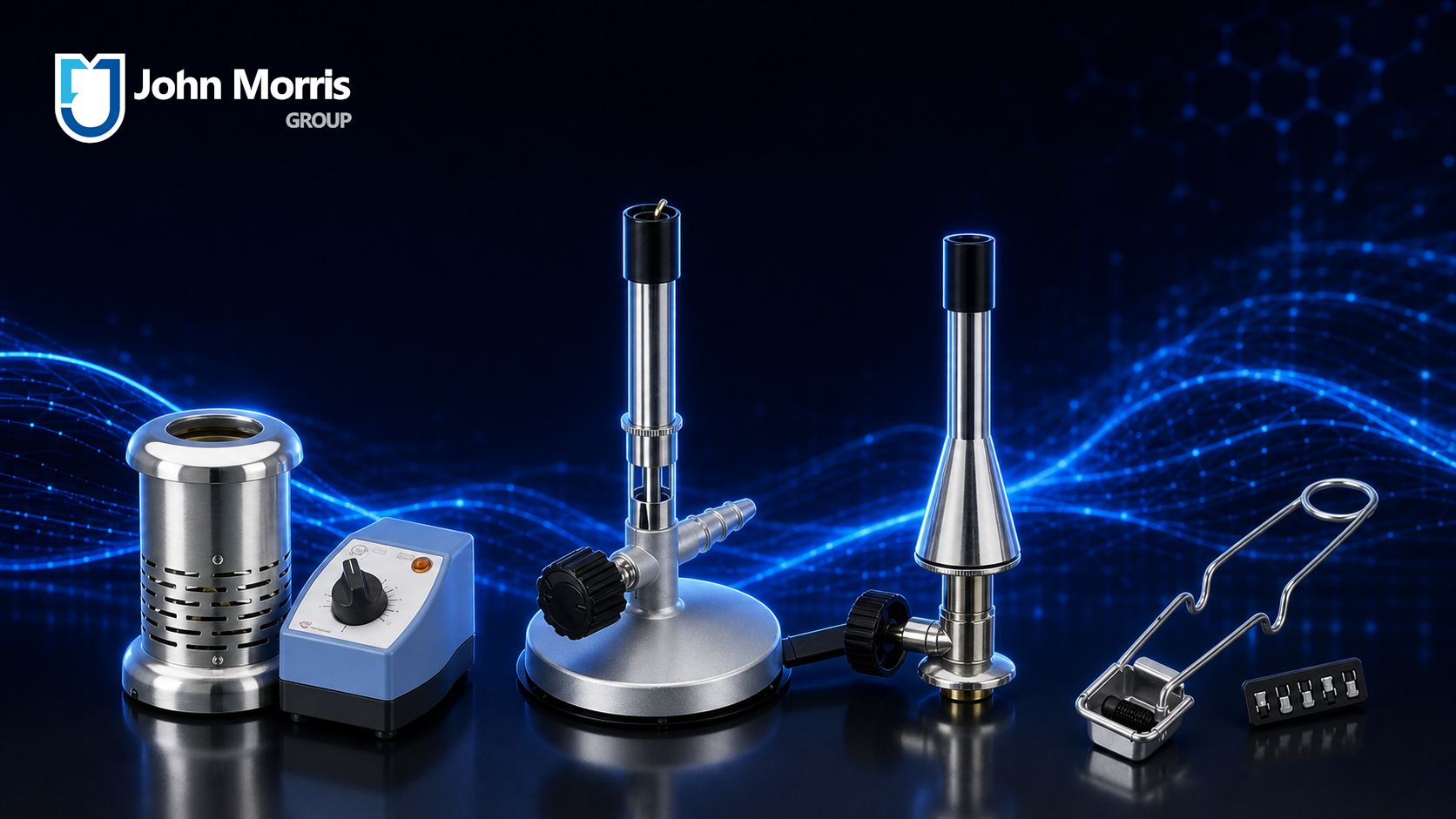
John Morris Group supplies standard gas, portable cartridge and electric Bunsen burners, along with the ignition accessories that go with them.
Cole-Parmer Electric Bunsen Burner BA 6101/C
A flameless 800 to 1000°C electric burner with controller, suited to non-contact heating where an open gas flame is restricted or not permitted.
Browse This Burner
Carl Friedrich Usbeck Bunsen Burner, Natural Gas
A standard single-tube burner with air regulation, a needle valve and a pilot flame, for benches with a piped natural gas supply.
Browse This Burner
Carl Friedrich Usbeck Teclu Burner For Cartridge, 170 g
A portable Teclu-style burner that runs from a 170 g gas cartridge rather than a bench line, for labs or outreach settings without piped gas.
Browse This Burner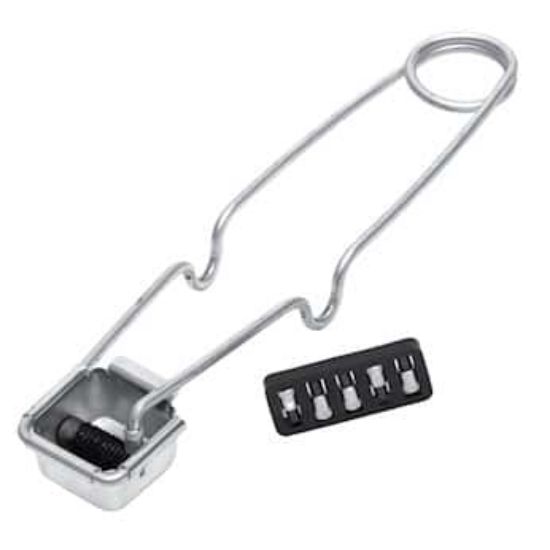
Cole-Parmer Safety Spark Lighter With 5 Flints
A spark hood lighter built for reliable, low-misfire ignition of gas Bunsen burners, safer than a match held near the barrel.
Browse This LighterExplore More Lab Technique Resources
A Bunsen burner is one part of everyday lab hygiene and heating practice. See how it connects to glassware care and sterilisation.
How To Clean Lab Glassware Properly
Follow the correct step by step method to clean glassware safely, so residue does not skew results after heating.
Read The Cleaning GuideWhat Is An Autoclave?
See how a full autoclave cycle compares with flaming a loop for sterilising equipment and media.
Read The Autoclave GuideLaboratory Equipment Guide
A broader look at the essential tool categories every lab needs, from glassware to analytical instruments.
Read The Equipment GuideBunsen Burner FAQs
What Are The Main Parts Of A Bunsen Burner?
A standard Bunsen burner has six main parts: the base, the barrel, the collar, the air holes, the gas jet and the gas valve. See the parts and functions table earlier in this guide for what each one does.
Where Is The Hottest Part Of A Bunsen Burner Flame?
The hottest point sits at the tip of the inner cone of the blue flame, where it meets the outer cone, commonly reaching around 1200°C. This is the point most lab protocols mean when they say to heat something in the hottest part of the flame.
Why Is A Bunsen Burner Flame Blue?
A blue flame means the air holes are open enough to let in sufficient oxygen for complete combustion. Complete combustion produces no glowing carbon particles, so the flame appears blue and non-luminous rather than yellow.
Why Does My Bunsen Burner Flame Look Yellow Or Green Instead Of Blue?
A yellow flame usually just means the air holes are closed, giving incomplete combustion, which is normal for a standby flame. A green or unusually coloured flame during heating can indicate trace metal contamination on the glassware or burner tip and is worth investigating rather than ignoring.
Can A Bunsen Burner Run On LPG Or Butane Instead Of Natural Gas?
Yes, many models are supplied for either natural gas or LPG, and portable cartridge burners typically run on a butane or butane propane mix. Always confirm the fuel type stamped on the unit before connecting it, since a gas jet sized for natural gas is not automatically correct for LPG or butane.
What Is The Difference Between A Gas And An Electric Bunsen Burner?
A gas burner produces an open flame by burning natural gas, LPG or cartridge fuel, reaching a higher maximum temperature. An electric burner heats a conical element with mains power instead, reaching a lower maximum temperature but removing the open flame and gas supply entirely.
What Gas Cartridge Fits A Portable Cartridge Burner?
Cartridge burners are matched to a specific cartridge size and thread, and are not universally compatible. The 170 g Usbeck Teclu burner supplied by John Morris Group, for example, is compatible only with the 9.018 364 gas cartridge, so always check compatibility before ordering replacement cartridges.
Who Invented The Bunsen Burner?
It is named after German chemist Robert Wilhelm Bunsen, though the practical design was engineered in 1855 by his laboratory technician Peter Desaga at Heidelberg University, originally to make better use of a newly installed coal gas supply for lab heating.
Need Help Choosing The Right Bunsen Burner?
Talk to John Morris Group about gas, cartridge and electric Bunsen burners for your school, university or industrial laboratory.
Contact UsCall 1300 501 555 or contact John Morris Group for quotation and technical support.