What Is A Separating Funnel? Types, Uses And How It Works
A separating funnel (also called a separatory funnel) uses density difference to split two liquids that don't mix, such as an organic solvent and water, into two clean layers you can drain off one at a time.
It's one of the most common pieces of glassware in a chemistry lab, but the shape, glass coating and stopcock material you choose genuinely change how well it holds up to daily use.
How Does A Separating Funnel Work?
Two immiscible liquids (ones that don't mix, like an organic solvent and water) go into the funnel together. When the stopper is on and the mixture is swirled or gently shaken, compounds redistribute between the two layers based on which liquid they dissolve in more readily.
Left to stand, the two liquids settle into distinct layers by density, the denser one on the bottom. Opening the stopcock lets you drain the lower layer off cleanly, leaving the upper layer behind in the funnel to be poured out separately.
What Is A Separating Funnel?
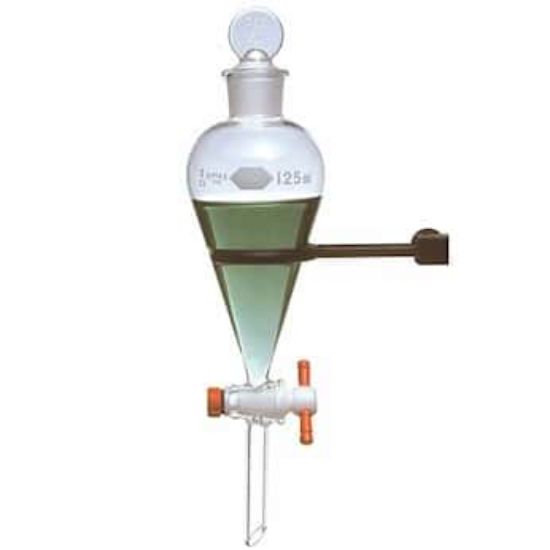
A separating funnel is a piece of laboratory glassware, usually pear-shaped or Squibb-shaped, with a ground-glass or PTFE stopper at the top and a stopcock at the narrow bottom outlet. It's built specifically for liquid-liquid extraction: separating and isolating a compound from a mixture using two solvents that don't mix.
"Separating funnel" and "separatory funnel" refer to the same piece of equipment. Separatory funnel is the more common term in North American chemistry usage; both spellings show real, comparable search demand in Australia, so this guide uses them interchangeably.
It's a different tool from a standard funnel used for pouring or filtering. For that comparison, and other core glassware in a chemistry lab, see our complete guide to laboratory glassware.
Common Separating Funnel Uses
- •Liquid-liquid extraction of a compound from a reaction mixture
- •Washing an organic layer to remove acid, base or salts
- •Drying an organic solvent layer before further work-up
- •Teaching and undergraduate organic chemistry labs
- •General acid-base and solvent partitioning work
What Are The Parts Of A Separating Funnel?
Stopper: seals the top opening, either a ground-glass stopper or a PTFE plug, and is removed to add the mixture and released briefly to vent pressure during shaking.
Body: the main glass reservoir holding both liquid layers, shaped either pear-shaped (conical) or Squibb-shaped depending on the model.
Stopcock: the valve at the bottom of the funnel, in PTFE or glass, that controls how much of the lower layer drains out and when.
Stem (delivery tube): the narrow outlet below the stopcock that the drained liquid actually passes through into the receiving vessel.
Support lugs or neck: the point where the funnel is held in a ring-stand clamp, positioned differently depending on whether the body is pear or Squibb-shaped.
How Do You Choose A Separating Funnel?
Start with your typical extraction volume and how often the funnel goes into a clamp, then narrow down by shape and glass type.
| Your Situation | Recommended Pick |
|---|---|
| Routine small-scale organic extraction, 100-250 mL | Kimble PTFE-Stopcock Funnel, 250 mL (pear shape) |
| Repeated or larger-volume extractions, 1-2 L | Ace Glass Squibb Funnel with lock-tight stopper |
| Shared, teaching or high-turnover lab | Kimble UltraClear Safety-Coated Funnel, 125 mL |
| Holding several funnels upright between uses | Scienceware Separatory Funnel Rack |
From our lab supply team: most of the labs we quote for start with a PTFE-stopcock, pear-shaped funnel in the 250 mL-1 L range for everyday organic extraction, and only move to a Squibb shape with a lock-tight stopper once extractions become frequent enough that clamping speed and spill risk during shaking start to matter more than the extra cost.
Beyond volume, the two shapes themselves come down to how the funnel sits in a stand and behaves near the stopcock.
Choose Squibb Shape If
- •You want a shorter, more spherical body for easier ring-stand clamping
- •You're doing repeated, high-volume extractions where stability in the clamp matters
- •A lock-tight stopper design to prevent spills during vigorous shaking is a priority
- •You need larger capacities (1-2 L and above)
Choose Pear Shape If
- •You want the narrower cone body to concentrate the lower layer near the stopcock
- •You're working with small volumes where precise layer separation matters most
- •You want the most widely available shape across brands and sizes
- •Routine teaching or general lab use is the main application
Ask Before Buying
- •PTFE stopcock or ground-glass stopcock, does your solvent attack glass grease?
- •Do you need a safety-coated funnel for handling in a shared or teaching lab?
- •What capacity actually matches your typical extraction volume?
- •Do you need a rack to hold multiple funnels upright at once?
Standard Glass Vs Safety-Coated At A Glance
Based on two real, currently stocked Kimble units: the standard PTFE-stopcock funnel and the UltraClear safety-coated funnel.
| Criteria | Standard Glass | Safety-Coated | Better Choice |
|---|---|---|---|
| Breakage Containment | – No shatter protection | ✓ Plastic coating contains glass and contents if dropped | Safety-Coated |
| Visual Clarity | ✓ Uncoated glass, unobstructed view | Ultraclear coating, still fully transparent | Either |
| Typical Setting | Research lab, controlled access | ✓ Shared, teaching or high-turnover labs | Safety-Coated |
| Typical Cost | ✓ Lower cost for the same capacity | – Higher cost for the coating and testing | Standard |
What Types Of Separating Funnel Are There?
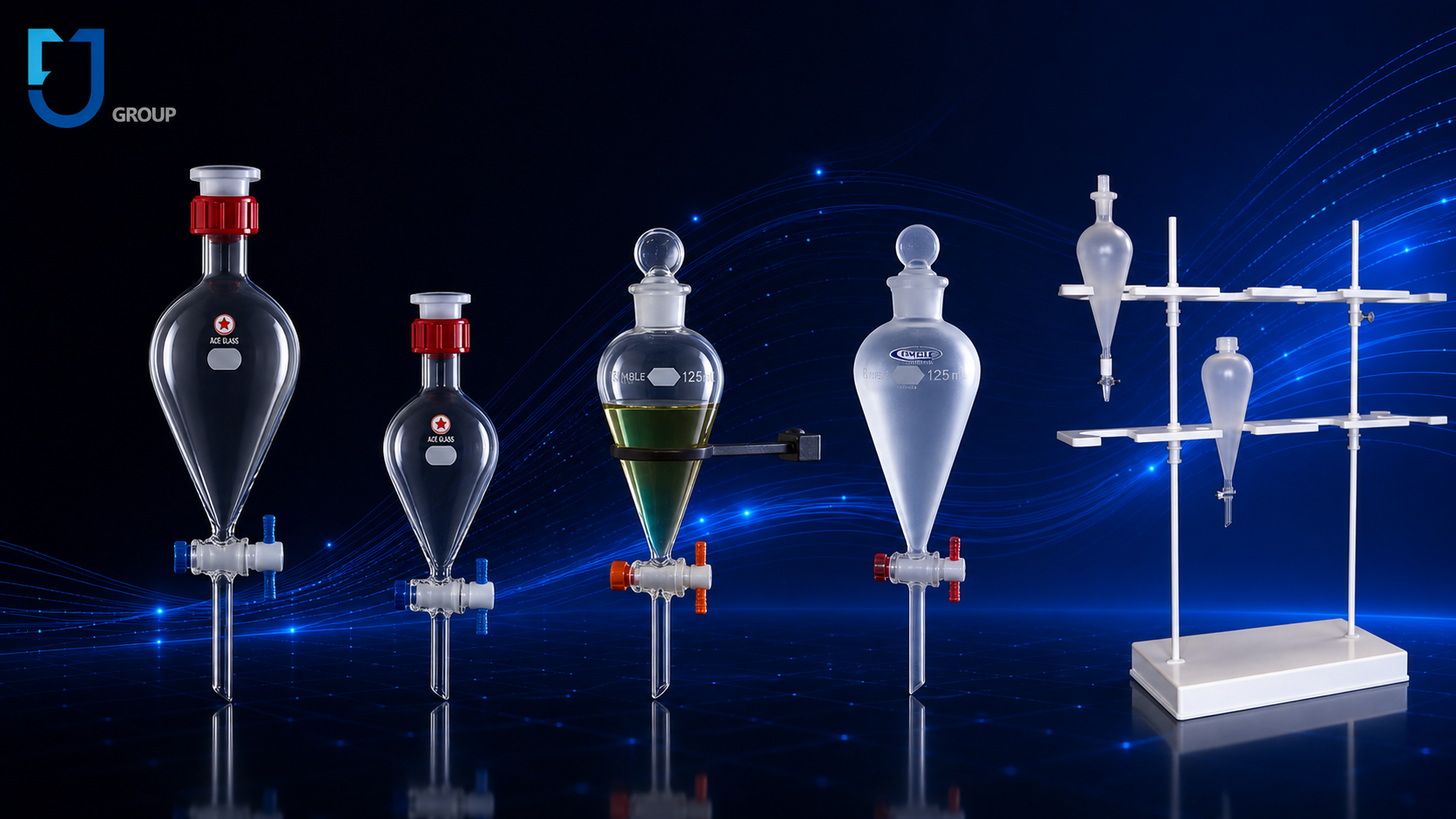
Pear-shaped (conical): the most common general-purpose shape, with a wide top body tapering to a narrow neck and stopcock. Good all-round choice for most extraction work and the shape most widely stocked across brands and sizes.
Squibb-shaped: a shorter, more rounded body that sits lower and more stably in a ring-stand clamp, often paired with a lock-tight stopper design. A practical choice for repeated, high-volume extractions where the funnel is clamped and unclamped often.
Cylindrical (graduated): a less common third shape with a straight, graduated body, used when reading off an approximate volume of each layer matters more than rapid phase separation.
Stopcock material: PTFE stopcocks are grease-free and handle most common organic solvents well, which is why they're the default choice for most general lab work today. Glass stopcocks need a thin film of stopcock grease to turn smoothly, and some labs still specify them for a narrower range of specialty solvent work, though this is increasingly uncommon.
Why A Good Separating Funnel Matters
1. Clean Layer Separation
A well-made stopcock and a shape suited to your volume make it easier to see the interface between layers clearly and drain accurately, which helps if the mixture is prone to emulsifying, though emulsions themselves are usually a chemistry issue rather than an equipment one.
2. Solvent Compatibility
The right stopcock material means the funnel won't leach grease into your product or degrade after repeated contact with aggressive organic solvents.
3. Safety In Shared Labs
Safety-coated glass contains breakage and its contents, an important consideration anywhere a funnel is handled by multiple people or students.
4. Repeatable Results
Consistent technique and equipment mean an extraction yield you can reproduce run to run, which matters for both research and QC work.
5. Fits Standard Lab Stands
A separating funnel shaped and sized correctly for your ring-stand clamp reduces the risk of it tipping or slipping mid-extraction.
6. Low-Cost, High-Use Equipment
It's one of the most frequently reached-for pieces of glassware in an organic chemistry lab, so getting the shape and stopcock right pays off many times over.
How To Use A Separating Funnel For Liquid-Liquid Extraction
The basic procedure is the same regardless of shape or brand:
- Close the stopcock and support the funnel in a ring-stand clamp before adding anything.
- Add the mixture to be separated, then the extraction solvent, keeping the total volume well under the funnel's rated capacity to leave room for shaking.
- Insert the stopper and invert the funnel, immediately opening the stopcock briefly to release built-up pressure, a step commonly called venting.
- Shake gently for a short burst, then vent again. Repeat several times, venting after each shake, before a longer, more vigorous shake once most of the pressure has been released.
- Return the funnel to the stand, remove the stopper, and let the layers settle until the interface between them is sharp and clear.
- Open the stopcock and drain the lower layer into a receiving vessel, stopping just as the interface reaches the stopcock. Pour the remaining upper layer out through the top separately.
Always vent before shaking vigorously. Volatile solvents and dissolved gases build up real pressure inside a closed, inverted funnel, and skipping the venting step is one of the most common causes of a stopper blowing out or solvent spraying from the stopcock.
Separating Funnels At John Morris Group
John Morris Group supplies separating funnels from 125 mL to 2000 mL, in both Squibb and pear shapes, plus racks to hold them.
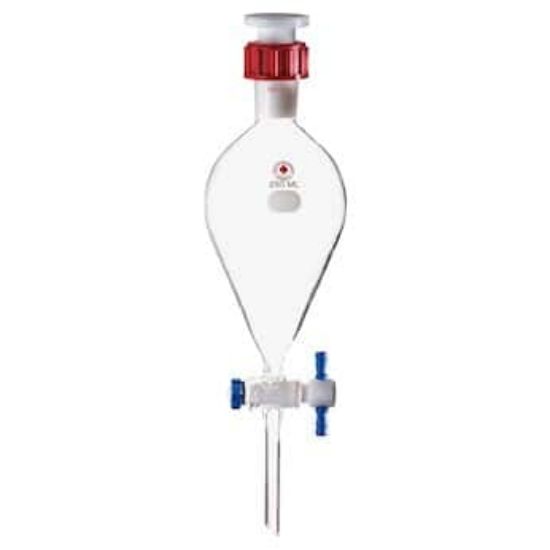
Ace Glass Separatory Funnel, Squibb Type, 1000 mL
Borosilicate glass with a 24/40 joint and a leak-tight locking stopper built to prevent spills during vigorous shaking.
Browse This Funnel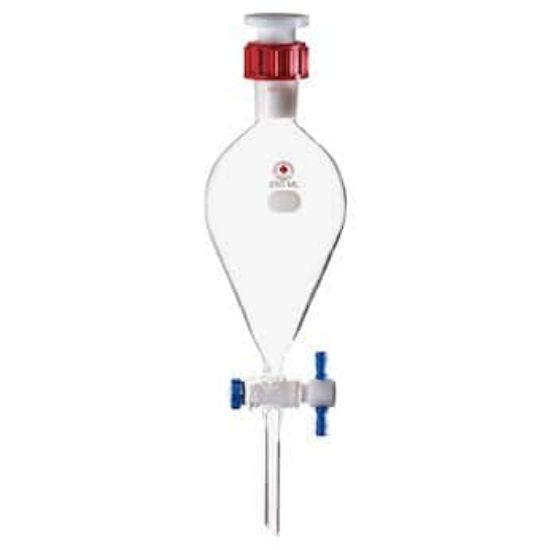
Ace Glass Separatory Funnel, Squibb Type, 2000 mL
The larger 45/50 joint version of the same lock-tight Squibb design, suited to higher-volume extractions.
Browse This Funnel
Kimble Separatory Funnel, PTFE Stopcock, 250 mL
High-clarity glass, ASTM E1096 Type 4 compliant, with a large-bore stem that allows phase separation without emptying the funnel.
Browse This Funnel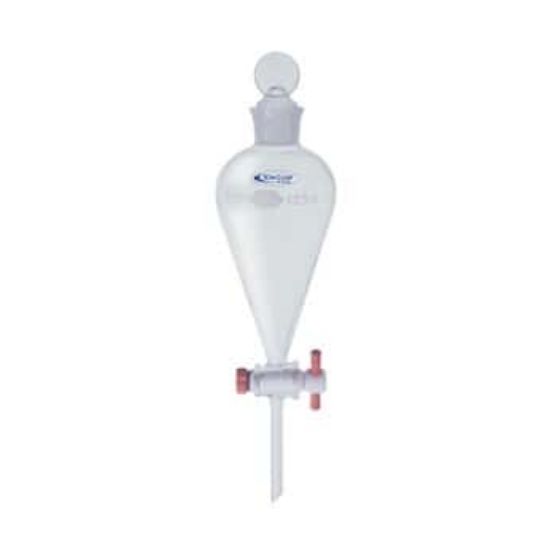
Kimble UltraClear Safety-Coated Funnel, 125 mL
Plastic safety-coated glass with an autoclavable PTFE plug, the smaller-volume, shatter-contained option for shared or teaching labs.
Browse This Funnel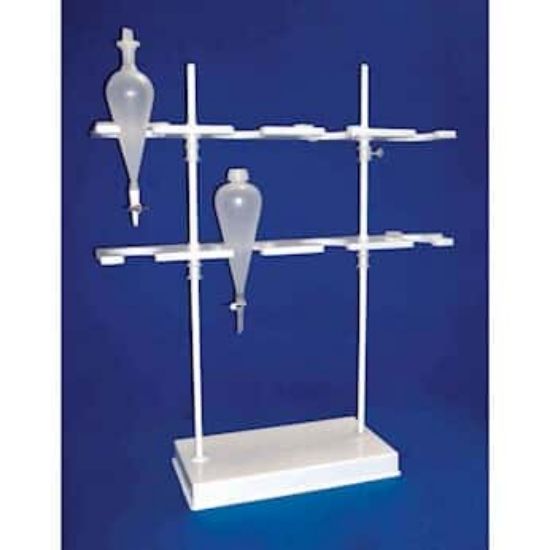
Scienceware Separatory Funnel Rack
Chemical-resistant HDPE rack with two height-adjustable rods and eight funnel positions per shelf, for holding multiple funnels upright at once.
Browse This RackExplore More Laboratory Glassware Guides
A separating funnel is one part of a bigger glassware kit. See how it fits alongside other core lab glassware.
Complete Guide To Laboratory Glassware
See how a separating funnel fits into the wider set of glassware used across a typical chemistry lab.
Read The Glassware GuideErlenmeyer (Conical) Flask Guide
Compare conical flasks with separating funnels for holding and swirling liquids during a workflow.
Read The Flask GuideWhat Is A Volume Beaker?
Learn where a beaker fits versus a separating funnel for receiving and holding drained liquid layers.
Read The Beaker GuideSeparating Funnel FAQs
What Is A Separating Funnel Used For?
Mainly liquid-liquid extraction, isolating a compound from a mixture by shaking it between two immiscible solvents, then draining the two layers off separately once they've settled.
What Is The Difference Between A Separating Funnel And A Separatory Funnel?
Nothing, they're the same piece of equipment. "Separatory funnel" is more common in North American usage, while "separating funnel" is more common elsewhere.
Why Do You Vent A Separating Funnel?
Shaking a closed, inverted funnel builds up real pressure from volatile solvents and dissolved gases. Venting (briefly opening the stopcock) releases that pressure before it can force the stopper out or spray solvent from the stopcock.
How Do You Know Which Layer Is On The Bottom?
The denser liquid settles at the bottom, nearest the stopcock. If you're unsure which of your two solvents is denser, add a small amount of water to the funnel; whichever layer it joins tells you which is the aqueous phase.
What Size Separating Funnel Do I Need?
As a rule of thumb, choose a funnel roughly twice the total volume of liquid you're adding, so there's enough headspace to shake and vent safely. 125-250 mL suits most small-scale work; 1-2 L suits larger or repeated extractions.
PTFE Or Glass Stopcock, Which Is Better?
PTFE stopcocks need no grease and handle most common organic solvents well, which makes them the lower-maintenance default for general use today. Glass stopcocks are still specified in some labs for a narrower range of specialty solvent work, though PTFE has become the more common choice overall. If you're working with an unusual or highly aggressive solvent, check compatibility with the specific stopcock material rather than assuming either one is universally safe.
What Is Liquid-Liquid Extraction?
A separation technique that uses the different solubility of a compound in two immiscible liquids to move it from one solvent into the other, most commonly performed using a separating funnel.
Need Help Choosing A Separating Funnel?
Talk to John Morris Group about separating funnels, shapes, stopcock materials and racks for your laboratory.
Contact UsCall 1300 501 555 or contact John Morris Group for quotation and technical support.