Drying Or Growing? Picking Between A Lab Oven And Incubator
The two get confused constantly, but the job they do is almost opposite.
A laboratory oven drives heat and moisture out of a sample. A laboratory incubator holds a gentle, stable environment so something living can grow. Once you know which job you need done, picking a model comes down to temperature range, chamber size and how tightly the environment has to be controlled. For Australian labs, it also comes down to local stock, installation and who will service it.
What's The Difference Between A Laboratory Oven And An Incubator?
A laboratory oven applies dry heat, usually somewhere between ambient and 300°C, to dry glassware, remove moisture from samples, cure materials or sterilise heat-stable items. An incubator does the opposite job at the opposite end of the temperature scale: it holds a stable, gentle environment, typically ambient to around 70-80°C, so cultures, cells or biological samples can grow or survive without being cooked.
If you're destroying moisture or microorganisms with heat, you want an oven. If you're keeping something alive, you want an incubator. Most of the buying decision from there is about airflow type, temperature accuracy and, for incubators, whether you need CO2 or humidity control on top of temperature. For heat-sensitive samples that can’t be oven-dried, a laboratory freeze dryer removes moisture at low temperature instead.
What Is A Laboratory Oven?
A laboratory oven is a heated chamber built for controlled, even drying and heat treatment rather than cooking food. The two things that separate it from a domestic or workshop oven are temperature uniformity across every shelf and a controller accurate enough to hold a set point for hours without drifting.
Most benchtop lab ovens run from ambient up to 250-300°C, which covers the bulk of drying, curing and dry-heat sterilising work. Airflow design is the main thing that separates one oven from another: gravity (natural) convection ovens are gentler and cheaper, fan-circulated (forced convection) ovens heat a full load faster and more evenly, and vacuum ovens dry at lower temperatures under reduced pressure for samples that would oxidise or degrade in open air.
Already know you want a Memmert? Our Memmert ovens and incubators model guide walks through the specific series.

Common Laboratory Oven Applications
- •Drying glassware and lab consumables
- •Moisture and loss-on-drying tests on soil, grain, food and mineral samples
- •Dry-heat sterilisation of heat-stable items
- •Curing coatings, adhesives and materials samples
- •Accelerated ageing and thermal stress testing

Common Laboratory Incubator Applications
- •Microbiology culture growth in pathology, food and water labs
- •Mammalian cell and tissue culture (CO2 models)
- •Shaking culture of microbial suspensions in flasks
- •Seed germination and food stability testing
- •Below-ambient conditioning such as BOD testing (cooled models)
What Is A Laboratory Incubator?
A laboratory incubator is built to hold a stable, biologically friendly environment rather than to heat things hard and fast. Where an oven's job is to be even and hot, an incubator's job is to be even and gentle, and to stay that way for days or weeks at a time without a temperature spike killing whatever's growing inside.
General-purpose incubators cover routine microbiology from a few degrees above ambient up to around 70-80°C. CO2 incubators add gas and humidity control on top of temperature, holding conditions that mimic the human body for mammalian cell culture. Cooled (Peltier) incubators can run below room temperature, which a heating-only unit cannot do, and shaking incubators combine agitation with temperature control for suspension cultures.
John Morris Group also distributes and services PHCbi's CO2 incubator range in Australia. See the PHCbi partnership announcement if cell culture is your main use case.
Oven Or Incubator: Which Do You Actually Need?
Start with what's inside the chamber, not the brand or the price. Everything else follows from that one question.
Choose A Laboratory Oven If
- •You're drying, curing or heat-treating non-living material
- •You need temperatures well above 80°C
- •You're running loss-on-drying or moisture-content testing
- •Humidity or gas composition inside the chamber doesn't matter
Choose A Laboratory Incubator If
- •Something living needs to survive or grow inside it
- •You need tight, stable temperature control under 80°C
- •Mammalian cell culture means you also need CO2 and humidity control
- •Your cultures need shaking, or below-ambient holding
Ask Before Buying Either
- •What chamber volume fits your typical batch, not your biggest one?
- •Is it in stock in Australia, or a 6 to 10 week order?
- •Will it arrive tested for Australian voltage with an Australian plug?
- •Who installs and services it locally, and who honours the warranty?
Laboratory Oven Vs Incubator At A Glance
| Criteria | Laboratory Oven | Laboratory Incubator | Better Choice |
|---|---|---|---|
| Typical Temperature Range | Ambient to 250-300°C | Ambient +5°C to around 70-80°C | Depends On Application |
| Primary Purpose | ✓ Drying, curing, dry-heat sterilising | ✓ Supporting biological growth or survival | Depends On Application |
| CO2 / Humidity Control | Not typically available | ✓ Available on CO2 and humidity-controlled models | Incubator |
| Below-Ambient Operation | Heating only | ✓ Available on cooled/Peltier models | Incubator |
| Airflow Options | Gravity, forced convection, vacuum | Gravity, forced convection, shaking | Tie |
| Example Price, 32L Memmert (AUD Inc GST, Oct 2026) | $3,683.90 (UF30 forced convection oven) | $3,188.90 (IN30 general-purpose incubator) | Similar Bracket |
Worth noting: at the same 32-litre size, a general-purpose Memmert oven and incubator sit within about $500 of each other at October 2026 pricing. The big jump comes with specialist incubators: a 176-litre CO2 incubator or a shaking incubator is closer to $9,000. Prices change, so check the live product page before you budget.
Why Getting This Choice Right Matters
1. The Wrong Chamber Ruins The Sample
Put a live culture in an oven and it dies. Try to sterilise glassware in an incubator and it never gets hot enough. The categories aren't interchangeable at the edges.
2. Temperature Uniformity Affects Every Result
A chamber with hot and cold spots gives inconsistent drying times or uneven culture growth depending on shelf position, which shows up as noise in your data.
3. Right-Sizing Saves Real Money
A chamber that's too small gets replaced within a couple of years as workload grows; one that's too large wastes bench space and energy running mostly empty.
4. CO2 And Humidity Control Only Matter For Some Work
Paying for a CO2 incubator when you only ever run general microbiology is money spent on a feature you'll never use.
5. Data Logging Supports Traceability
Where results feed into an accredited or regulated process, a built-in temperature logger gives you a defensible record instead of a manual logbook entry.
6. Downtime Costs More Than The Unit
An incubator that fails mid-run can cost weeks of cultures. Local service engineers and parts support matter as much as the specification sheet.
Do Laboratory Ovens And Incubators Need Calibration?
Yes, in any setting where the result needs to be traceable. A controller display reading the set temperature is not the same thing as confirming the chamber actually holds that temperature evenly across every shelf, and that drifts over time with use.
In Australia, NATA-accredited testing labs, GLP work and pharmaceutical manufacturing typically expect periodic temperature verification and, for larger chambers, multi-point temperature mapping. A unit with a built-in data logger makes this easier to demonstrate, since it produces a continuous record rather than relying on spot checks alone.
If your lab already uses a NATA-accredited calibration provider for other equipment, ask whether they cover ovens and incubators too. For routine upkeep, John Morris Group offers preventative maintenance plans for the equipment it sells.
What To Expect When You Buy From An Australian Supplier
An oven or incubator is a ten-year purchase, so what happens after delivery matters. Here is what comes with buying through John Morris Group. For the checks worth running on any supplier, see our lab equipment supplier checklist.
Local Stock On Popular Models
Stock levels are shown on each product page. At the time of writing, the Memmert UF30, IN30 and VO29 were all held in stock. Other models are typically a 4 to 10 week order.
Ready For Australian Power
Local delivery includes Australian voltage and earth leakage testing, a QA inspection and an Australian standard plug. See the delivery details for timeframes by state.
Nationwide Installation
Installation services are available nationwide from factory-trained service engineers, including help with Memmert programming and setup.
Genuine Local Warranty
Equipment is backed by a genuine local product warranty, so claims are handled in Australia rather than through an overseas seller.
Service And Repairs
Preventative maintenance and breakdown repair are available nationwide, on site or in a nearby workshop.
Accredited Quality Systems
John Morris Group operates under ISO 9001, with ISO 17025 NATA accreditation for its in-house pipette calibration laboratory.
Laboratory Ovens And Incubators At John Morris Group
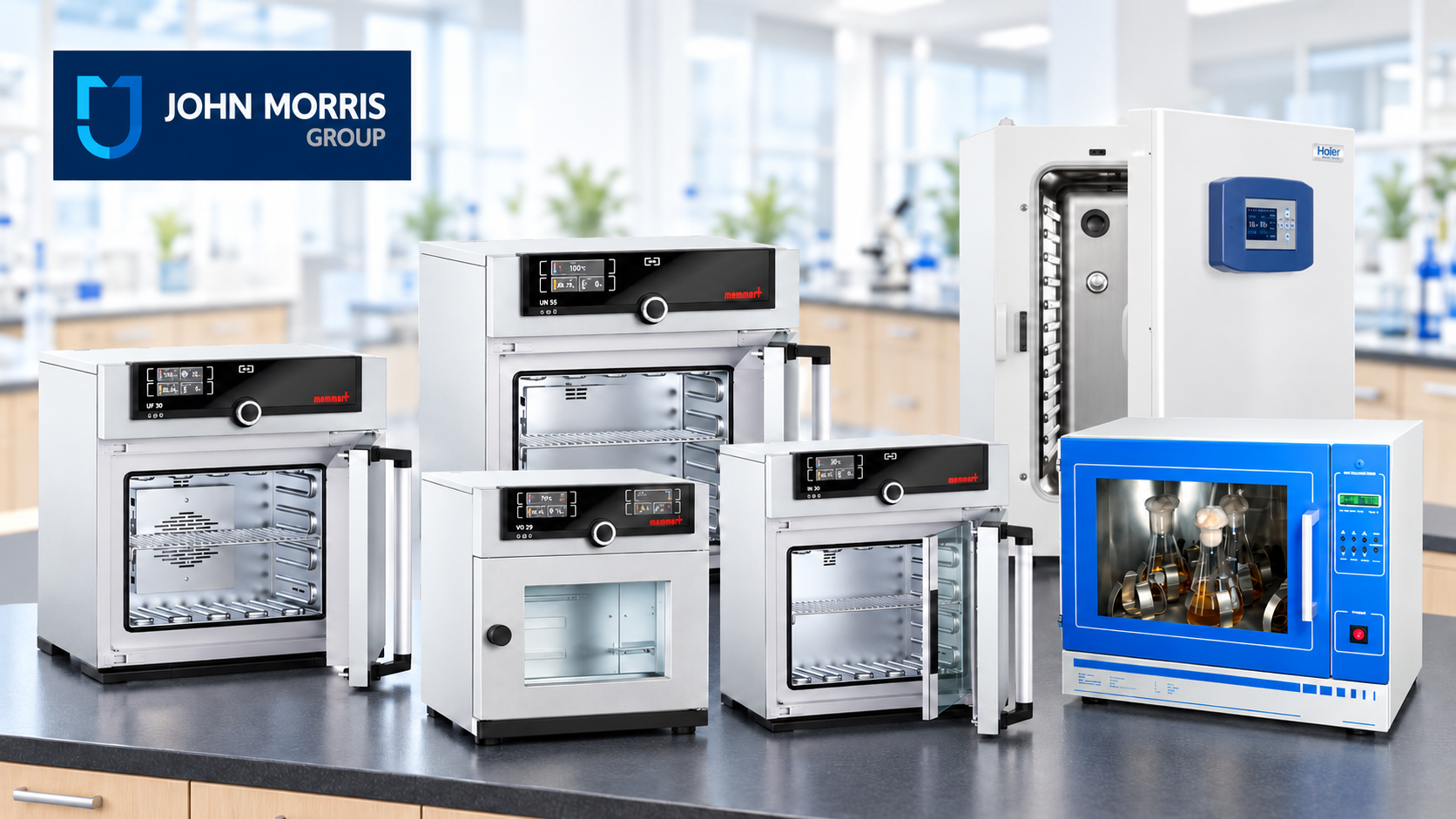
Six picks across Memmert, Grant and Haier: three ovens and three incubators. We chose them because they are the oven and incubator pages that already show up when Australian labs search Google, from a compact 32-litre drying oven through to CO2 cell culture.
Memmert Universal Oven UF30, +20 To +300°C, 32L
A compact fan-circulated oven with Memmert's ControlCOCKPIT touch controls. It leads this list because it was held in stock locally at the time of writing and already ranks near the top of Google for Memmert oven searches in Australia.
Browse This Oven
Memmert Universal Oven UN55, +20 To +300°C, 53L
A larger natural convection oven with a SingleDISPLAY interface and stainless steel interior. A good choice for gentle, even drying of larger batches.
Browse This Oven
Memmert VO29 Vacuum Oven, 29L
For heat- and oxygen-sensitive samples. Digital pressure control and individually heated thermoshelves dry gently at lower temperatures than an open-air oven.
Browse This Oven
Memmert Incubator IN30, +20 To +80°C, 32L
A compact general-purpose incubator with PID control and auto-diagnostics for routine microbiology. It is the Memmert incubator page Australian labs find most often in Google.
Browse This Incubator
Grant ES-80 Shaking Incubator, +25 To +80°C
An orbital shaker-incubator for flask cultures, with digital control of time, temperature and speed from 50 to 250 rpm and an 8 kg maximum load.
Browse This Incubator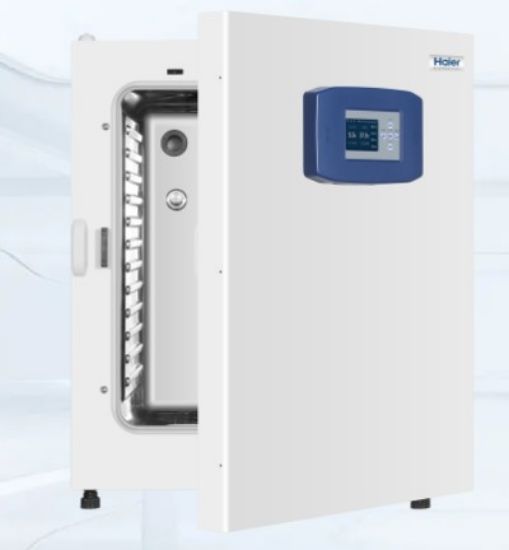
Haier Biomedical E Series CO2 Incubator, 176L
For cell culture, with temperature control to ±0.1°C from six-sided heating and infrared (NDIR) CO2 sensing. A large chamber for labs running several culture lines.
Browse This IncubatorMore Oven And Incubator Resources
Already know the brand you want, or specifically need CO2 cell culture equipment? These go deeper.
Memmert Ovens & Incubators Model Guide
A model-by-model breakdown of Memmert's Universal Oven, Hot Air Steriliser, Vacuum Oven and Incubator ranges.
Read The Model GuideMemmert ICO CO2 Incubator
A closer look at the ICO range for next-generation cell culture work in Australian labs.
Read About The ICO RangePHCbi CO2 Incubator Partnership
John Morris Group's announcement on distributing and servicing PHCbi's CO2 incubator range across Australia.
Read The AnnouncementLaboratory Oven And Incubator FAQs
What Is The Difference Between A Laboratory Oven And An Incubator?
A laboratory oven applies dry heat, usually up to 250-300°C, to dry, cure or sterilise non-living material. A laboratory incubator holds a gentle, stable environment, typically ambient to 70-80°C, to support the growth or survival of living cultures, cells or samples.
How Much Does A Laboratory Oven Or Incubator Cost In Australia?
At October 2026 pricing, a compact 32-litre Memmert oven or incubator costs roughly $3,200 to $3,700 including GST. Larger chambers, vacuum ovens and specialist incubators cost more, with a 176-litre CO2 incubator or a shaking incubator closer to $9,000. Check the live product page for current pricing.
Can John Morris Group Install And Service Ovens And Incubators In Australia?
Yes. Installation, preventative maintenance and breakdown repair are available nationwide from factory-trained service engineers, and equipment is backed by a genuine local product warranty.
What Temperature Range Do Laboratory Ovens Operate At?
Most benchtop laboratory ovens run from ambient temperature up to 250-300°C, with some high-temperature models exceeding that range for specialised drying or heat-treatment applications.
What Temperature Range Do Laboratory Incubators Operate At?
Standard incubators typically hold temperatures from around 5°C above ambient up to 70-80°C. Cooled or Peltier models extend that range below room temperature for applications like BOD or food stability testing.
What Is A CO2 Incubator Used For?
A CO2 incubator maintains a set carbon dioxide level alongside temperature and humidity, mimicking physiological conditions for mammalian cell and tissue culture, where standard temperature-only incubation isn't enough.
What Is The Difference Between Gravity Convection And Forced Convection?
Gravity (natural) convection relies on passive air movement and suits lightly loaded chambers or delicate samples. Forced (mechanical) convection uses a fan to circulate air, giving faster heat-up and more even temperatures across a full load, in both ovens and incubators.
Can A Laboratory Oven Be Used As An Incubator?
Not reliably. Most ovens are built and calibrated for higher-temperature work and lack the fine low-temperature control, and any CO2 or humidity regulation, that biological samples generally need. A dedicated incubator is the safer choice for anything living.
What Size Laboratory Oven Or Incubator Do I Need?
Size to your typical batch, not your largest ever batch. A chamber running mostly empty wastes bench space and energy, while one that's routinely overloaded gives uneven results, so match capacity to what actually goes through it week to week.
Need Help Choosing The Right Oven Or Incubator?
Talk to John Morris Group about laboratory ovens, incubators and CO2 incubators for Australian labs, with nationwide installation and service from factory-trained engineers.
Contact UsCall 1300 501 555 or contact John Morris Group for quotation and technical support.