A petri dish is a shallow, flat, lidded container used to grow microorganisms or cells in laboratory environments. It is typically made from borosilicate glass (reusable) or polystyrene plastic (disposable, pre-sterilised) and comes in standard sizes from 60 mm to 200 mm. They’re one of several everyday lab consumables most labs restock regularly — see our complete lab consumables guide for pipette tips, filter paper, gloves and more. Petri dishes are essential for microbiology, cell culture, environmental monitoring, and food safety testing.
First developed in 1887 by German bacteriologist Julius Richard Petri, its simple design has remained fundamentally unchanged for over 130 years. What has changed is how they are manufactured, sterilised, and specified for increasingly demanding applications across microbiology, cell culture, environmental monitoring, pharmaceutical QC, and food safety testing.
Choosing the wrong petri dish for your application can compromise results. Glass when you need sterile single-use, unvented when your cultures need gas exchange, or the wrong diameter for your incubation system. This guide covers the key types available, how to choose the right one, and common mistakes Australian laboratories make when selecting them.
In This Guide
Glass vs Plastic Petri Dishes · Vented vs Non-Vented · Sizes and When to Use Each · Laboratory Applications · How to Choose · Common Mistakes · Accessories · FAQ
Petri Dish Definition
A petri dish (also called a Petri plate or culture dish) is a shallow, flat-bottomed cylindrical container with a loose-fitting lid, used to culture microorganisms, grow cells, or observe small specimens. Standard sizes are 60 mm, 90 mm, 100 mm, 150 mm, and 200 mm in diameter. They are made from either borosilicate glass (reusable) or polystyrene plastic (disposable, often pre-sterilised). A petri dish gives you a wide, flat surface for surface culture and colony observation; for liquid samples and small-volume work, a test tube is usually the better format.
Glass vs Plastic Petri Dishes
This is the first and most important decision. The two materials serve fundamentally different purposes:
| Factor | Glass (Borosilicate) | Plastic (Polystyrene) |
|---|---|---|
| Use type | Reusable (autoclave between uses) | Single-use, disposable |
| Sterilisation | Autoclavable at 121°C repeatedly | Pre-sterilised by gamma irradiation (single use only) |
| Chemical resistance | Excellent resistance to solvents and acids | Limited; damaged by organic solvents |
| Optical clarity | Excellent, no distortion | Good but varies by manufacturer |
| Cost per use | Lower over time (reusable) | Higher per unit but no washing/autoclaving labour |
| Cross-contamination risk | Higher (depends on cleaning quality) | Eliminated (single use, pre-sterilised) |
| Available at JMG | DWK DURAN Steriplan | Thermo Scientific Nunc, Greiner Bio-One |
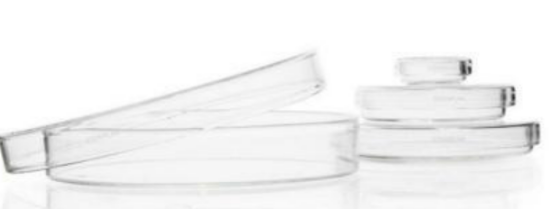
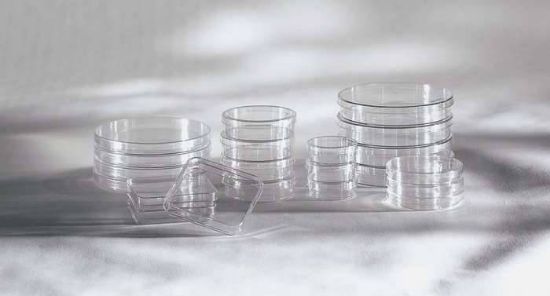
When to choose glass: When you need to reuse dishes repeatedly, when working with solvents or chemicals that attack polystyrene, or when optical clarity under a microscope is critical. Glass petri dishes are made from borosilicate glass, the same material used in laboratory beakers and flasks. DWK DURAN borosilicate glass dishes are available in sizes from 60 mm to 200 mm.
When to choose plastic: For any application requiring guaranteed sterility without autoclaving, for high-throughput work where washing is impractical, or for routine microbiology where single-use eliminates cross-contamination risk entirely. For specialist applications, PFA (fluoropolymer) petri dishes offer both chemical resistance and autoclavability.
Browse our full range of glass and plastic petri dishes with delivery across Australia and New Zealand.
Vented vs Non-Vented Petri Dishes
Plastic petri dishes are available with or without ventilation ribs (small raised ridges on the lid that create a small gap for gas exchange). This distinction matters more than most labs realise:
Vented (with airflow ribs): Allow CO2 and O2 exchange between the culture and the incubator atmosphere. Essential for mammalian cell culture in CO2 incubators and for aerobic microbial cultures that need oxygen. Thermo Scientific vented dishes are a standard choice for these applications.
Non-vented (without ribs): Create a tighter seal that reduces moisture loss and limits airborne contamination. Better for anaerobic culture work, long-term incubation, and applications where controlling the internal atmosphere is important. LLG aseptic non-vented dishes are widely used for these applications.
Petri Dish Sizes and When to Use Each
| Diameter | Common Applications | Notes |
|---|---|---|
| 35 mm | Individual cell culture experiments, small-scale assays | Fits standard multi-well plate incubator racks |
| 60 mm | Bacterial plating, antimicrobial susceptibility, small cultures | Common in clinical microbiology |
| 90 mm | Standard bacteriology, environmental monitoring, colony counting | The most widely used size globally. Standard for air sampling and water testing |
| 100 mm | Cell culture, tissue culture, mammalian cell work | Standard tissue culture dish diameter |
| 150 mm | Large-scale plating, library screening, high colony density work | Used when more surface area is needed for colony isolation |
| 200 mm | Specimen observation, large-area cultures, teaching | Typically glass (DWK DURAN borosilicate) |
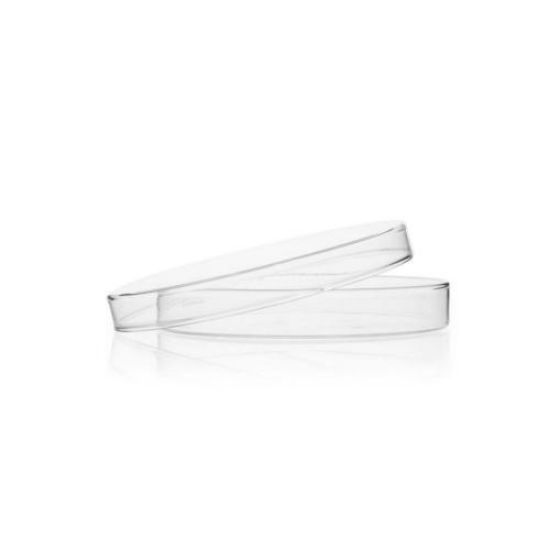
The 90 mm dish is the industry standard for most bacteriology and environmental monitoring work. If you are setting up a new microbiology lab or ordering for the first time, start with 90 mm and add other sizes as specific applications require.
Laboratory Applications for Petri Dishes
Microbiology and bacteriology: The primary use. Agar media is poured into the dish, allowed to set, inoculated with a sample, and incubated. Colonies are then counted, identified, or subcultured. Standard for clinical specimens, water testing, food safety testing, and environmental monitoring.
Environmental air monitoring: Open petri dishes or dishes loaded into air samplers are used to measure airborne microbial contamination in cleanrooms, pharmaceutical manufacturing areas, and food production facilities. The 90 mm dish is the standard size for most air samplers.
Cell and tissue culture: Sterile plastic dishes (often tissue culture-treated for cell adhesion) are used for growing mammalian cells. Vented lids are essential for CO2 incubator applications.
Antimicrobial susceptibility testing: Kirby-Bauer disc diffusion tests use 90 mm or 100 mm dishes to determine antibiotic sensitivity. Consistent dish quality and flatness directly affect zone-of-inhibition measurements.
Specimen observation: Larger glass dishes (150 mm and 200 mm) are used as observation chambers for examining specimens under stereo microscopes without needing to mount slides.
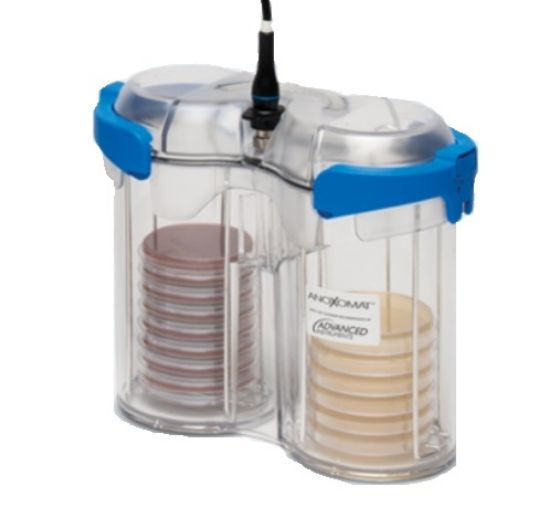
Anaerobic culture: Petri dishes are stacked inside anaerobic jars with gas-generating sachets to create oxygen-free environments for culturing anaerobic bacteria. Non-vented dishes help maintain the anaerobic atmosphere.
How to Choose the Right Petri Dish
1. Glass or plastic? If you need to reuse, autoclave, or work with solvents: glass. If you need guaranteed sterility, high throughput, or single-use convenience: plastic.
2. Vented or non-vented? For aerobic culture and CO2 incubators: vented. For anaerobic work, long-term incubation, or when minimising moisture loss matters: non-vented.
3. What size? 90 mm for standard bacteriology and environmental monitoring. 100 mm for tissue culture. 60 mm for small-scale clinical work. 150 mm when you need more colony separation. Match the dish size to your incubator shelving and air sampler requirements.
4. Sterile or non-sterile? For microbiology and cell culture: always pre-sterilised (gamma irradiated). For general laboratory observation or chemical work: non-sterile is acceptable and more economical.
5. Standard or compartmented? Standard single-compartment dishes suit most applications. Triple-compartment dishes allow multiple media types or specimens in a single dish, useful for comparative testing and saving incubator space.
6. Check your equipment compatibility. Confirm the dish diameter fits your incubator shelves, colony counter, air sampler cassette, and anaerobic jars. An inoculating turntable should accommodate the dish diameter you select.
Common Mistakes When Selecting Petri Dishes
Most Common Mistake
Using vented dishes for anaerobic culture. The ventilation ribs allow oxygen exchange, which defeats the purpose of an anaerobic jar or chamber. For anaerobic work, always use non-vented dishes with tight-fitting lids to maintain the oxygen-free environment.
- Reusing disposable plastic dishes: Polystyrene dishes cannot be autoclaved (they melt at ~100°C). Attempting to wash and reuse them risks contamination and structural failure. If you need reusable dishes, invest in glass.
- Using non-sterile dishes for culture work: Non-sterile dishes are significantly cheaper, which makes them tempting. But for any microbiological or cell culture application, pre-sterilised dishes are essential. The few cents saved per dish are not worth a contaminated experiment.
- Wrong size for air sampler: Most environmental air samplers are designed for 90 mm dishes. Using 100 mm dishes may not seat properly in the sampler cassette, leading to air leaks and inaccurate colony counts.
- Ignoring surface treatment: For cell culture applications, standard polystyrene is not enough. Mammalian cells require tissue culture-treated (TC-treated) surfaces for attachment. Confirm the dish specifies TC treatment before use in cell culture.
- Not cleaning glass dishes properly between uses: Residual agar, media, or chemical traces on reused glass dishes can inhibit growth or introduce contamination. Follow a validated cleaning protocol before autoclaving. See our guide on how to clean lab glassware properly for best practices. See our full guide to how autoclaves work for sterilisation cycle basics.
Petri Dish Accessories
Beyond the dishes themselves, several accessories improve workflow and results:
- Inoculating turntable: Rotates the dish during inoculation for even spreading of cultures. Accommodates dishes from 60 to 150 mm.
- Anaerobic jars: Sealed containers that create oxygen-free environments for anaerobic culture. Available in sizes holding up to 24 petri dishes.
- Sealing tape: Wraps around the dish-lid junction to prevent contamination during transport or extended incubation.
- Dish racks: Organise and store stacked dishes in the incubator or on the bench.
- Air samplers: Environmental monitoring instruments that draw a measured volume of air across the agar surface in a petri dish to capture airborne microorganisms.
Frequently Asked Questions
What is a petri dish used for?
A petri dish is used to culture microorganisms, grow cells, and observe specimens in laboratory settings. The most common use is pouring agar media into the dish, inoculating it with a sample, and incubating it to grow bacterial or fungal colonies for identification, counting, or susceptibility testing.
What is the difference between glass and plastic petri dishes?
Glass petri dishes (borosilicate) are reusable, autoclavable, chemically resistant, and offer excellent optical clarity. Plastic petri dishes (polystyrene) are single-use, pre-sterilised, and eliminate cross-contamination risk. Glass suits labs that reuse and autoclave. Plastic suits high-throughput microbiology where guaranteed sterility matters.
What size petri dish should I use?
90 mm is the standard for most bacteriology, environmental monitoring, and air sampling. 100 mm is standard for tissue and cell culture. 60 mm suits small-scale clinical microbiology. 150 mm and 200 mm are used when more surface area is needed for colony separation or specimen observation.
What does vented mean on a petri dish?
Vented petri dishes have small raised ribs on the lid that create a gap for gas exchange (CO2 and O2). They are essential for aerobic microbial culture and mammalian cell culture in CO2 incubators. Non-vented dishes have tight-fitting lids that reduce moisture loss and limit gas exchange, making them better for anaerobic culture.
Can you autoclave plastic petri dishes?
No. Standard polystyrene petri dishes melt at approximately 100°C and cannot be autoclaved. If you need an autoclavable disposable dish, PFA (fluoropolymer) dishes are available but significantly more expensive. For routine reuse and autoclaving, borosilicate glass dishes are the standard choice.
Are petri dishes reusable?
Glass petri dishes (borosilicate) are fully reusable. They can be washed, autoclaved at 121°C, and used repeatedly. Polystyrene plastic petri dishes are single-use only and cannot be autoclaved because they melt at approximately 100°C. For labs that need both reusability and chemical resistance, PFA (fluoropolymer) dishes are autoclavable but more expensive.
Why are petri dishes circular?
The circular shape provides uniform distance from the centre to the edge, which promotes even spreading of agar media and consistent colony growth. It also eliminates corners where moisture could accumulate or where agar could crack during cooling. The round lid sits evenly on the base, providing consistent protection against airborne contamination across the entire surface.
Where can I buy petri dishes in Australia?
John Morris Group supplies petri dishes from Thermo Scientific, DWK DURAN, Greiner Bio-One, LLG, CellTreat, and Advantec across Australia and New Zealand. We carry glass and plastic dishes in all standard sizes, sterile and non-sterile, vented and non-vented. Call 1300 501 555 or browse our petri dish range online.
Need Help Selecting Petri Dishes?
Whether you need sterile plastic dishes for routine microbiology, borosilicate glass for reusable applications, or complete environmental monitoring systems including air samplers and anaerobic jars, our team can help.
Call 1300 501 555 or browse our petri dish range online.