A peristaltic pump is a type of positive displacement pump that moves fluid by squeezing flexible tubing with rotating rollers. The fluid only ever contacts the inside of the tube, making peristaltic pumps ideal for sterile, shear-sensitive, or chemically aggressive applications. They are used across Australian laboratories, water treatment facilities, pharmaceutical manufacturing, food production, and mining operations.
This guide explains how peristaltic pumps work, the main types available, how to choose the right one for your application, and the most common mistakes to avoid when selecting tubing.
Peristaltic Pump Definition
A peristaltic pump is a positive displacement pump that moves fluid through flexible tubing using rotating rollers. The fluid only contacts the tubing, making it ideal for sterile, corrosive, and shear-sensitive applications in laboratory, pharmaceutical, industrial, and environmental settings.
How Does a Peristaltic Pump Work?
A peristaltic pump works by compressing flexible tubing against a housing using rotating rollers or shoes. As the rollers move along the tubing, they create a sealed pocket of fluid that is pushed forward. Behind the roller, the tubing springs back to its original shape, creating a vacuum that draws in more fluid.
This mechanism means the fluid never contacts any moving parts, only the inner wall of the tubing. That single design feature is what makes peristaltic pumps so valuable: the pump cannot contaminate the fluid, and the fluid cannot corrode the pump. It also means the pump can run dry without damage in most laboratory and dosing applications and is inherently self-priming.
Flow Rate and Accuracy
The flow rate of a peristaltic pump depends on two main factors: the inside diameter of the tubing and the rotation speed (RPM) of the pump drive. Larger tubing and faster speeds produce higher flow. Smaller tubing and slower speeds give finer control for precision dosing. Flow rate is typically calculated based on tubing inner diameter (ID) and pump RPM, with manufacturer charts used for precise calibration.
Typical accuracy ranges from ±0.5% for high-precision dispensing pumps to ±5% for general transfer applications. One consideration that is often overlooked is pulsation. Because the rollers compress the tubing at fixed intervals, the flow is not perfectly continuous. In applications where pulsation matters (such as optical measurement systems or sensitive analytical instruments), using a pump head with more rollers or adding a pulse dampener can smooth the output.
Types of Peristaltic Pumps
Fixed-Speed Pumps
Deliver a constant flow rate. Best for simple transfer tasks where the flow does not need to be adjusted during operation. Common in water treatment and continuous dosing applications.
Variable-Speed Pumps
Allow the operator to adjust flow rate by changing the motor speed. These are the most common type in laboratory environments where flow needs to be tuned to different experiments. The Masterflex L/S series is a widely used example, offering precision flow control from microlitres to litres per minute. For compact benchtop applications, the VWR Low-Flow Variable-Speed Peristaltic Pump is a popular entry-level option.
Dispensing Pumps
Designed to deliver precise, repeatable volumes on demand. Used in pharmaceutical filling, reagent dispensing, and quality control workflows where accuracy to within ±0.5% is required.
Industrial Hose Pumps
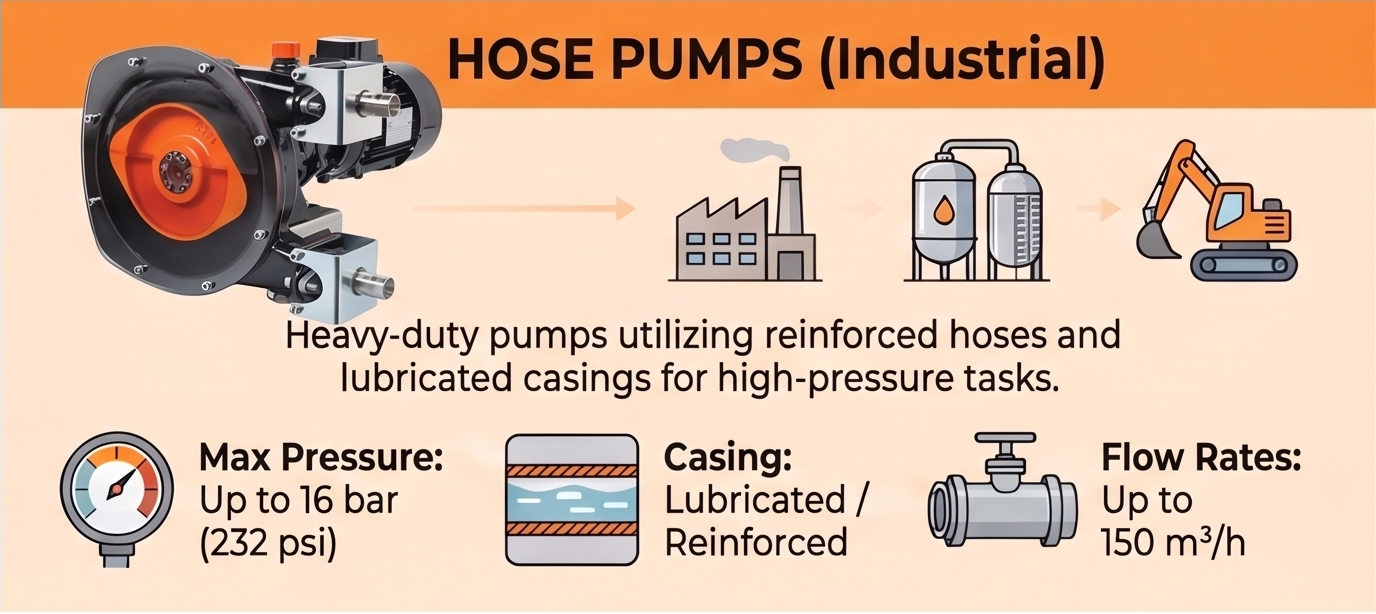
Heavy-duty versions that use reinforced hoses instead of laboratory tubing. Built for high-flow, abrasive, or viscous fluids in mining, wastewater, and chemical processing. The Masterflex High-Pressure High-Flow Pump is designed for these demanding throughput requirements.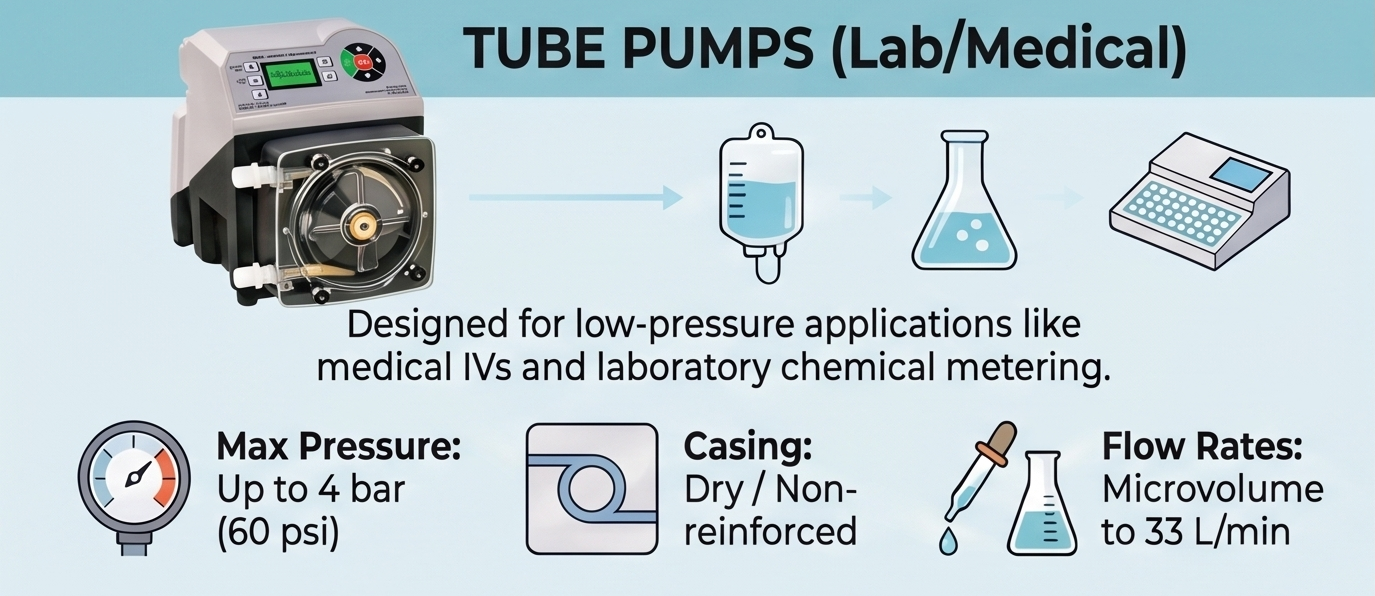
Common Applications in Australian Labs and Industry
- Water and wastewater treatment: Chemical dosing of flocculants, pH adjustment reagents, and disinfectants. Peristaltic pumps handle these corrosive chemicals safely because only the tubing contacts the fluid. MANTECH automated water analysis systems often integrate peristaltic pump sample delivery.
- Chemical transfer and general laboratory: Moving acids, solvents, and reagents between vessels without contamination risk. The self-priming and dry-run capability make them reliable for intermittent lab workflows.
- Food and beverage production: Transferring flavourings, additives, and viscous products like syrups or sauces. Silicone and PharMed tubing meet food-contact safety requirements.
- Mining and mineral processing: Pumping abrasive slurries and reagents where traditional pumps wear out quickly. The replaceable tubing acts as the only wear part, reducing maintenance costs.
- Pharmaceutical and bioprocessing: Cell culture media transfer, fermentation sampling, and sterile filling. Multi-channel systems like the Ismatec Reglo ICC Digital 4-Channel Pump allow multiple fluid lines from a single drive. The Masterflex Cytoflow pump head is specifically designed to maintain cell viability during these shear-sensitive applications.
Choosing the Right Tubing
The tubing is the only part of a peristaltic pump that contacts the fluid, and it is the only wearing part. Selecting the right material is the single most important decision when setting up a peristaltic pump system. Average tubing lifespan is around 2,000 hours, though this varies significantly depending on the fluid, operating conditions, and tubing material.
| Tubing Material | Best For | Key Advantage |
|---|---|---|
| Silicone | Food, beverage, pharmaceutical, bioprocessing | Transparent, flexible, non-toxic, autoclavable |
| PharMed BPT | Cell culture, fermentation, long-duration runs | Up to 30x the service life of silicone, low gas permeability |
| Viton (Fluoroelastomer) | Aggressive chemicals, solvents, fuels | Excellent chemical resistance to acids and hydrocarbons |
| Tygon | General laboratory transfer | Good all-round performer, specialised versions for long flex life |
| Norprene | Industrial chemical transfer, continuous operation | Superior flex life for 24/7 industrial applications |
Real-World Example: When Tubing Choice Goes Wrong
A client developing a medical diagnostic instrument experienced inconsistent results when dispensing reagents. The problem was traced to long, soft silicone tubing that was expanding and contracting like a balloon with every pump stroke. This absorbed the pressure pulse and released it out of sync, causing the instrument to vibrate and throwing off optical sensors. The fix was straightforward: switching to short lengths of rigid PTFE tubing, which does not expand under pressure and transmits the pump's flow directly and smoothly. The lesson: tubing selection is not just about chemical compatibility. Physical properties like wall rigidity and length also affect system performance.
Peristaltic vs Syringe vs Diaphragm Pumps
| Factor | Peristaltic | Syringe | Diaphragm |
|---|---|---|---|
| Best for | Continuous flow, sterile transfer, shear-sensitive fluids | Micro-volume precision dosing (below 1 µL/min) | High-pressure industrial transfer |
| Fluid contact | Tubing only (no contamination) | Syringe barrel and valve | Diaphragm, valves, and chamber |
| Can run dry? | Yes, in most laboratory and dosing applications | Not applicable | Limited |
| Volume range | µL/min to L/min | nL to mL (limited by syringe size) | mL/min to high flow |
Choose a peristaltic pump when you need continuous flow over extended periods, when the fluid must remain uncontaminated, or when you are working with shear-sensitive biological materials. Choose a syringe pump for ultra-precise micro-volume dosing. Choose a diaphragm pump for high-pressure industrial fluid transfer. For help comparing options for your specific application, see our guide to selecting pumps for medical and laboratory applications.
How to Choose the Right Peristaltic Pump
1. Define your flow rate requirements. What volume do you need to move, and over what time period? This determines the pump drive speed and tubing bore size.
2. Identify your fluid. What are you pumping? The chemical composition, viscosity, temperature, and whether it contains particulates or is shear-sensitive all affect both the pump type and tubing selection.
3. Select the tubing material. Match the tubing to your fluid using a chemical compatibility chart. Then consider whether you need autoclavability, long flex life, or food-grade certification.
4. Choose the pump head. The pump head holds the tubing and determines how many rollers compress it. More rollers mean smoother flow but shorter tubing life. Fewer rollers (like the Masterflex Cytoflow) preserve cell viability but produce more pulsation.
5. Select the drive. Fixed-speed for simple transfer, variable-speed for adjustable laboratory work, or programmable for automated dispensing and process control.
6. Plan for tubing replacement. Budget for replacement tubing and schedule changes based on your operating hours. For continuous operation, PharMed BPT or Norprene tubing lasts significantly longer than silicone.
Common Mistakes When Selecting a Peristaltic Pump
- Wrong tubing ID for the required flow rate: Choosing tubing that is too small limits throughput. Choosing tubing that is too large reduces dosing precision. Always match tubing bore size to your target flow range first.
- Ignoring chemical compatibility: The tubing is the only wetted part. If it is not compatible with your fluid, it will swell, harden, or crack. Always run a compatibility check or immersion test (24 to 48 hours) before committing to a tubing material.
- Over-specifying accuracy: Not every application needs ±0.5% precision. Over-specifying drives up cost and complexity. Match the accuracy requirement to the actual application need.
- Underestimating tubing wear: Tubing is a consumable. Budget for replacement and schedule changes based on operating hours. Unexpected tubing failure during a critical run is the most common cause of unplanned downtime.
- Choosing the drive first: Many buyers select the drive unit and then try to fit the tubing and head around it. A better approach is to select the tubing material and size first, then match the pump head and drive to that tubing.
When NOT to Use a Peristaltic Pump
- When you need ultra-precise micro-volumes below 1 µL/min (use a syringe pump instead)
- When high discharge pressure above 3 to 4 bar is required (use a diaphragm or piston pump)
- When absolutely pulseless flow is critical and no dampener can be added
- When the fluid degrades all available tubing materials (consult a compatibility chart first)
Peristaltic Pump Brands at John Morris Group
- Masterflex: The global standard for laboratory peristaltic pumps. The L/S Easy-Load II pump head is one of the most widely used in Australian labs, and the L/S Cytoflow is purpose-built for shear-sensitive bioprocessing. See our Masterflex Peristaltic Pump Selection Guide for help choosing the right drive, pump head, and tubing combination.
- Cole-Parmer: Supplies the drive units and controllers that pair with Masterflex pump heads, plus a broader range of fluid handling accessories and tubing.
- Fluid Metering Inc. (FMI): Valveless piston pumps for applications requiring pulseless, precise metering at very low flow rates.
For laboratory-grade systems, Australian labs generally invest between $1,100 and $1,700 for a high-precision pump unit, $1,200 to $1,500 for compact continuous dosing setups, and $3,800 to $5,200 or more for advanced chemical dosing or industrial-grade configurations.
Frequently Asked Questions
What is a peristaltic pump?
A peristaltic pump is a positive displacement pump that moves fluid by compressing flexible tubing with rotating rollers. The fluid only contacts the tubing, making these pumps ideal for sterile, corrosive, or shear-sensitive applications.
How long does peristaltic pump tubing last?
Average tubing lifespan is around 2,000 hours, though this varies based on the fluid being pumped, operating conditions, and tubing material. PharMed BPT can last up to 30 times longer than standard silicone in continuous-operation applications.
Can a peristaltic pump run dry?
Yes. Peristaltic pumps can run dry without damage in most laboratory and dosing applications because there are no internal seals or moving parts in contact with the fluid. This also makes them inherently self-priming.
What is the difference between a peristaltic pump and a syringe pump?
Peristaltic pumps deliver continuous flow and handle larger volumes over time. Syringe pumps deliver ultra-precise micro-volumes but are limited by the physical size of the syringe. Choose peristaltic for ongoing flow, syringe for micro-dosing.
Where can I buy a peristaltic pump in Australia?
John Morris Group supplies Masterflex, Cole-Parmer, and Fluid Metering Inc. (FMI) peristaltic pumps across Australia and New Zealand with local technical support, installation, and service. Call 1300 501 555 or browse our laboratory and scientific equipment online.
Need Help Choosing a Peristaltic Pump?
Our technical team helps Australian labs and industrial facilities select the right pump drive, pump head, and tubing for their specific application. Whether you need a compact lab dosing system or a high-flow industrial setup, we provide expert guidance from specification through to installation and ongoing service.
Call 1300 501 555 or browse our Masterflex, Cole-Parmer, and laboratory pumps ranges online.