A centrifuge is a laboratory instrument that spins samples at high speed to separate components based on density. The spinning creates centrifugal force that pushes heavier particles outward and to the bottom of the tube, while lighter components remain in suspension. Centrifuges are essential in clinical pathology, molecular biology, microbiology, chemistry, and environmental testing.
One of the most common mistakes in laboratories is confusing RPM (how fast the rotor spins) with RCF (the actual force applied to the sample). Two centrifuges running at the same RPM can apply completely different forces if their rotors are different sizes. This guide explains the difference, covers the main types of laboratory centrifuges, and helps you choose the right one.
In This Guide
How a Centrifuge Works · RCF vs RPM · Types of Centrifuges · Applications · How to Choose · Common Mistakes · FAQ
How a Centrifuge Works
A centrifuge works on a simple principle: when a sample is spun rapidly, centrifugal force pushes denser components outward (toward the bottom of the tube) and lighter components stay closer to the centre of rotation.
The sample is placed in tubes or containers inside a rotor. The rotor spins at a set speed, generating centrifugal force that separates the sample into layers based on density. After spinning, you typically see a pellet (dense material at the bottom) and a supernatant (lighter liquid above).
The effectiveness of the separation depends on three factors: the force applied (RCF), the time of centrifugation, and the density difference between the components being separated.
RCF vs RPM: Why the Difference Matters
The Key Difference
RPM (Revolutions Per Minute) tells you how fast the rotor spins. RCF (Relative Centrifugal Force, also called g-force) tells you the actual force applied to the sample. RCF depends on both the RPM and the rotor radius. Always report and follow protocols in RCF, not RPM.
Why RPM alone is misleading: A centrifuge spinning at 5,000 RPM with a small rotor (10 cm radius) generates approximately 2,800 x g. The same 5,000 RPM with a larger rotor (20 cm radius) generates approximately 5,600 x g. Same speed, double the force. If a protocol says "centrifuge at 3,000 x g" and you set your centrifuge to 3,000 RPM, you will almost certainly apply the wrong force.
| Factor | RPM | RCF (g-force) |
|---|---|---|
| What it measures | Rotor speed (rotations per minute) | Force applied to the sample (multiples of gravity) |
| Depends on rotor size | No | Yes (larger rotor = higher force at the same RPM) |
| Reproducible across machines | No (different rotors give different force) | Yes (same force regardless of centrifuge model) |
| Use for protocols | Avoid if possible | Always preferred |
The Conversion Formula
RCF = 1.118 x 10⁻⁵ x r x RPM²
Where r is the rotor radius in centimetres (measured from the centre of the rotor to the bottom of the tube) and RPM is the rotational speed. Most modern centrifuges like the Sigma range allow you to set either RPM or RCF directly, converting automatically.
Quick Reference: Common Protocols
| Application | Typical RCF | Time |
|---|---|---|
| Cell pelleting (mammalian cells) | 200 to 500 x g | 5 to 10 min |
| Blood separation (serum/plasma) | 1,500 to 3,000 x g | 10 to 15 min |
| Bacterial pelleting | 3,000 to 5,000 x g | 10 to 15 min |
| DNA/RNA extraction | 12,000 to 20,000 x g | 10 to 30 min |
| Subcellular fractionation | 20,000 to 100,000 x g | 30 min to 2 hr |
Types of Laboratory Centrifuges
Microcentrifuges
Compact benchtop units designed for small volumes (0.5 to 2 mL microtubes). Speeds up to 15,000 RPM (approximately 21,000 x g). The workhorse for molecular biology, PCR preparation, DNA/RNA extraction, and quick spin-downs. The Sigma 1-14K refrigerated microcentrifuge reaches 15,000 RPM with temperature control down to -10 degrees Celsius.
Benchtop Centrifuges
Medium-capacity units that accept 15 mL and 50 mL tubes, as well as microplates and blood tubes. Speeds typically range from 300 to 6,000 RPM. Used in clinical laboratories, cell culture, and general sample processing. The Sigma 2-7 benchtop centrifuge handles up to 4 x 100 mL or 30 x 15 mL tubes at 4,000 RPM.
Refrigerated Benchtop Centrifuges
Same capacity as standard benchtop models but with built-in cooling to maintain sample temperature during extended runs. Essential for temperature-sensitive biological samples like proteins, enzymes, and live cells that degrade if they warm up during centrifugation. The Sigma 4-5L is a large-capacity refrigerated benchtop model.
High-Speed Centrifuges
Floor-standing or large benchtop units reaching 20,000 to 30,000 RPM. Used for subcellular fractionation, large-volume bacterial pelleting, and applications requiring higher g-forces than standard benchtop models can achieve. The Sigma 3-30KS reaches 30,000 RPM with refrigeration.
Clinical Centrifuges
Specifically designed for blood tube processing in pathology and diagnostic laboratories. Accept standard blood collection tubes (vacutainers) and spin at the precise g-forces required for serum and plasma separation. The Sigma 2-7 Clinical Package comes preconfigured with the correct rotor and settings for clinical blood work.
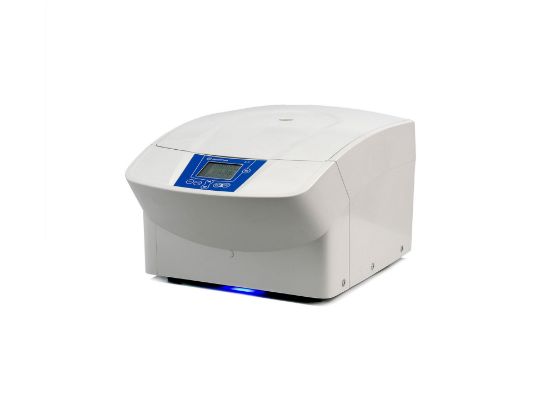
Browse our full Sigma centrifuge range or call 1300 501 555 for help selecting the right model.
Laboratory Applications
Clinical pathology: Separating serum or plasma from whole blood for diagnostic testing. Every pathology lab in Australia uses centrifuges daily for blood chemistry, haematology, and coagulation testing.
Molecular biology: DNA and RNA extraction, PCR preparation, plasmid purification, and protein isolation. Microcentrifuges are essential at every molecular biology bench.
Cell culture: Harvesting and washing cells, separating cell debris from supernatant, and preparing cell pellets for downstream analysis. Low-speed centrifugation (200 to 500 x g) is critical to avoid damaging fragile mammalian cells.
Microbiology: Concentrating bacterial cultures, washing cells, and preparing samples for analysis. Higher g-forces (3,000 to 5,000 x g) are needed to pellet smaller bacterial cells.
Environmental testing: Separating suspended solids from water and soil samples for analysis. The Raven Environmental Centrifuge is designed specifically for EPA solids testing methods.
Chemistry and petrochemistry: Separating immiscible liquids, clarifying samples, and sedimenting particulates. Centrifuges are used in petroleum testing for water-in-oil determination and sediment analysis alongside instruments like viscometers for full fluid characterisation.
How to Choose the Right Centrifuge
1. What RCF do you need? Check the protocols you will run. Cell pelleting needs 200 to 500 x g. Blood separation needs 1,500 to 3,000 x g. DNA extraction needs 12,000+ x g. Your required RCF determines whether you need a microcentrifuge, benchtop, or high-speed model.
2. What tube sizes and volumes? Microcentrifuges accept 0.5 to 2 mL tubes. Benchtop models accept 15 mL, 50 mL tubes, and blood tubes. Large-capacity models accept 100 mL to 500 mL bottles. Match the centrifuge to the tubes your lab uses.
3. Do you need refrigeration? If you work with temperature-sensitive samples (proteins, enzymes, live cells, RNA), a refrigerated centrifuge is essential. Without cooling, friction heat during long runs can reach 40 degrees Celsius and degrade sensitive biomolecules.
4. How many samples per run? Clinical labs processing 50+ blood tubes per day need a centrifuge with a large-capacity rotor. Research labs running occasional spin-downs may only need a small microcentrifuge.
5. Does it display RCF directly? Modern centrifuges allow you to set RCF directly and convert automatically. Older models only display RPM, requiring manual conversion. For reproducibility, choose a centrifuge that displays and sets RCF.
6. Noise and footprint. Centrifuges can be loud. If your lab is shared or open-plan, check the noise rating (dB). Benchtop models save floor space but need a stable, level bench to avoid vibration.
Common Centrifuge Mistakes
Most Common Mistake
Confusing RPM and RCF. A protocol that says "3,000 x g" does not mean 3,000 RPM. Setting your centrifuge to 3,000 RPM when the protocol requires 3,000 x g will apply far less force than needed, resulting in incomplete separation. Always check whether the protocol specifies RPM or RCF (x g).
- Unbalanced rotor: Tubes must be balanced by weight (not just volume) opposite each other in the rotor. An unbalanced rotor causes vibration, noise, and in severe cases can damage the centrifuge or break tubes. Always use a balance tube of equal weight opposite your sample.
- Using the wrong tube type: Not all tubes withstand high g-forces. Standard polypropylene microtubes are rated for most microcentrifuge speeds, but thin-walled PCR tubes can collapse under high force. Always check the tube manufacturer's RCF rating.
- Skipping pre-cooling: Starting a refrigerated run without pre-cooling the rotor means your samples warm up during the acceleration phase. Pre-cool the rotor for 15 to 30 minutes before loading temperature-sensitive samples.
- Centrifuging with the lid off: Some operators remove the lid to save time. This is a serious safety hazard. A tube failure at 15,000 RPM sends glass or plastic fragments at high velocity. Always close and lock the lid before starting.
- Not recording the rotor used: If you report centrifugation as RPM in your lab notebook but don't record which rotor you used, the RCF cannot be calculated later and the experiment is not reproducible.
Related Guides
What Is Viscosity? · How to Clean Lab Glassware · What Is Borosilicate Glass?
Frequently Asked Questions
What is the difference between RCF and RPM?
RPM (Revolutions Per Minute) measures how fast the rotor spins. RCF (Relative Centrifugal Force) measures the actual force applied to the sample. RCF depends on both RPM and the rotor radius. Two centrifuges at the same RPM with different rotor sizes will apply different forces. Always use RCF when following protocols.
How do I convert RPM to RCF?
Use the formula: RCF = 1.118 x 10⁻⁵ x r x RPM², where r is the rotor radius in centimetres. Most modern centrifuges like the Sigma range convert automatically when you enter either value.
What is a microcentrifuge used for?
Microcentrifuges process small volumes (0.5 to 2 mL) at high speeds (up to 15,000 RPM / 21,000 x g). They are used for DNA/RNA extraction, PCR preparation, protein pelleting, and quick spin-downs in molecular biology and biochemistry labs.
Do I need a refrigerated centrifuge?
Yes, if you work with temperature-sensitive samples like proteins, enzymes, live cells, or RNA. Friction heat during centrifugation can reach 40 degrees Celsius in non-refrigerated models. Refrigerated centrifuges maintain temperatures from -10 to +40 degrees Celsius.
What speed do I need for blood separation?
Serum separation typically requires 1,500 to 3,000 x g for 10 to 15 minutes. Platelet-rich plasma requires lower speeds (200 to 300 x g). Always follow the specific protocol for the test being performed.
Why is my centrifuge vibrating?
The most likely cause is an unbalanced rotor. Tubes must be balanced by weight opposite each other. Other causes include worn rotor bearings, incorrect rotor seating, or a centrifuge that is not level on the bench.
Where can I buy laboratory centrifuges in Australia?
John Morris Group supplies Sigma laboratory centrifuges including microcentrifuges, benchtop, refrigerated, high-speed, and clinical models across Australia and New Zealand. We also supply Eppendorf centrifuges and rotors. Call 1300 501 555 for product selection and pricing.
Need Help Selecting a Centrifuge?
From microcentrifuges for molecular biology to refrigerated benchtop models for clinical labs, our team helps Australian laboratories select the right centrifuge for their applications and throughput requirements.
Call 1300 501 555 or browse our Sigma centrifuge range online.