Laboratory Equipment • Expert Guide
The Complete Guide to Freeze Dryers: How They Work, What They Cost, and How to Choose the Right One for Your Lab
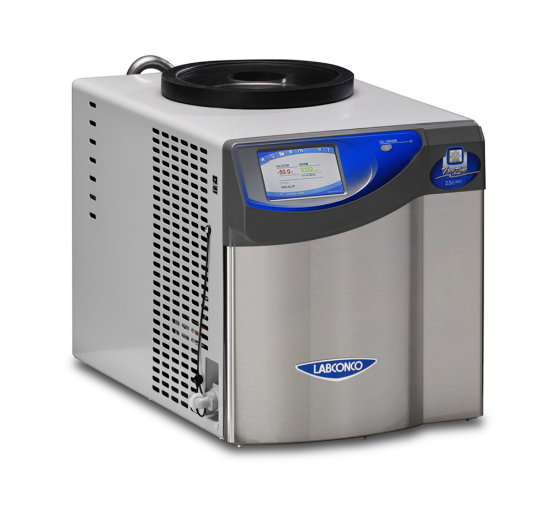
Freeze dryers are one of those essential laboratory instruments that labs either swear by or struggle with. When they work well, they preserve biological samples, stabilise pharmaceuticals, and extend the shelf life of materials in ways no other drying method can match. When they're misused, they destroy vacuum pumps, ruin irreplaceable samples, and generate repair bills that make the original purchase price look modest.
The difference between those two outcomes almost always comes down to three things: understanding how the process actually works, choosing the right machine for your specific samples, and knowing which maintenance steps most people skip. This guide covers all three, with real pricing, real product recommendations, and the kind of operational detail that only comes from years of supporting labs across Australia and New Zealand.
Explore the full range of freeze dryers and lyophilizers available from John Morris Group.
The #1 cause of freeze dryer failure is untrapped vapors reaching the vacuum pump. If your collector isn't at least 15 to 20 degrees colder than your sample's freezing point, you're slowly destroying the most expensive component in the system.
In This Guide
01. How Freeze Drying Actually Works
02. The Mistake That Kills Most Freeze Dryers
03. How to Choose the Right Freeze Dryer
04. Labconco FreeZone: Model Comparison
05. Maintenance That Extends Life by 10+ Years
06. Industry Spotlight: Who Uses Freeze Dryers
07. Buying a Freeze Dryer in Australia
08. Frequently Asked Questions
1. How Freeze Drying Actually Works
Freeze drying (lyophilization) removes moisture from a sample by converting ice directly into vapor without passing through a liquid phase. This process, called sublimation, preserves the sample's structure, biological activity, and chemical integrity in ways that heat-based drying methods cannot.
The process happens in three distinct stages:
Stage 1: Freezing
The sample is frozen solid, typically below its eutectic temperature. For aqueous samples this is straightforward; for samples containing solvents, you need to know the exact freezing point to avoid incomplete solidification.
Stage 2: Primary Drying
Under deep vacuum, ice sublimates directly to vapor. The collector traps this vapor at extremely cold temperatures. This is the longest stage, typically 24 to 48 hours depending on sample volume and loading.
Stage 3: Secondary Drying
Residual bound moisture is removed through desorption. Shelf temperature is gently raised to release water molecules still attached to the dried material, bringing final moisture content below 1 to 3%.
The "Colder is Better" Myth
Even experienced researchers get this wrong. Sublimation is an endothermic reaction that requires energy input to drive water molecules from solid to gas. Setting shelf temperatures too cold (e.g., -40 degrees C) during primary drying starves the process of energy, turning a two-day run into a week-long ordeal. The shelf temperature should be set just below the sample's eutectic or collapse temperature to provide enough heat to move molecules while keeping the product frozen.
2. The Mistake That Kills Most Freeze Dryers
The single most expensive mistake in freeze drying is placing samples on a machine without considering their compatibility with the collector temperature. This leads to the most frequent technical failure in the field: destruction of the vacuum pump.
Here's what happens. If the collector is not at least 15 to 20 degrees C colder than the sample's freezing point, vapors won't be effectively trapped on the collector coils. These untrapped vapors then migrate into the vacuum pump and condense in the oil. Over time, the oil degrades, vacuum levels drop, and the pump's internal components corrode. This is especially destructive when processing acids or solvents that require specialised PTFE coatings or hybrid pumps.
Warning: The Overloading Trap
The relationship between load weight and drying time is not linear. If a machine is overloaded even slightly, cycle time increases logarithmically. A small increase in volume can turn a 24-hour run into a 72-hour run. Overloading can also overwhelm the collector and vacuum pump, causing samples to melt and ruining the preservation properties of sublimation entirely.
The surface area to volume ratio matters more than total volume. Samples that are "shell frozen" in thin layers will dry significantly faster than thick "plug frozen" samples because the water vapor has a shorter distance to travel through the dried matrix.
Expert Technique: Sample Compatibility Check
Before every run, identify your sample's eutectic temperature (the point at which all components are frozen). Then confirm your collector is rated at least 15 to 20 degrees below that point. Aqueous samples (-50 degrees C collector is fine), solvents like methanol or acetonitrile (-84 degrees C or -105 degrees C required), and corrosive acids (PTFE-coated collector essential). Skip this step and you're gambling with your pump.
3. How to Choose the Right Freeze Dryer for Your Lab
When a lab calls our technical team asking for a freeze dryer, we start with three questions. These three answers determine the base unit, the accessories, and the pump type. Get them right and you'll have a system that runs efficiently for 15 to 20 years. Get them wrong and you'll be replacing components within months.
Question 1: What type of samples are you processing?
The chemical composition of your sample determines the necessary collector temperature and material construction. Purely water-based samples work with a standard -50 degrees C collector. Samples containing solvents like acetonitrile or methanol need a colder collector (-84 degrees C or -105 degrees C). Harsh acids require a PTFE-coated collector and coil to prevent irreversible corrosion.
Question 2: What is your total sample volume per run?
This determines the ice-holding capacity (size) of the unit. The general rule is the 50% Rule: choose a freeze dryer with an ice-holding capacity that is double your sample volume. A lab processing 3 litres of liquid per batch should select a 6L model. Undersizing leads to overloading, which causes collector temperature to rise, vacuum to fail, and samples to melt.
Question 3: How will you containerise your samples?
The physical format dictates which drying accessories you need. Individual samples in flasks or ampules require a manifold with multiple ports. Serum vials that must be sealed under vacuum need a stoppering tray dryer or a system like the FreeZone Triad. Large volumes of bulk material work best on bulk tray dryers where product is spread in thin layers.
By answering these three questions, you establish your "base unit" (collector temperature and size) and your "application setup" (accessories and pump type). Everything else is configuration.
4. Labconco FreeZone Range: Model Comparison
John Morris Group is the authorised Australian partner for Labconco, supplying the full FreeZone range with local factory-trained engineers for installation, testing, and ongoing service. Laboratory-grade Labconco freeze dryers typically range from $5,000 to over $40,000 AUD depending on configuration and capacity. Here are six key models that cover the most common lab requirements:
| Model | Type | Collector Temp | Capacity | Best For | Price (AUD) |
|---|---|---|---|---|---|
| Dry Ice Benchtop 12-Port | Benchtop Manifold | Dry Ice (-78 C) | 12 ports | Budget entry, small aqueous batches | $7,881.50 |
| FreeZone 2.5L Benchtop, -50 C | Benchtop | -50 C | 2.5 litres | Compact labs, aqueous samples only | Ask For Price |
| FreeZone 4.5L Benchtop, -50 C | Benchtop | -50 C | 4.5 litres | Mid-range workhorse for water-based samples | Ask For Price |
| FreeZone 4.5L Benchtop, -84 C | Benchtop | -84 C | 4.5 litres | Solvents like methanol or acetonitrile | Ask For Price |
| FreeZone 6L Console, -50 C | Console (PTFE Coil) | -50 C | 6 litres | Corrosive samples, higher throughput labs | Ask For Price |
| FreeZone 18L Console, -50 C | Console | -50 C | 18 litres | High-volume production, pilot plant scale | Ask For Price |
Essential Accessories Most Buyers Overlook
Labconco systems are modular. The base unit gets you started, but the accessories below are what separate a frustrating experience from a reliable one:
Hybrid Vacuum Pumps
Combine a chemical-resistant diaphragm pump with a rotary vane pump. The diaphragm keeps oil under negative pressure, preventing corrosive vapors from condensing in the oil. Makes pump oil last up to 10 times longer.
End-Zone Detection
Sensors that alert you when a sample is truly dry. Eliminates guesswork, prevents pulling samples too early (causing melt-back) or running the machine unnecessarily long. Starter kit from $4,525.40.
8-Port Manifold
Standard for multi-sample batch processing. Labconco offers stainless steel manifolds with up to 28 ports for high-throughput labs. The 8-port unit is $6,416.30 incl. GST.
Glass Lids and Amber Flasks
If your lab uses solvents, switch from standard acrylic to a glass lid to prevent crazing and potential implosion under vacuum. Amber Fast-Freeze Flasks ($1,136.30) protect UV-sensitive samples during long drying cycles.
5. The Maintenance Tasks That Extend a Freeze Dryer's Life by 10+ Years
Freeze dryers are treated as "laboratory workhorses" that run for years with little attention until something breaks. The components below are the ones that fail first when maintenance is neglected. Protect them and you'll get 15 to 20 years from a well-built system. Ignore them and you'll be facing a repair bill within 12 months.
After Every Run: Gas Ballast Purging (20 to 30 min)
The single most neglected task. After each run, operate the vacuum pump with the gas ballast open for 20 to 30 minutes. This heats the oil and distils out water vapor, solvents, and acids that bypassed the collector. Most users simply remove samples and shut down, allowing contaminants to corrode the pump from the inside.
After Every Run: Collector Neutralisation and Draining
Defrost, drain, and wipe the collector chamber completely dry after every use. If samples contained acids (like TFA), the coils must be neutralised immediately after defrosting. Liquid left in the chamber will be pulled directly into the vacuum pump during the next startup. Labconco describes this scenario as a "maintenance nightmare." The same discipline applies to manifold flasks and drying chambers. For a thorough approach, see our guide on how to clean lab glassware properly.
Every 12 Months: Refrigeration Condenser Cleaning
Use a vacuum cleaner with a brush attachment to clean the condenser coils annually (more often in dusty environments). Neglecting this reduces refrigeration efficiency, extends cycle times, and stresses the compressor, shortening the expected 15 to 20 year lifespan of the refrigeration module.
Monthly: Rubber and Acrylic Inspection
Gaskets and hoses should be checked monthly for hardening or deterioration. Watch for "crazing" (small spider-web cracks) on acrylic lids, especially if your lab uses solvents. Over time, crazing weakens the lid structurally, which can lead to a dangerous implosion under deep vacuum.
Every 1,000 Hours: Service Alert Response
Labconco FreeZone units trigger a service alert after 1,000 hours. Don't ignore it. Depending on sample types (volatile solvents vs. aqueous), pumps may need servicing even more frequently. Monitor oil colour: cloudy, discoloured, or particle-filled oil must be changed immediately regardless of the hour counter.
6. Industry Spotlight: Who Uses Freeze Dryers and Why
🎓 University Research Labs
The largest user group in Australia. Research labs rely on freeze dryers for preserving biological samples, stabilising proteins, and preparing materials for long-term storage or analysis. Labs upgrading from basic consumer-grade units to Labconco systems typically report a 10x improvement in vacuum depth (0.002 mBar vs. 0.02 mBar), which is critical for scientific reproducibility.
💊 Pharma and Biotech
Pharmaceutical labs use freeze drying to stabilise APIs, vaccines, and biologics for extended shelf life. Pilot plant operations benefit from integrated systems like the FreeZone Triad, which combines freezing, drying, and stoppering in one unit, eliminating the cost and contamination risk of transferring frozen products between separate machines.
🔬 Forensic Science and Archaeology
Forensic labs switched from air-drying to lyophilization to preserve biological evidence (blood-stained clothing, tissues) in its original state for high-quality DNA analysis. Archaeological researchers use freeze drying to prevent waterlogged wood artifacts from collapsing, a common failure of standard drying methods.
🍎 Food Science and Agriculture
Food science labs use freeze dryers for shelf-life testing, flavour retention studies, and creating reference standards. Properly freeze-dried food stored in airtight containers can last up to 25 years. Note that items with high fat, high sugar, or high alcohol content do not freeze dry well and can cause "melt-back" that contaminates the vacuum pump.
Real-World Lesson
One customer transitioned from a port-type (manifold) dryer to a tray dryer and thought the new unit was broken because samples took one week instead of two days. The cause: shelf temperature set to -40 degrees C during primary drying. In manifold systems, ambient room heat drives sublimation naturally. By correctly balancing heat input on the tray dryer, they restored throughput while gaining the ability to process much larger batch volumes.
7. Buying a Freeze Dryer in Australia: What's Different
Buying a freeze dryer in the Australian market involves practical considerations that most international buying guides don't mention. Here's what you need to know:
⚡ Voltage and Electrical
Australian units must be 230V/50Hz compatible. Using a 60Hz unit on a 50Hz line can cause permanent compressor damage. Scientific units often require a dedicated circuit. A 2.5L FreeZone on 230V draws approximately 7 Amps.
📦 Lead Times and Shipping
Labconco units are manufactured in the US. Expect 6 to 10 weeks delivery via JMG. Units weigh 54 kg to over 300 kg and typically require LTL pallet shipping. All pricing is quoted in AUD inclusive of GST.
🌡 Climate Considerations
For optimum performance, the environment should be below 21 degrees C. High humidity (common in Queensland) increases cycle times. Some units prevent operation above 30 degrees C. Freeze dryers vent significant heat, so avoid unventilated rooms.
🔧 Local Servicing
Sourcing through JMG provides access to factory-trained service engineers for on-site installation, testing, and breakdown repairs across Australia. Equipment meets Australian safety standards and uses HCFC/CFC-free refrigerants.
Frequently Asked Questions
How does a freeze dryer work?
A freeze dryer works through three stages: freezing the sample to a solid state, primary drying (sublimation) where ice converts directly to vapor under deep vacuum, and secondary drying (desorption) which removes residual bound moisture. The collector traps the vapor at extremely cold temperatures, typically -50 degrees C to -105 degrees C, preventing it from reaching the vacuum pump.
How much does a laboratory freeze dryer cost in Australia?
Laboratory freeze dryers from Labconco typically range from $5,000 to over $40,000 AUD depending on configuration and capacity. A basic Dry Ice Benchtop model starts at $7,881.50 (incl. GST), while larger FreeZone console systems and bulk tray dryers require a direct quote from John Morris Group. Accessories like manifolds, vacuum pumps, and End-Zone detection kits add $1,200 to $8,500+ to the base cost.
Can I buy a freeze dryer in Australia?
Yes. John Morris Group is the authorised Australian partner for Labconco, supplying the full FreeZone range across Australia and New Zealand. Units are configured for 230V/50Hz Australian electrical standards, and JMG provides local factory-trained engineers for installation, testing, and ongoing service support. Typical lead times are 6 to 10 weeks.
How long will freeze-dried food last?
Properly freeze-dried food stored in airtight containers with oxygen absorbers can last up to 25 years. The key is achieving complete moisture removal during the cycle and maintaining an airtight seal during storage. Incomplete drying or improper storage significantly reduces shelf life. Items with high fat, sugar, or alcohol content are not suitable for freeze drying.
What is the most common mistake when using a freeze dryer?
Placing samples on a machine without confirming their compatibility with the collector temperature. If the collector isn't at least 15 to 20 degrees colder than the sample's freezing point, untrapped vapors enter the vacuum pump oil and cause corrosion, degraded vacuum levels, and expensive pump failure. This is especially dangerous with acids or solvents.
Is it worth freeze drying your own food?
For long-term preservation, freeze drying retains more nutrients, flavour, and texture than traditional dehydration. However, the equipment investment is significant ($5,000+), cycle times run 24 to 48 hours per batch, and ongoing costs include vacuum pump oil ($100/year), Mylar bags, and electricity ($1.25 to $5.00 per batch). It is most cost-effective for labs, businesses, or households committed to regular batch processing.
Ready to Choose the Right Freeze Dryer?
Whether you're setting up a new lyophilization workflow, upgrading from a consumer-grade unit, or troubleshooting cycle times on an existing system, our technical team can help you match the right Labconco FreeZone configuration to your samples, volume, and budget.
To discuss your specific requirements or to request a quote, get in touch today.
John Morris Group
Australia & New Zealand's trusted partner for scientific instruments, laboratory equipment, and technical solutions since 1962.