A pipette that is out of calibration does not look broken. It still aspirates, still dispenses, still feels the same in the hand. But the volumes it delivers may have drifted outside specification, and every result produced with it becomes unreliable. In regulated Australian laboratories, out-of-tolerance pipettes can lead to failed audits, invalid data, product recalls, and wasted reagents.
This guide explains how pipette calibration works, how often it should be done, what changed with the ISO 8655:2022 update, and how John Morris Group's NATA-accredited calibration service helps Australian labs stay compliant.
What Is Pipette Calibration?
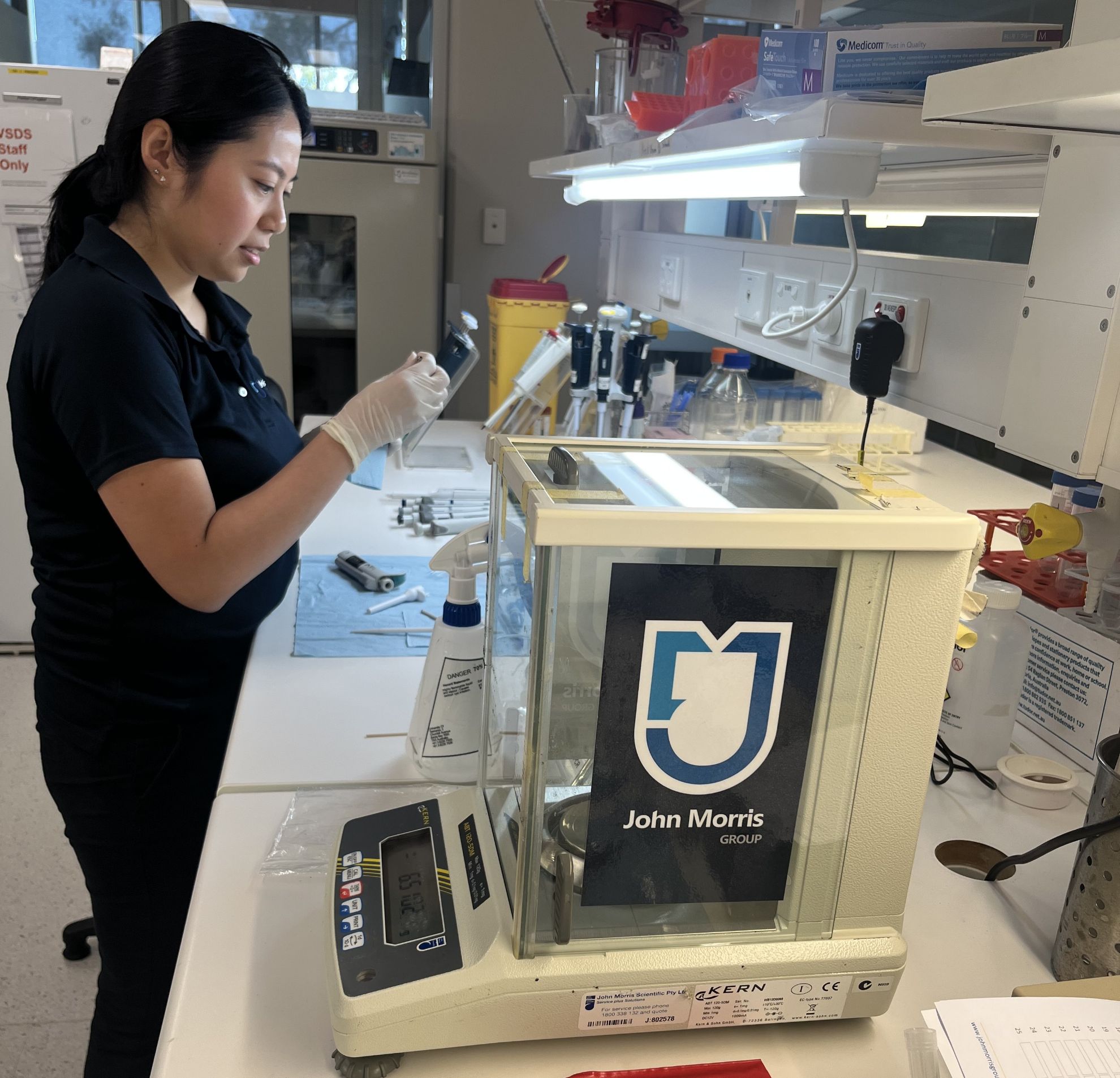
Pipette calibration is the process of verifying that a pipette delivers the correct volume within acceptable error limits, typically using a gravimetric method where dispensed water is weighed on a calibrated analytical balance. If the pipette falls outside specification, it is adjusted and retested. The process is governed by ISO 8655 and, in Australia, must be performed by a NATA-accredited laboratory for results to be formally traceable.
Why Pipette Calibration Matters
Pipettes are mechanical instruments with moving parts (pistons, seals, O-rings, springs) that wear down with use. Even in a well-maintained laboratory, accuracy drifts over time. A pipette that was accurate at installation may be dispensing 2 to 5% less volume after six months of daily use without anyone noticing.
The consequences depend on the application:
- Pharmaceutical and clinical labs: Out-of-tolerance pipettes can lead to incorrect drug concentrations, failed stability studies, and regulatory non-compliance during TGA or FDA audits.
- NATA-accredited testing laboratories: Unverified pipettes undermine the traceability chain required under ISO/IEC 17025. NATA assessors check calibration records as a standard part of every surveillance visit.
- Research laboratories: Unreliable volumes introduce systematic errors into experiments, leading to irreproducible results and wasted time repeating assays.
- Environmental and food testing: Inaccurate sample preparation can produce false positives or negatives, with real consequences for public health reporting.
How Pipette Calibration Works
The standard method for pipette calibration is gravimetric measurement, as defined in ISO 8655-6. The process involves:
1. Environmental conditioning. The pipette, tips, and distilled water are equilibrated to the calibration laboratory's controlled temperature (typically 20 to 25°C). Temperature, humidity, and barometric pressure are recorded because they affect the density of water used to calculate volume.
2. As-found testing. The pipette is tested at its current state to record the "as-found" performance before any adjustment. A minimum of 10 repeated measurements per volume are required under ISO 8655:2022. The dispensed water is weighed on a calibrated analytical balance (six-place for volumes below 20 µL, five-place for 20 to 199 µL).
3. Calculation. The weight of water is converted to volume using the density of water at the recorded temperature. Systematic error (accuracy) and random error (precision/repeatability) are calculated and compared against the maximum permissible errors defined in ISO 8655-2.
4. Adjustment and repair. If the pipette falls outside specification, it is adjusted. Worn parts (seals, O-rings, pistons) are replaced with genuine manufacturer parts. For Gilson PIPETMAN pipettes, service kits include tip holders, piston seals, and O-rings specific to each model.
5. As-left testing. After adjustment, the pipette is retested to confirm it now meets specification. Both as-found and as-left results are documented on the calibration certificate.
6. Certificate issued. A formal calibration certificate is provided documenting the pipette model, serial number, test volumes, as-found and as-left results, measurement uncertainty, environmental conditions, and the standard used.
What Changed with ISO 8655:2022
The ISO 8655 standard was significantly updated in April 2022, the first major revision since 2002. Key changes that affect Australian laboratories include:
| Change | What It Means |
|---|---|
| Pipette + tip = one system | Calibration is only valid for the specific tip type used during testing. If you change tip brands, the pipette needs recalibration with the new tip. |
| Error limits at multiple volumes | Maximum permissible errors are now specified at 10%, 50%, and 100% of nominal volume, not just at the nominal volume. |
| Stricter balance requirements | Six-place balance required for volumes below 20 µL. Five-place for 20 to 199 µL. |
| Multichannel table added | Dedicated error limits for multichannel pipettes. Each channel is treated as a single-channel for calibration purposes. |
| Photometric method recognised | A photometric calibration procedure is now formally recognised alongside the traditional gravimetric method. |
In Australia, NATA has also confirmed that the previous Australian Standard AS 2162.2 was withdrawn in October 2019. NATA-accredited calibration laboratories now reference ISO 8655 as the primary standard for pipette calibration.
How Often Should Pipettes Be Calibrated?
There is no single universal answer. Calibration frequency depends on usage intensity, the regulatory environment, and the criticality of the application:
| Environment | Recommended Frequency | Why |
|---|---|---|
| Pharmaceutical / GMP | Every 3 months | TGA and FDA audit requirements, batch release testing |
| NATA-accredited testing | Every 3 to 6 months | ISO/IEC 17025 traceability chain |
| Clinical / diagnostic | Every 6 months | Patient safety, diagnostic accuracy |
| Research / university | Every 6 to 12 months | Data reproducibility, grant compliance |
| Teaching / general use | Every 12 months | Basic functional verification |
Pipettes should also be calibrated immediately after being dropped, repaired, or exposed to corrosive chemicals that may have damaged internal seals.
What to Do Between Calibrations
Calibration verifies performance at a point in time. Between scheduled calibrations, regular maintenance and interim checks help catch problems early:
- Visual inspection: Check for cracks in the tip holder, worn or damaged ejector, and smooth plunger action. Gilson provides two-minute inspection guides for each PIPETMAN series.
- Seal and O-ring replacement: Replace piston seals and O-rings at the intervals recommended by the manufacturer. For Gilson PIPETMAN, Level 1 service kits include the tip holder, 3 piston seals, and 3 O-rings for each model size.
- In-house gravimetric checks: A quick gravimetric check using your laboratory balance can flag a pipette that has drifted significantly. The Gilson Calibration Tool for PIPETMAN L simplifies this process for interim verification.
- Leak testing: A pipette leak testing unit can verify that the seal between the tip and the pipette body is intact, which is one of the most common causes of volume drift.
Common Pipette Calibration Mistakes
Most Common Mistake We See
Sucking liquid compound up into the pipette body. Once fluid enters the barrel, it contaminates the piston and seals, corrodes internal components, and the pipette will fail calibration. Always use a pre-wetted tip, pipette at the correct angle, and never exceed the first stop when aspirating.
- Using too much force when applying tips: Excessive force when pushing tips onto the pipette damages the tip holder and shaft over time. Tips should seat with a gentle twist, not a hard slam. If tips feel loose, the tip holder likely needs replacing rather than more force.
- Pulling pipettes apart without knowing how to reassemble: Operators sometimes unscrew connecting nuts or disassemble components for cleaning without understanding the reassembly sequence. This leads to misaligned seals, lost O-rings, and pipettes that fail calibration immediately after being "cleaned".
- Using incompatible tips: Under ISO 8655:2022, the pipette and tip are treated as one system. Using a tip brand that does not match the pipette manufacturer's specification can introduce systematic volume errors. Always use the tip type recommended by the pipette manufacturer.
- Using non-genuine replacement parts: Aftermarket seals and O-rings are a frequent cause of pipettes failing calibration shortly after servicing. Genuine manufacturer parts are engineered to exact tolerances and are the only way to guarantee the pipette returns to specification after repair.
- Skipping the as-found test: Some services only report as-left results. Without as-found data, you have no record of how far the pipette had drifted, which is critical for audit trails and for setting appropriate calibration intervals.
- Ignoring environmental conditions: Temperature, humidity, and barometric pressure all affect gravimetric calibration results. A pipette calibrated in an uncontrolled environment may produce unreliable data.
Pipette Calibration Services at John Morris Group
John Morris Group operates a NATA-accredited pipette calibration laboratory (Accreditation No. 4283) with ILAC MRA recognition, most recently confirmed during a successful NATA surveillance audit in 2025. We comply with ISO/IEC 17025 according to ISO 8655 procedures and specifications. Our calibration technicians are trained on genuine Gilson service procedures and use manufacturer-approved replacement parts.
How our service works:
- NATA-accredited calibration: All NATA calibration is performed at our Sydney pipette calibration laboratory. Each pipette receives two reports: As Found and As Calibrated. Typical turnaround is 5 to 10 working days.
- Onsite pipette service: Available in all major Australian cities for laboratories with a minimum of 50 single-channel pipettes. Our technicians service approximately 50 pipettes per day onsite. Multichannel pipettes are returned to our Sydney laboratory for service and calibration.
- Mail-in service: Laboratories with fewer than 50 pipettes can send their instruments to our Sydney lab. Return freight is A$55.
- All brands serviced: We calibrate and repair pipettes from Gilson, Eppendorf, Thermo Fisher, BRAND, and all other manufacturers. We carry common spare parts for most brands.
- Repairs included: Seal replacement, piston servicing, and component repair are performed alongside calibration using genuine parts wherever available.
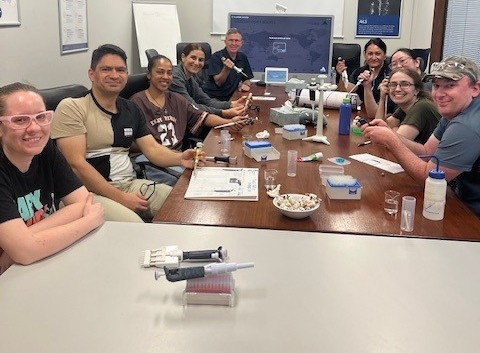
We also run Fundamental Pipetting Workshops for Australian laboratories covering pipetting fundamentals, forward vs reverse pipetting technique, positive displacement pipetting, ergonomics, care and maintenance, troubleshooting, and calibration. These workshops include a Gilson liquid handling display and hands-on practice, and are available at your facility on request.
For labs that perform interim checks in-house, the Gilson Calibration Tool for PIPETMAN L and the BRAND Pipette Leak Testing Unit are available through our Gilson range.
Frequently Asked Questions
What is NATA-accredited pipette calibration?
NATA (National Association of Testing Authorities) accreditation means the calibration laboratory has been independently assessed and found competent to perform pipette calibration to ISO/IEC 17025. Results from a NATA-accredited lab are formally traceable and internationally recognised through the ILAC Mutual Recognition Arrangement.
How often should I calibrate my pipettes?
This depends on your specific regulatory and quality requirements. Pharmaceutical and GMP labs typically calibrate every 3 months. NATA-accredited testing laboratories every 3 to 6 months. Research and general use laboratories every 6 to 12 months. Your quality management system should define the frequency based on usage intensity and compliance needs. Calibrate immediately after a drop, repair, or chemical exposure.
Do you calibrate pipettes from all manufacturers?
Yes. John Morris Group calibrates pipettes from Gilson, Eppendorf, Thermo Fisher, BRAND, and all other manufacturers. Our NATA-accredited service covers single-channel, multichannel, and electronic pipettes. Contact us on 1300 501 555 to confirm your specific models.
What is ISO 8655?
ISO 8655 is the international standard for calibration and testing of piston-operated volumetric apparatus (POVA), including pipettes, burettes, dispensers, and dilutors. The most recent version (ISO 8655:2022) introduced stricter requirements including treating the pipette and tip as one system, error limits at multiple volumes, and stricter balance specifications.
Where can I get pipette calibration in Australia?
John Morris Group performs all NATA-accredited pipette calibration at our Sydney laboratory. Turnaround is 5 to 10 working days. For laboratories with 50 or more single-channel pipettes, we also offer onsite pipette service in all major Australian cities. Pipettes can be mailed in from any location with a return freight cost of A$55. Call 1300 501 555 to arrange a calibration or request a quote.
Can I calibrate pipettes in-house?
You can perform interim gravimetric checks using a calibrated balance and distilled water. However, for formal NATA-traceable calibration, the work must be performed by a NATA-accredited laboratory with controlled environmental conditions, calibrated reference equipment, and documented measurement uncertainty. The Gilson Calibration Tool is useful for routine in-house checks between scheduled professional calibrations.
Book Your Pipette Calibration
NATA-accredited calibration at our Sydney laboratory. 5 to 10 working day turnaround. As-found and as-left reporting. All pipette brands serviced. Onsite service available for fleets of 50+ pipettes.
Call 1300 501 555 or visit our pipette calibration services page.